Source: President praises Diaspora liberation legacy – herald President Mnangagwa hands over the Zimbabwe flag to national hero Ambassador Victor Matemadanda’s widow, Mrs Tendai Matemadanda, at his burial at the National Heroes’ Acre in Harare yesterday. — Picture: Presidential Photographer Tawanda Mudimu Zvamaida Murwira Senior Reporter PRESIDENT Mnangagwa has described the Diaspora community as the […]
President Mnangagwa hands over the Zimbabwe flag to national hero Ambassador Victor Matemadanda’s widow, Mrs Tendai Matemadanda, at his burial at the National Heroes’ Acre in Harare yesterday. — Picture: Presidential Photographer Tawanda Mudimu
Zvamaida Murwira
Senior Reporter
PRESIDENT Mnangagwa has described the Diaspora community as the nucleus of the early stage of the liberation struggle and praised it for helping in the country’s modernisation, industrialisation and development.
People in the Diaspora, he said, sacrificed their lives, savings and businesses for the good of the nation.
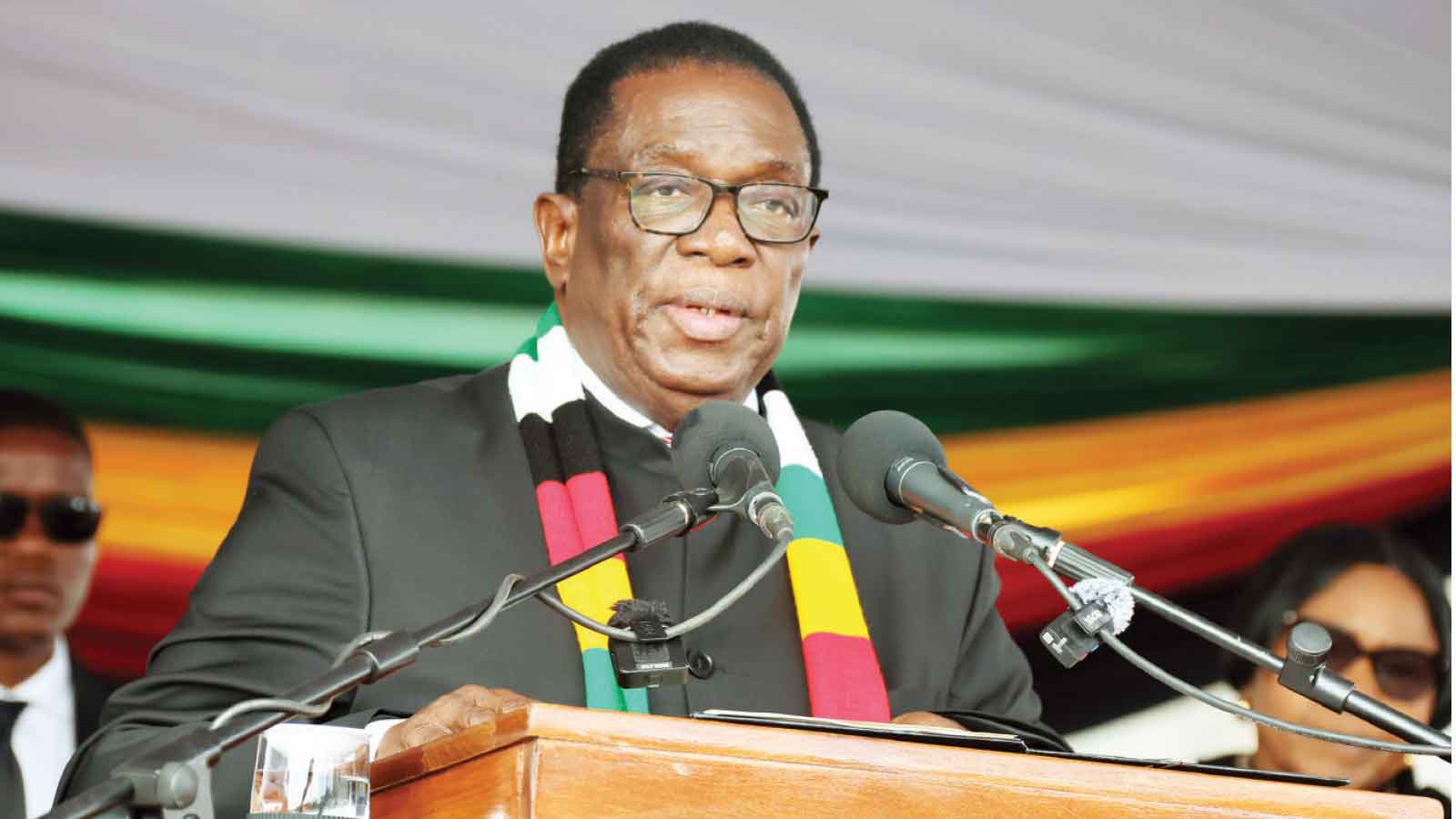
The President made the remarks while addressing mourners at the burial of Zimbabwe’s Ambassador to Mozambique and Eswatini, Cde Victor Matemadanda, at the National Heroes Acre yesterday.
In his eulogy, the President described displaced and migrant families as the nucleus of the early stage of the revolution, and Cde Matemadanda was part of that community in Zambia.
“The life of the late national hero, Cde Matemadanda, reminds us of the important role the Diaspora has always played towards the independence, development and growth of our motherland, Zimbabwe. During the liberation struggle, Zimbabweans residing in areas such as Mumbwa, in Zambia, selflessly gave their savings towards the liberation effort. They also volunteered in diverse ways to execute intricate missions of the struggle, including facilitating and moving cadres from Zambia to Mozambique and Tanzania,” said President Mnangagwa.
“Many were always ready and willing to avail requisite resources needed by fighters in different camps and at the war front. Some lost their assets and businesses as part of their contribution to the struggle. They served as frontline health workers, attending to the wounded and injured, until full recovery. Sadly, they also helped lay to rest thousands who perished in the rear.”
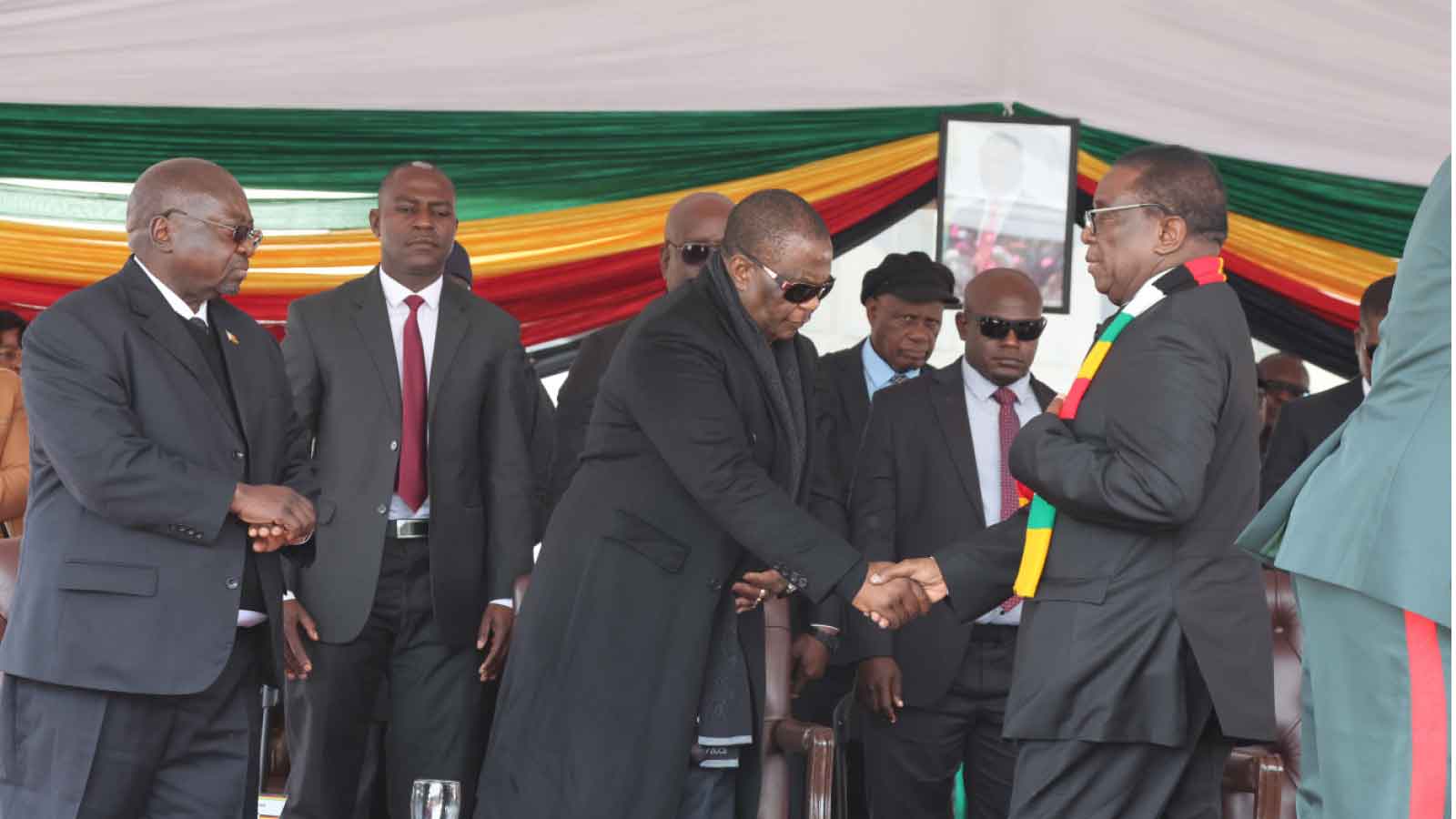
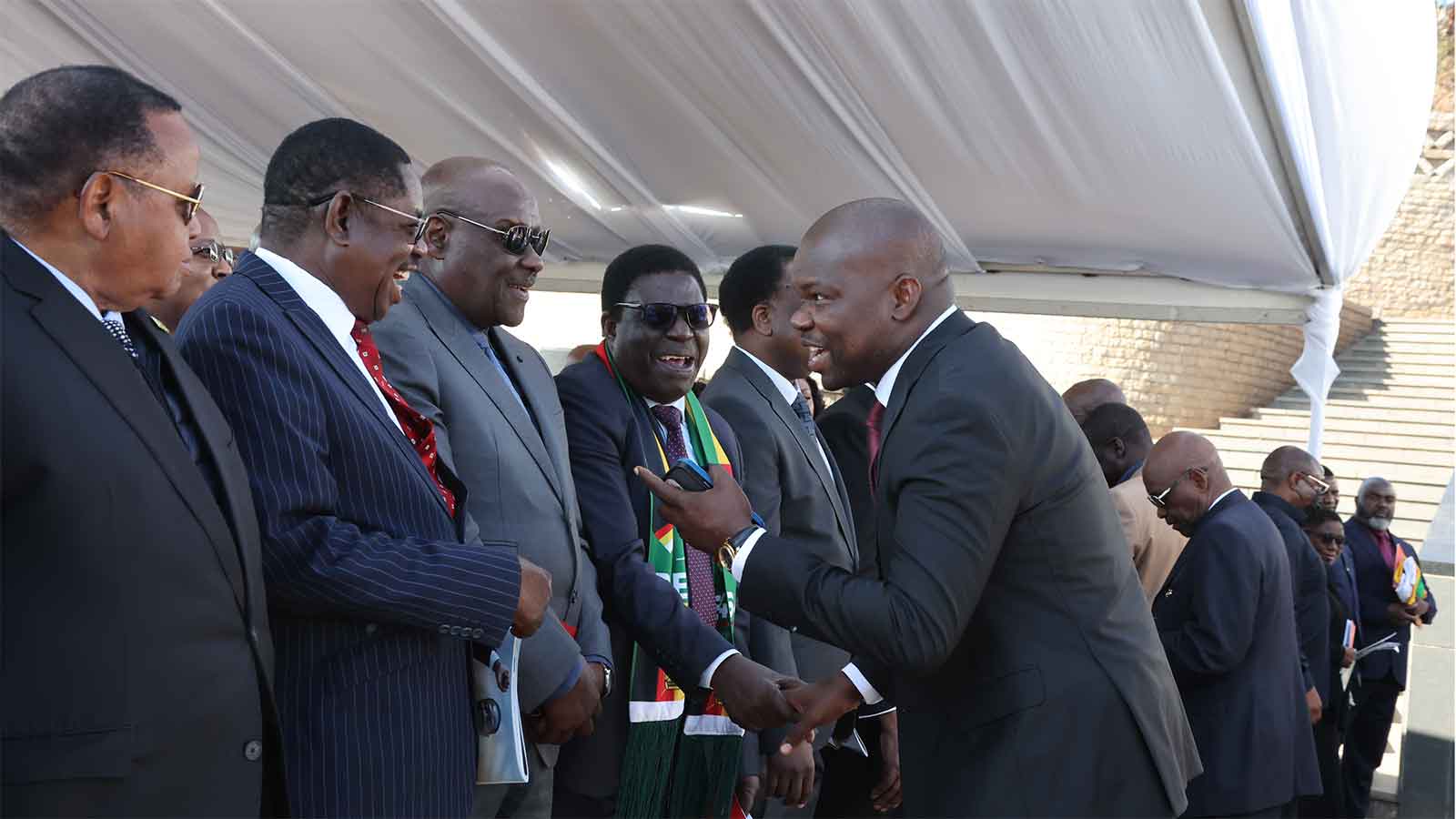
President Mnangagwa is welcomed by Vice President Dr Constantino Chiwenga, while Chief Secretary to the President and Cabinet Dr Martin Rushwaya (left)looks on at the burial of national hero Ambassador Victor Matemadanda at the National Heroes Acre in Harare yesterday. — Picture: Presidential Photographer Tawanda Mudimu
He said it was critical to commend the role played by the Diaspora community.
“Despite being in foreign lands, many of our people never dodged national obligations. We should never forget their contributions. It is pleasing and commendable that this spirit lives on in the present generation of Zimbabweans in the Diaspora. I, therefore, pay tribute to all our citizens working and living in foreign lands, for playing their part in the ongoing national development, industrialisation and modernisation agenda. Zimbabwe is our home together,” said President Mnangagwa.
Many families in the Diaspora, the President said, released their sons and daughters, including professionals, to join the liberation struggle.
“Displaced and migrant families became the nucleus of our early stages of the revolution, always ready to aid the military wings of ZANU and ZAPU, who used Zambia and Mozambique as the rear. I recall that many families released their sons and daughters, including students and professionals, to participate in the cause of national freedom and independence,” he said.
“It is within this context that we contextualise and cherish the role of our dear departed National Hero, Ambassador Matemadanda. As part of the Zimbabwean migrant community that had settled in Zambia, the late Cde Matemadanda abandoned the relatively stable migrant life to join the struggle. He helped in the mobilisation of vital support for freedom fighters and refugees in camps across Zambia and Mozambique, collaborating closely with prominent personalities such as the late Cde Patrick Kombayi, among others.”
The President addresses mourners
He said it was important to immortalise the role played by Zimbabwean families who relocated to neighbouring countries.
“In appreciation of our rich liberation history and heritage, we must immortalise the role played by Zimbabwean families who relocated to neighbouring countries, particularly their indelible contribution to the early phases of the armed liberation struggle. Many of these families left the then Southern Rhodesia following forced displacements by the oppressive colonial authorities, in the aftermath of the 1930 Land Apportionment Act and related persecutions,” he said.
Chronicling his interaction with Cde Matemadanda, President Mnangagwa said he last met him in Eswatini in April this year to commemorate the 40th Anniversary of the coronation of King Mswati 111.
He said he was welcomed by Cde Matematanda, who accompanied him throughout the event.
“As per tradition, we shared a meal, laughed and reminisced about the days of the struggle, departed comrades, as well as views on how we can grow relations with the countries where he was accredited ambassador. He later saw me off as I returned home. Unbeknown to me, that was the last meal we would share, the last handshake and the last wave goodbye, as I bid him farewell,” said President Mnangagwa.
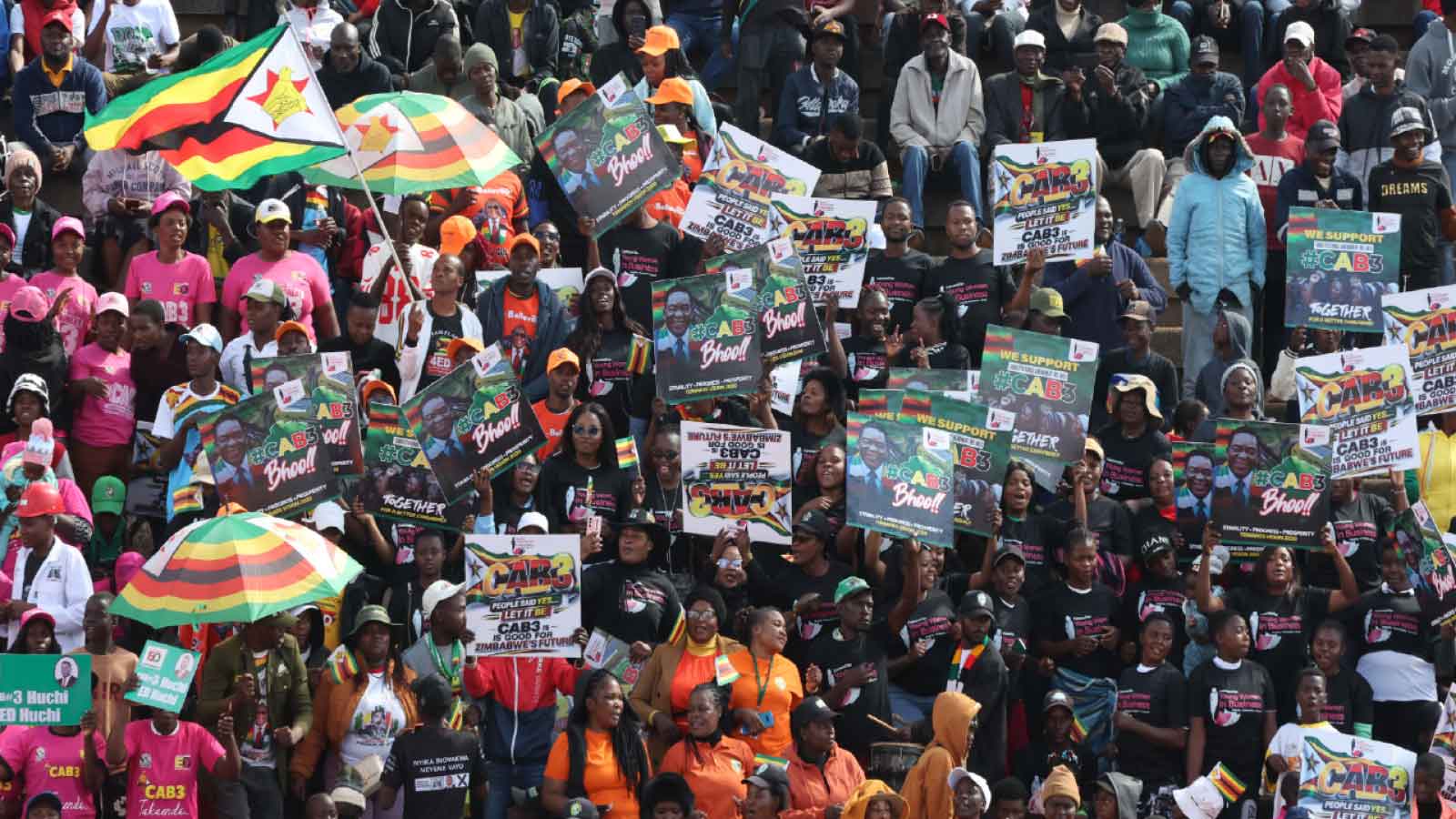
Some of the thousands of mourners who attended the burial
He described Cde Matemadanda as unwavering and with ideological clarity, patriotic and loyal to the values of the liberation struggle.
“He answered the call of our national armed struggle and remained fiercely dedicated to the complete economic liberation of Zimbabwe. We have lost a leader whose indelible legacy will serve as guidance to future generations,” he said.
“In honour of his gallantry, patriotism and dedicated service to our beloved motherland, Zimbabwe, as well as our Party ZANU PF, we inter him here, at this National Shrine alongside other heroes and heroines who consistently defended the sacred flame of the liberation struggle and independence.”
President Mnangagwa implored the youths and women to use their vibrancy, skills, innovation, and entrepreneurship to become future leaders.
“To the stakeholders across the socio-economic and political spectrum of our country, I commend you for the unity, peace and harmony prevailing in our country. It is this unity of purpose that shall continue to inspire our people, as well as friends and neighbours. National cohesion, peace, unity and development remain vital ingredients for the realisation of our national Vision 2030 as well as the SADC Vision 2050 and wider aspirations of the African continent,” he said.
“Zimbabwe’s election for a non-permanent seat at the United Nations Security Council for the period 2027-2028 is a show of trust and confidence by many across the world in our country.”
Born on 3 March 1960, in Gokwe, Cde Matemadanda whose nom de guerre was Cde Hama Yesango got his primary education at Nambala Primary School in Mumbwa, Zambia, and later attended Mumbwa Secondary School.
His family was among the many African households forcibly uprooted from their ancestral lands in Gokwe under the racially discriminatory land policies of the settler regime, which saw his family moving to Zambia as part of the Zimbabwean migrant community seeking to escape persecution and inhibitions in colonial Rhodesia. In 1969, Victor enrolled for primary education at Nambala Primary School in Mumbwa, Zambia before proceeding to Mumbwa Secondary School for Forms One and Two.
After receiving training, Cde Matemadanda was deployed to the Takawira Sector in 1979. During a fierce enemy attack on his detachment, Cde Matemadanda was wounded and evacuated back to Mozambique for medical treatment. Undeterred by injuries, he was redeployed to the battlefront and operated in Mudzi.
During the country’s historic transition to black majority rule, he served within the ZANLA Commissariat Department, where he mobilised grassroots support to vote during the 1980 General Elections.
Driven by a quest for self-improvement, he attained academic qualifications in Personnel Management and Marketing, Automotive Engineering, Development Studies and International Relations.
After a stint in the Zimbabwe National Army from 1980, Cde Matemadanda resigned in 1986 and became instrumental in mobilising grassroots support for ZANU-PF.
Some of the positions he held include Secretary General of Zimbabwe National War Veterans Association, Zanu PF National Political Commissar in the Politburo, Member of Parliament for Gokwe Central constituency and Deputy Minister of Defence and War Veterans Affairs.
As ambassador of Mozambique, Cde Matemadanda collaborated with the Maputo Government to protect, preserve and develop our historic national liberation shrines at Chimoio, Tembwe, and Nyadzonia, among others.
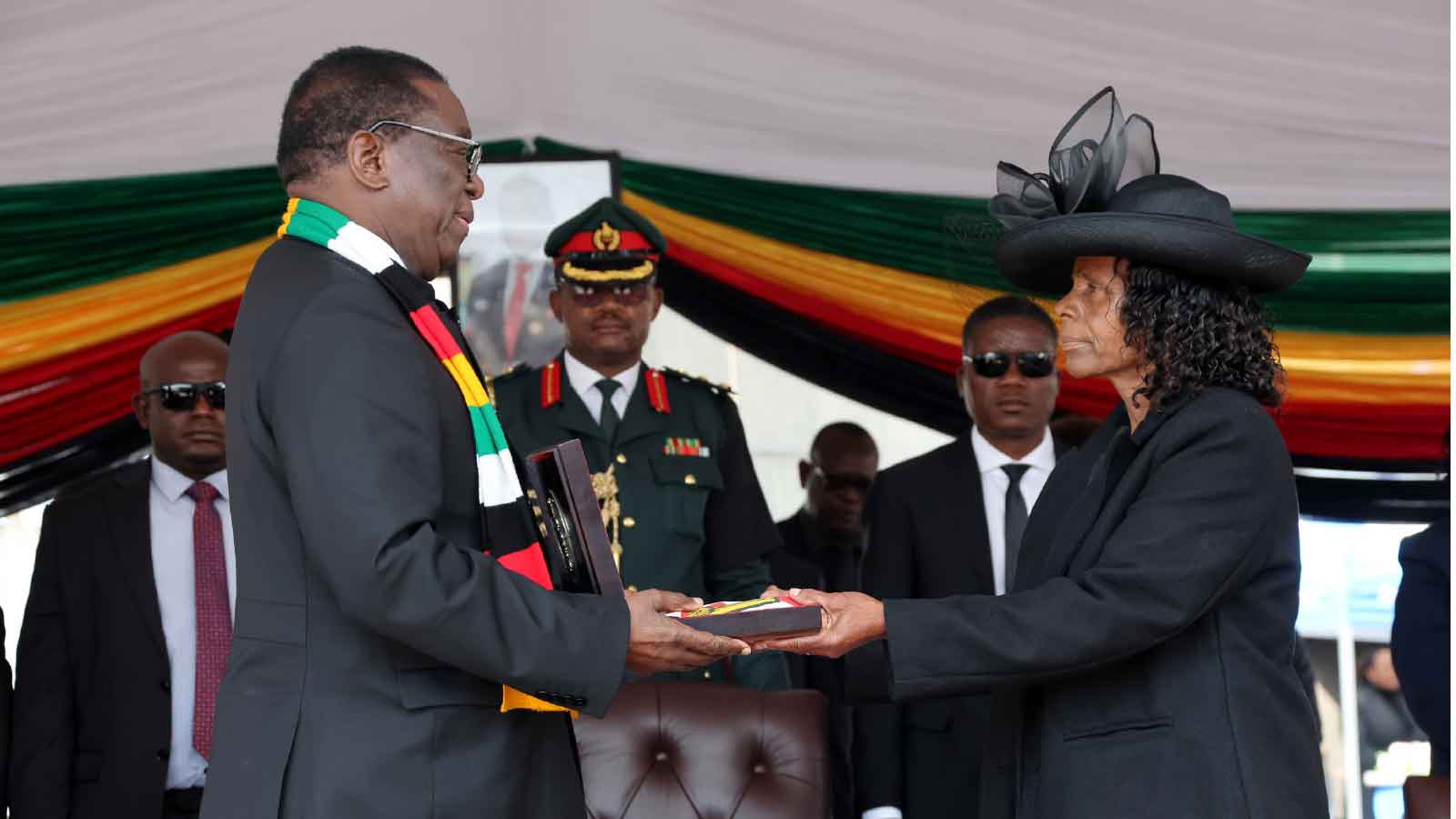 President Mnangagwa hands over the Zimbabwe flag to national hero Ambassador Victor Matemadanda’s widow, Mrs Tendai Matemadanda, at his burial at the National Heroes’ Acre in Harare yesterday. — Picture: Presidential Photographer Tawanda Mudimu