Gender, human rights commissions merger lawful: AG 

Source: Gender, human rights commissions merger lawful: AG -Newsday Zimbabwe HARARE, Mar. 18 (NewsDay Live) – Attorney-General Virginia Mabiza says the planned abolition of the Zimbabwe Gender Commission and its merger into the Zimbabwe Human Rights Commission is lawful and will strengthen  not weaken  rights protection. The proposal has sparked debate, with the Zanu PF Women’s League […]

The post Gender, human rights commissions merger lawful: AG  appeared first on Zimbabwe Situation.

Source: Gender, human rights commissions merger lawful: AG -Newsday Zimbabwe

HARARE, Mar. 18 (NewsDay Live) – Attorney-General Virginia Mabiza says the planned abolition of the Zimbabwe Gender Commission and its merger into the Zimbabwe Human Rights Commission is lawful and will strengthen  not weaken  rights protection.

The proposal has sparked debate, with the Zanu PF Women’s League urging a rethink over fears it could dilute focus on gender issues.

Mabiza rejected those concerns.

“The legal advice from this office is clear and constitutionally grounded: the Zimbabwe Human Rights Commission already protects all human rights, including functions of the Gender Commission,” she said.

“Gender equality and women’s rights are core — not peripheral. The transfer creates no gap or loss of protection.”

She said the reform would streamline oversight and improve efficiency.

“This is a lawful, forward-looking reform that builds a stronger, leaner institution.”

Mabiza added the merger would cut duplication and boost enforcement.

“It eliminates fragmentation and concentrates limited resources into a single body with greater authority and visibility.”

She, however, said Parliament would scrutinise the proposals.

“Concerns about maintaining a dedicated focus are valid and will be fully examined. Nothing in the Bill is final.”

Mabiza also urged the public to rely on the officially gazetted Constitutional Amendment No. 3 Bill, published on February 16, 2026, following Cabinet approval.

The Bill proposes changes to sections 92, 95, 143 and 158 of the Constitution, mainly targeting the timing and conduct of national elections.

She said the amendments seek to address structural issues in Zimbabwe’s harmonised electoral cycle, which links the terms of the Presidency, Parliament and local authorities.

The post Gender, human rights commissions merger lawful: AG  appeared first on Zimbabwe Situation.

Zim moves to deepen trade ties with Uganda 

Source: Zim moves to deepen trade ties with Uganda -Newsday Zimbabwe HARARE, Mar. 18 (NewsDay Live) – Zimbabwe is stepping up trade diplomacy with Uganda, as officials and business leaders push to turn long-standing political ties into concrete commercial deals to boost exports, investment, and industrial cooperation. Trade between the two countries remains heavily skewed […]

The post Zim moves to deepen trade ties with Uganda  appeared first on Zimbabwe Situation.

Source: Zim moves to deepen trade ties with Uganda -Newsday Zimbabwe

HARARE, Mar. 18 (NewsDay Live) – Zimbabwe is stepping up trade diplomacy with Uganda, as officials and business leaders push to turn long-standing political ties into concrete commercial deals to boost exports, investment, and industrial cooperation.

Trade between the two countries remains heavily skewed in Uganda’s favour. Zimbabwe imported goods worth US$829,206.02 from Uganda, against exports of US$109,869.63, according to the Zimbabwe National Statistics Agency.

Speaking at the Zimbabwe–Uganda Business Forum on Wednesday, Justice, Legal and Parliamentary Affairs Minister Ziyambi Ziyambi said the platform should translate strong bilateral relations into tangible economic gains.

“Let us use this forum to turn our strong friendship into concrete business opportunities that benefit our peoples,” he said, expressing confidence the engagements would unlock new trade and investment avenues.

Ziyambi said Zimbabwe’s foreign policy prioritises trade promotion, with diplomats positioned as drivers of economic transformation.

ZimTrade chief executive Allan Majuru said bilateral trade has strong growth potential, with partnerships expected to go beyond improving statistics to advancing regional integration.

“They can help build a more integrated, self-reliant African economy better positioned in global trade,” he said, urging stronger planning and use of existing cooperation networks.

Majuru stressed the need to expand value addition and participation in regional value chains, saying this would drive jobs, productivity, foreign currency earnings, and industrial growth.

Uganda’s Ambassador to South Africa, Paul Amoru — also accredited to several Southern African countries including Zimbabwe — said the forum would foster practical business linkages and shared prosperity.

He highlighted the role of Uganda’s diaspora, estimated at over 1.6 million globally, and called for greater investment-driven partnerships.

Amoru identified manufacturing, agro-processing, medical services, education, and air transport as high-potential sectors for collaboration.

“These sectors can generate jobs, reduce poverty, and integrate our economies into mainstream financial systems,” he said.

The post Zim moves to deepen trade ties with Uganda  appeared first on Zimbabwe Situation.

Nearly half of Zim’s industrial capacity lies idle 

Source: Nearly half of Zim’s industrial capacity lies idle -Newsday Zimbabwe Confederation of Zimbabwe Industries (CZI) NEARLY half of Zimbabwe’s industrial capacity is lying idle, underscoring mounting pressure on firms as subdued production pushes many closer to distress, a Confederation of Zimbabwe Industries (CZI) consultant has revealed. The deepening crisis in capacity utilisation reflects a […]

The post Nearly half of Zim’s industrial capacity lies idle  appeared first on Zimbabwe Situation.

Source: Nearly half of Zim’s industrial capacity lies idle -Newsday Zimbabwe

Confederation of Zimbabwe Industries (CZI)

NEARLY half of Zimbabwe’s industrial capacity is lying idle, underscoring mounting pressure on firms as subdued production pushes many closer to distress, a Confederation of Zimbabwe Industries (CZI) consultant has revealed.

The deepening crisis in capacity utilisation reflects a broader structural strain on Zimbabwe’s economy, where a toxic mix of high operating costs, policy constraints and weakening demand is eroding industrial viability and accelerating company failures.

Over the past two years, companies have increasingly entered corporate rescue amid worsening macroeconomic challenges, including energy shortages, exchange rate volatility, shrinking liquidity, a 76,1% informal market, declining disposable incomes and weakening capital positions.

Last month, once-dominant retailer OK Zimbabwe entered corporate rescue despite lining up potential liquidity of about US$67,3 million, highlighting the severity of the operating environment.

Local firms such as Truworths Limited, Beta Holdings and Khayah Cement Limited have also entered corporate rescue, while others have exited the market altogether.

South African packaging giant Nampak Limited is seeking to sell its local unit, Nampak Zimbabwe Limited.

“Capacity utilisation currently is just above 50%. Which means a lot of capacity is lying idle. From most firms, more than 45% is capacity that is not being used,” CZI consultant Tichaona Zivengwa told NewsDay Business.

“These are firms that are almost in distress. If we add the issue of global risks, it’s going to be even worse.”

By “global risks,” Zivengwa was referring to the ongoing conflict involving the United States and Israel against Iran.

The conflict, which began on February 28, has triggered a stagflationary shock to the global economy, largely due to disruptions at the Strait of Hormuz — a key transit route for about 20% of the world’s oil and liquefied natural gas.

Brent crude prices have since surged past US$100 per barrel, driving up shipping costs and insurance premiums as trade reroutes around the Cape of Good Hope.

Locally, fuel prices rose sharply to US$1,77 and US$1,71 per litre of diesel and petrol, respectively, on March 4, from US$1,52 and US$1,56.

“Fuel is a major input in the production process,” Zivengwa said.

“The rise in fuel prices is also going to be translated into an increase in prices for a lot of products. We are likely to see inflation numbers going up.”

Beyond energy costs, the global disruption is also affecting fertiliser supply, threatening food security and complicating monetary policy as central banks confront renewed inflationary pressures.

“We’ve got firms that are into exports, which have access to markets outside. Those countries are part of global markets. So, it’s going to break that chain,” Zivengwa said.

“Also, supply chains of raw materials that are needed in the industry come through some of those countries. The manufacturing sector is going to suffer very much because of these risks.”

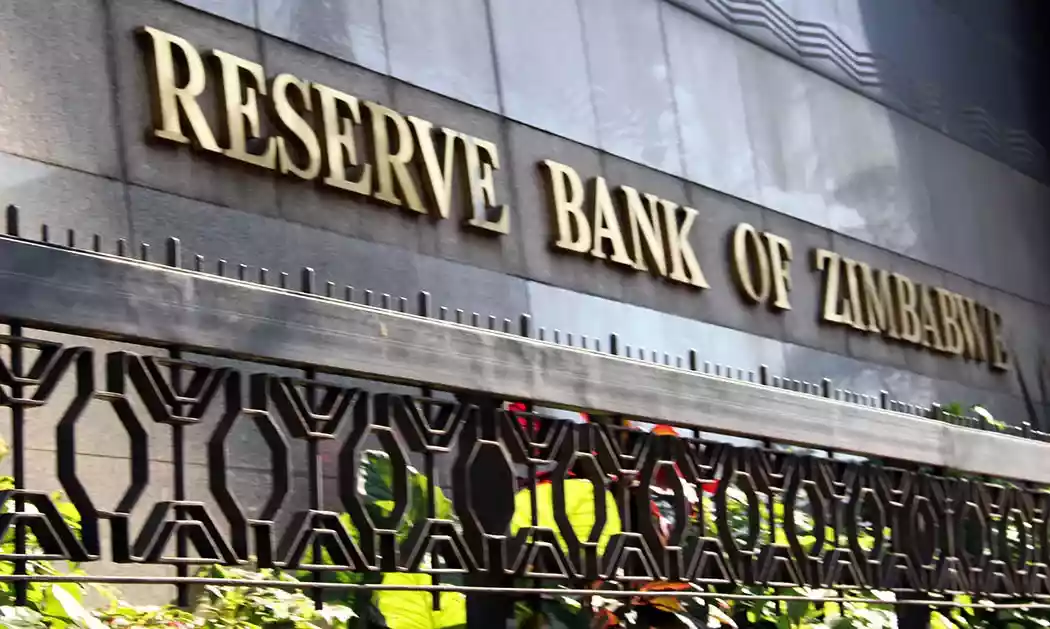
He added that exporters are already constrained by local policies, including foreign currency retention requirements imposed by the Reserve Bank of Zimbabwe, which limit access to earnings.

Under current rules, exporters must surrender 30% of their foreign currency earnings in exchange for ZiG.

“We depend heavily on agricultural inputs — about 60% of our inputs come from agriculture, especially for fast-moving consumer goods,” he said.

“This will affect both pricing and availability of inputs, worsening existing challenges.”

Zivengwa warned that Zimbabwe’s recent inflation stability could come under pressure from these external shocks.

“These risks are global, so we can’t tackle them as an individual sector. We need to tackle them at a national scale,” he said.

“At CZI, we continue to work with the government to move in a certain direction to circumvent some of these risks.”

The government has indicated it is taking steps to cushion the industry, including monitoring fuel prices to contain cost pressures.

The post Nearly half of Zim’s industrial capacity lies idle  appeared first on Zimbabwe Situation.

Suppliers, contractors to have access to forex: RBZ 

Source: Suppliers, contractors to have access to forex: RBZ -Newsday Zimbabwe THE Reserve Bank of Zimbabwe (RBZ) has assured companies that foreign currency will remain accessible even after the government announced it will pay contractors and suppliers exclusively in the Zimbabwe Gold (ZiG) currency. The move follows Treasury’s introduction of a National Standard Pricing List […]

The post Suppliers, contractors to have access to forex: RBZ  appeared first on Zimbabwe Situation.

Source: Suppliers, contractors to have access to forex: RBZ -Newsday Zimbabwe

THE Reserve Bank of Zimbabwe (RBZ) has assured companies that foreign currency will remain accessible even after the government announced it will pay contractors and suppliers exclusively in the Zimbabwe Gold (ZiG) currency.

The move follows Treasury’s introduction of a National Standard Pricing List for goods and services procured by ministries, departments and agencies, which also mandated local currency payments amid fears of fuelling the parallel market.

Treasury last week introduced benchmarked pricing for goods and services procured by ministries, departments and agencies, adding that it would solely pay in the Zimbabwe Gold (ZiG) currency amid fears this will fuel the parallel market if companies do not access the foreign currency using formal channels.

RBZ governor John Mushayavanhu welcomed the initiative, saying it promotes the use of ZiG and sets the stage for a transition to exclusive domestic currency usage.

“Providers of goods and services to the public sector that will receive payment in ZiG will have access to foreign currency on the willing-buyer, willing-seller interbank foreign exchange market for their bona fide import requirements,” he said.

Mushayavanhu highlighted the country’s strong foreign currency position, supported by US$16 billion in external receipts in 2025, which allows the Reserve Bank to meet legitimate foreign payment demands.

He said the strong performance guaranteed forex availability, citing the central bank’s consistent clearance of unmet demand in the market.

Mushayavanhu emphasised that the policy does not signal the end of Zimbabwe’s multi-currency system.

However, some economists have raised concern about unintended consequences.

“The payment in ZiG presents a huge problem if you need to import materials to supply the government. The parallel market is back as suppliers will look for USD elsewhere,” economist Vince Musewe told NewsDay.

He said while the introduction of a standard pricing framework could help to curb overpricing, its effectiveness would depend on how accurately it reflects market conditions.

“National Standard Pricing List is not a bad idea, given the tendency to overprice. However, I wonder if the prices are accurate. Suppliers will simply begin to reject government business and that’s another problem,” Musewe said.

“This policy will create another self-manufactured currency crisis because its effects have not been thought through once more.”

Economist Chenayimoyo Mutambasere noted significant risks.

“Suppliers, who rely on imported inputs, may struggle if they are paid in ZiG without reliable access to foreign currency, leading to inflated prices, reduced participation or low quality goods and services,” she said.

“Increased ZiG liquidity could also heighten volatility if recipients quickly convert to USD, putting pressure on the exchange rate.

“Ultimately, without strong policy credibility and consistent macroeconomic management, this measure may boost liquidity, but fail to deliver stability.”

The post Suppliers, contractors to have access to forex: RBZ  appeared first on Zimbabwe Situation.

Govt pushes consumer protection into classrooms

Source: Govt pushes consumer protection into classrooms -Newsday Zimbabwe THE government is set to introduce consumer rights education in schools through the national curriculum, aiming to ensure citizens understand their entitlements from an early age. The move comes as the government rolls out the Consumer Protection Policy and strengthens the Consumer Protection Commission (CPC) across […]

The post Govt pushes consumer protection into classrooms appeared first on Zimbabwe Situation.

Source: Govt pushes consumer protection into classrooms -Newsday Zimbabwe

THE government is set to introduce consumer rights education in schools through the national curriculum, aiming to ensure citizens understand their entitlements from an early age.

The move comes as the government rolls out the Consumer Protection Policy and strengthens the Consumer Protection Commission (CPC) across all provinces, signalling a broader push to empower consumers, curb counterfeit products and make consumer rights the cornerstone of public awareness.

Ahead of belated World Consumer Rights Day commemorations in Masvingo, Industry and Commerce minister Mangaliso Ndlovu said the government would work with the Primary and Secondary Education ministry to develop a curriculum that taught students about consumer rights. World Consumer Rights Day is celebrated on March 15.

“We will start working with the Ministry of Primary and Secondary Education to develop a curriculum so that students learn about these rights at school,” Ndlovu said.

“They do not need to be attending these workshops. This has to be a right that is entrenched in the curriculum.”

On product safety, Ndlovu said consumer protection started with manufacturers, who were legally obliged to ensure proper labelling and indication of expiry dates.

Retailers, in turn, have a responsibility to stock products only from registered manufacturers.

He warned against counterfeit products, describing counterfeiters as “free riders” who undermine genuine companies.

“When companies are investing in research and development, in product quality, they are registering with different quality standards to make sure that their products meet minimum standards,” Ndlovu said.

“Somebody will want to ride on the popularity of the product, on the investment that the manufacturer has made and simply come up with an imitation.

“This unfair competition over time will wear down the authentic company because it is facing unfair competition. Capacity utilisation comes down. But more importantly for us, these products will not be safe for consumers.”

Ndlovu urged consumers to exercise responsibility by checking products before purchase and helping to combat illicit trade.

He revealed that CPC is in all provinces and will receive vehicles by the end of the month to enhance its outreach programme.

Clarifying institutional roles, Ndlovu distinguished between CPC — a government body established under the 2019 Consumer Protection Act — and the Consumer Council of Zimbabwe (CCZ), which focuses on advocacy, arbitration and conciliation.

“The CCZ has been a voluntary organisation for more than 50 years, championing consumer rights,” he said, adding that with the CPC operational, the CCZ continues to play a vital role in arbitration and conciliation.

The post Govt pushes consumer protection into classrooms appeared first on Zimbabwe Situation.