Nearly half of Zim’s industrial capacity lies idle 

Source: Nearly half of Zim’s industrial capacity lies idle -Newsday Zimbabwe Confederation of Zimbabwe Industries (CZI) NEARLY half of Zimbabwe’s industrial capacity is lying idle, underscoring mounting pressure on firms as subdued production pushes many closer to distress, a Confederation of Zimbabwe Industries (CZI) consultant has revealed. The deepening crisis in capacity utilisation reflects a […]

The post Nearly half of Zim’s industrial capacity lies idle  appeared first on Zimbabwe Situation.

Source: Nearly half of Zim’s industrial capacity lies idle -Newsday Zimbabwe

Confederation of Zimbabwe Industries (CZI)

NEARLY half of Zimbabwe’s industrial capacity is lying idle, underscoring mounting pressure on firms as subdued production pushes many closer to distress, a Confederation of Zimbabwe Industries (CZI) consultant has revealed.

The deepening crisis in capacity utilisation reflects a broader structural strain on Zimbabwe’s economy, where a toxic mix of high operating costs, policy constraints and weakening demand is eroding industrial viability and accelerating company failures.

Over the past two years, companies have increasingly entered corporate rescue amid worsening macroeconomic challenges, including energy shortages, exchange rate volatility, shrinking liquidity, a 76,1% informal market, declining disposable incomes and weakening capital positions.

Last month, once-dominant retailer OK Zimbabwe entered corporate rescue despite lining up potential liquidity of about US$67,3 million, highlighting the severity of the operating environment.

Local firms such as Truworths Limited, Beta Holdings and Khayah Cement Limited have also entered corporate rescue, while others have exited the market altogether.

South African packaging giant Nampak Limited is seeking to sell its local unit, Nampak Zimbabwe Limited.

“Capacity utilisation currently is just above 50%. Which means a lot of capacity is lying idle. From most firms, more than 45% is capacity that is not being used,” CZI consultant Tichaona Zivengwa told NewsDay Business.

“These are firms that are almost in distress. If we add the issue of global risks, it’s going to be even worse.”

By “global risks,” Zivengwa was referring to the ongoing conflict involving the United States and Israel against Iran.

The conflict, which began on February 28, has triggered a stagflationary shock to the global economy, largely due to disruptions at the Strait of Hormuz — a key transit route for about 20% of the world’s oil and liquefied natural gas.

Brent crude prices have since surged past US$100 per barrel, driving up shipping costs and insurance premiums as trade reroutes around the Cape of Good Hope.

Locally, fuel prices rose sharply to US$1,77 and US$1,71 per litre of diesel and petrol, respectively, on March 4, from US$1,52 and US$1,56.

“Fuel is a major input in the production process,” Zivengwa said.

“The rise in fuel prices is also going to be translated into an increase in prices for a lot of products. We are likely to see inflation numbers going up.”

Beyond energy costs, the global disruption is also affecting fertiliser supply, threatening food security and complicating monetary policy as central banks confront renewed inflationary pressures.

“We’ve got firms that are into exports, which have access to markets outside. Those countries are part of global markets. So, it’s going to break that chain,” Zivengwa said.

“Also, supply chains of raw materials that are needed in the industry come through some of those countries. The manufacturing sector is going to suffer very much because of these risks.”

He added that exporters are already constrained by local policies, including foreign currency retention requirements imposed by the Reserve Bank of Zimbabwe, which limit access to earnings.

Under current rules, exporters must surrender 30% of their foreign currency earnings in exchange for ZiG.

“We depend heavily on agricultural inputs — about 60% of our inputs come from agriculture, especially for fast-moving consumer goods,” he said.

“This will affect both pricing and availability of inputs, worsening existing challenges.”

Zivengwa warned that Zimbabwe’s recent inflation stability could come under pressure from these external shocks.

“These risks are global, so we can’t tackle them as an individual sector. We need to tackle them at a national scale,” he said.

“At CZI, we continue to work with the government to move in a certain direction to circumvent some of these risks.”

The government has indicated it is taking steps to cushion the industry, including monitoring fuel prices to contain cost pressures.

The post Nearly half of Zim’s industrial capacity lies idle  appeared first on Zimbabwe Situation.
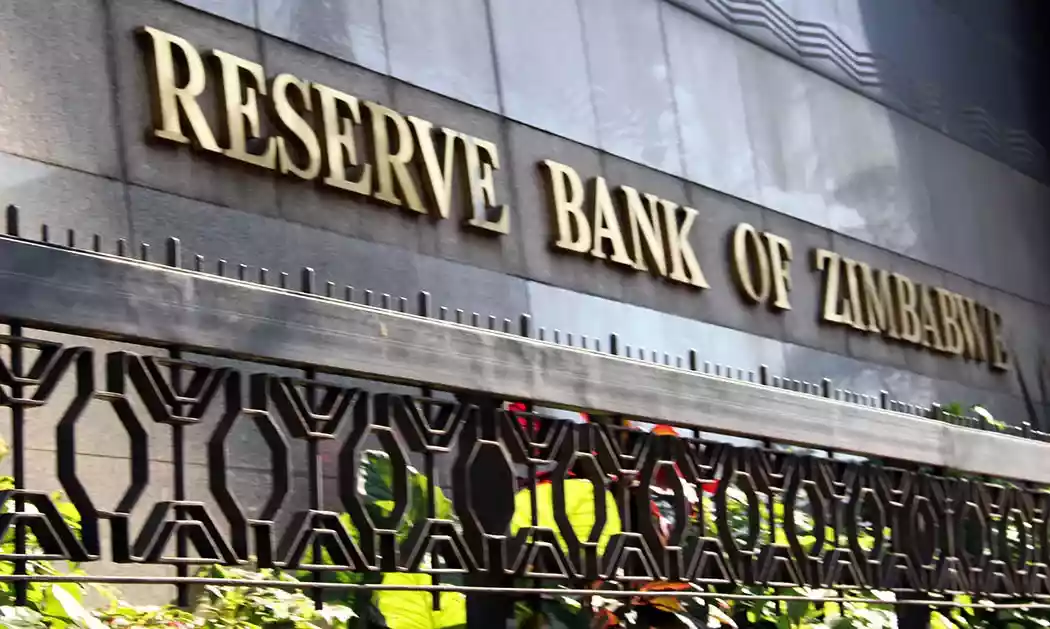
Suppliers, contractors to have access to forex: RBZ 

Source: Suppliers, contractors to have access to forex: RBZ -Newsday Zimbabwe THE Reserve Bank of Zimbabwe (RBZ) has assured companies that foreign currency will remain accessible even after the government announced it will pay contractors and suppliers exclusively in the Zimbabwe Gold (ZiG) currency. The move follows Treasury’s introduction of a National Standard Pricing List […]

The post Suppliers, contractors to have access to forex: RBZ  appeared first on Zimbabwe Situation.

Source: Suppliers, contractors to have access to forex: RBZ -Newsday Zimbabwe

THE Reserve Bank of Zimbabwe (RBZ) has assured companies that foreign currency will remain accessible even after the government announced it will pay contractors and suppliers exclusively in the Zimbabwe Gold (ZiG) currency.

The move follows Treasury’s introduction of a National Standard Pricing List for goods and services procured by ministries, departments and agencies, which also mandated local currency payments amid fears of fuelling the parallel market.

Treasury last week introduced benchmarked pricing for goods and services procured by ministries, departments and agencies, adding that it would solely pay in the Zimbabwe Gold (ZiG) currency amid fears this will fuel the parallel market if companies do not access the foreign currency using formal channels.

RBZ governor John Mushayavanhu welcomed the initiative, saying it promotes the use of ZiG and sets the stage for a transition to exclusive domestic currency usage.

“Providers of goods and services to the public sector that will receive payment in ZiG will have access to foreign currency on the willing-buyer, willing-seller interbank foreign exchange market for their bona fide import requirements,” he said.

Mushayavanhu highlighted the country’s strong foreign currency position, supported by US$16 billion in external receipts in 2025, which allows the Reserve Bank to meet legitimate foreign payment demands.

He said the strong performance guaranteed forex availability, citing the central bank’s consistent clearance of unmet demand in the market.

Mushayavanhu emphasised that the policy does not signal the end of Zimbabwe’s multi-currency system.

However, some economists have raised concern about unintended consequences.

“The payment in ZiG presents a huge problem if you need to import materials to supply the government. The parallel market is back as suppliers will look for USD elsewhere,” economist Vince Musewe told NewsDay.

He said while the introduction of a standard pricing framework could help to curb overpricing, its effectiveness would depend on how accurately it reflects market conditions.

“National Standard Pricing List is not a bad idea, given the tendency to overprice. However, I wonder if the prices are accurate. Suppliers will simply begin to reject government business and that’s another problem,” Musewe said.

“This policy will create another self-manufactured currency crisis because its effects have not been thought through once more.”

Economist Chenayimoyo Mutambasere noted significant risks.

“Suppliers, who rely on imported inputs, may struggle if they are paid in ZiG without reliable access to foreign currency, leading to inflated prices, reduced participation or low quality goods and services,” she said.

“Increased ZiG liquidity could also heighten volatility if recipients quickly convert to USD, putting pressure on the exchange rate.

“Ultimately, without strong policy credibility and consistent macroeconomic management, this measure may boost liquidity, but fail to deliver stability.”

The post Suppliers, contractors to have access to forex: RBZ  appeared first on Zimbabwe Situation.

Govt pushes consumer protection into classrooms

Source: Govt pushes consumer protection into classrooms -Newsday Zimbabwe THE government is set to introduce consumer rights education in schools through the national curriculum, aiming to ensure citizens understand their entitlements from an early age. The move comes as the government rolls out the Consumer Protection Policy and strengthens the Consumer Protection Commission (CPC) across […]

The post Govt pushes consumer protection into classrooms appeared first on Zimbabwe Situation.

Source: Govt pushes consumer protection into classrooms -Newsday Zimbabwe

THE government is set to introduce consumer rights education in schools through the national curriculum, aiming to ensure citizens understand their entitlements from an early age.

The move comes as the government rolls out the Consumer Protection Policy and strengthens the Consumer Protection Commission (CPC) across all provinces, signalling a broader push to empower consumers, curb counterfeit products and make consumer rights the cornerstone of public awareness.

Ahead of belated World Consumer Rights Day commemorations in Masvingo, Industry and Commerce minister Mangaliso Ndlovu said the government would work with the Primary and Secondary Education ministry to develop a curriculum that taught students about consumer rights. World Consumer Rights Day is celebrated on March 15.

“We will start working with the Ministry of Primary and Secondary Education to develop a curriculum so that students learn about these rights at school,” Ndlovu said.

“They do not need to be attending these workshops. This has to be a right that is entrenched in the curriculum.”

On product safety, Ndlovu said consumer protection started with manufacturers, who were legally obliged to ensure proper labelling and indication of expiry dates.

Retailers, in turn, have a responsibility to stock products only from registered manufacturers.

He warned against counterfeit products, describing counterfeiters as “free riders” who undermine genuine companies.

“When companies are investing in research and development, in product quality, they are registering with different quality standards to make sure that their products meet minimum standards,” Ndlovu said.

“Somebody will want to ride on the popularity of the product, on the investment that the manufacturer has made and simply come up with an imitation.

“This unfair competition over time will wear down the authentic company because it is facing unfair competition. Capacity utilisation comes down. But more importantly for us, these products will not be safe for consumers.”

Ndlovu urged consumers to exercise responsibility by checking products before purchase and helping to combat illicit trade.

He revealed that CPC is in all provinces and will receive vehicles by the end of the month to enhance its outreach programme.

Clarifying institutional roles, Ndlovu distinguished between CPC — a government body established under the 2019 Consumer Protection Act — and the Consumer Council of Zimbabwe (CCZ), which focuses on advocacy, arbitration and conciliation.

“The CCZ has been a voluntary organisation for more than 50 years, championing consumer rights,” he said, adding that with the CPC operational, the CCZ continues to play a vital role in arbitration and conciliation.

The post Govt pushes consumer protection into classrooms appeared first on Zimbabwe Situation.

‘2030 Bill public hearings cosmetic’ 

Source: ‘2030 Bill public hearings cosmetic’ -Newsday Zimbabwe ZIMBABWE’S civic society says the public hearings set to be held as Zanu PF forges ahead with Constitutional Amendment No 3 Bill are cosmetic. Last month, Parliament of Zimbabwe invited the public to submit comments on Constitutional Amendment No 3 Bill. In a notice, Parliament said it […]

The post ‘2030 Bill public hearings cosmetic’  appeared first on Zimbabwe Situation.

Source: ‘2030 Bill public hearings cosmetic’ -Newsday Zimbabwe

ZIMBABWE’S civic society says the public hearings set to be held as Zanu PF forges ahead with Constitutional Amendment No 3 Bill are cosmetic.

Last month, Parliament of Zimbabwe invited the public to submit comments on Constitutional Amendment No 3 Bill.

In a notice, Parliament said it was acting in line with section 328(4) of the Constitution, which requires lawmakers to seek public views on any proposed constitutional amendment.

Parliament said comments on the Bill should be submitted via email to the Clerk of Parliament at clerk@parlzim.gov.zw or delivered physically to Parliament Building in Mt Hampden, Harare, by May 15, 2026.

The public hearings are set for March 30 to April 2, 2026.

In a statement on Tuesday the Zimbabwe Constitutional Movement (Zicomo), a civil society network of institutions advocating for constitutionalism in Zimbabwe, noted with “serious concern” the recent invitation by Parliament of Zimbabwe for citizens to participate in the upcoming public hearings for the Constitutional Amendment Number 3 Bill of 2026.

“While Parliament is trying to be seen to be facilitating consultations, we argue that these public hearings are cosmetic, especially in the context that, in fact, Parliament ought to be facilitating a national referendum,” Zicomo said.

“Zicomo, in particular, highlights the following: The people fronting the Constitutional Amendment Bill No 3 argue that they need a two-thirds majority in Parliament since the Bill concerns changing term limits. But the same proponents are refusing Zimbabweans a referendum, arguing that Bill Number 3 does not ‘extend term limits’ — whichever wording is used.

“The sharp partisan nature of public discussions is striking. Supporters and allies of the amendment can easily hold meetings and public consultations, receiving significant coverage in the media.

“In contrast, those opposed to the Bill face serious repercussions, including warnings, intimidation, dispersal, arrests and physical violence. This hostile environment effectively denies Zimbabweans their rights.”

The organisation added: “The parliamentary public meetings list, assuming it is in good faith, falls far short of public consultations for such an important Bill.

“Allocating one meeting for Bulawayo and less than five for Harare province reveals their intention of putting partisan political interests above national interests.

“We raise concern about the incestuous precedent that this Parliament is setting by conducting public consultations on issues that would provide them with a direct and illegal benefit by extending their term of office from five years to seven.

“This proposal contradicts section 143(1), which states that ‘Parliament is elected for a five-year term that begins when the President-elect is sworn in and assumes office as outlined in section 94(1)(a)’.”

Zicomo said a more rational approach from the Speaker of National Assembly would have been to request the President to establish an independent commission to conduct this process impartially.

It urged Parliament to reconsider moving forward with the public hearings, as the foundation of the process appears to be flawed.

“We would like to remind the Speaker of [National Assembly], Jacob Mudenda, who also serves as the secretary-general of the ruling party, Zanu PF, to uphold the integrity of Parliament.

“Parliament must serve all Zimbabweans, regardless of political affiliation. Mixing the role of the Speaker with his private position as secretary-general of Zanu PF is inappropriate and unacceptable.

“The separation of the Speaker’s official duties from his role within Zanu PF is crucial, as Zimbabwe is a nation founded on collective rights and citizenship, while Zanu PF is a political party formed by voluntary membership.”

Zicomo called on President Emmerson Mnangagwa and his government to adhere strictly to the Constitution.

“We urge that the proposed amendments be put to a national referendum, allowing the voice of the people to be heard clearly and effectively, without fear or favour.

“Furthermore, we implore the government to ensure the safety and protection of all Zimbabweans who choose to participate in upcoming public hearings.

“Their ability to express their views freely and without fear is crucial to a genuine people-driven democratic process.

“Any deviation from this norm risks destabilising Zimbabwe.”

The civic society added to a growing list of Zimbabweans who are calling for Constitutional Amendment No 3 Bill to be subjected to a referendum, which Zanu PF is steering clear of to avoid a disappointing rejection.

Former military generals and war veterans have also voiced concern and  want the amendments to be subjected to a referendum.

However, both the government and Zanu PF maintain that there is no need for a referendum, arguing that the right to amend the charter rests solely with Parliament.

Commenting on X (formerly Twitter), the office of the Attorney-General said: “The Bill proposes amendments to certain provisions of the Constitution, including sections 92, 95, 143 and 158.

“These provisions relate primarily to the framework governing the timing and conduct of national elections.”

It said the proposed amendments were, therefore, directed at addressing issues relating to the national electoral cycle for the presidency, Parliament and local authorities.

“Under the current constitutional framework, the duration of the presidency and that of Parliament are linked through provisions that establish a harmonised electoral cycle.

“Section 95(2)(b) provides for the term of office of the presidency within the electoral cycle, while section 143(1) provides for the duration and dissolution of Parliament.

“These provisions operate together with section 158, which governs the timing of general elections.

“In practice, these sections collectively regulate the periodic conduct of harmonised elections.

“It is important to note that section 95(2)(b) does not deal with or alter the constitutional provisions relating to presidential term limits, which remain governed by other provisions of the Constitution.”

The Attorney-General’s office added: “The Bill proposes to amend section 95(2)(b) and section 143(1) by substituting the current five-year electoral cycle with a seven-year cycle, while maintaining the harmonised nature of elections for Parliament and local authorities as provided for under section 158.

“The Bill also contains transitional provisions to clarify the application of the proposed cycle in relation to the current electoral period.

“Accordingly, the proposed amendments should be understood in the context of the structure and timing of the national electoral cycle, rather than as amendments to provisions relating to presidential term limits.

“These amendments are not designed to benefit office bearers, but rather they reform institutions that automatically fall under the electoral cycle.”

The post ‘2030 Bill public hearings cosmetic’  appeared first on Zimbabwe Situation.

‘ZiG‑only pay will appreciate domestic currency’

Source: ‘ZiG‑only pay will appreciate domestic currency’ – herald Zvamaida Murwira Senior Reporter THE Government’s directive requiring suppliers to be paid exclusively in ZiG will result in the appreciation and firming of the domestic currency given that there will be more demand for it, Finance, Economic Development and Investment Promotion Minister Professor Mthuli Ncube has […]

The post ‘ZiG‑only pay will appreciate domestic currency’ appeared first on Zimbabwe Situation.

Source: ‘ZiG‑only pay will appreciate domestic currency’ – herald

Zvamaida Murwira

Senior Reporter

THE Government’s directive requiring suppliers to be paid exclusively in ZiG will result in the appreciation and firming of the domestic currency given that there will be more demand for it, Finance, Economic Development and Investment Promotion Minister Professor Mthuli Ncube has said.

Speaking during a post-Cabinet media briefing in Harare on Tuesday, Prof Ncube said exclusive payment of suppliers using ZiG under the National Standard Pricae List will not result in excess liquidity but will actually see the appreciation of the local unit, owing to a surge in demand.

He was responding to concerns about whether the policy directive would trigger exchange rate volatility as people rush to preserve value by buying foreign currency on the parallel market.

“What should happen is, if we are insisting that we pay out in ZiG, the economics dictate that the domestic currency should appreciate. What the public is worrying about, what other players are worrying about, is that they feel there is liquidity sloshing around, and therefore this will cause the currency to depreciate. But it can go the other way. It can also appreciate provided there’s a liquidity constraint,” said Prof Ncube.

“Once you have a liquidity constraint, a money supply constraint in ZiG, any demand for ZiG should see the price of ZiG appreciating, or rather the exchange rate appreciating.”

The minister said there is no excess liquidity in the market that could undermine the currency.

“I can assure you that there’s no excess liquidity sloshing around. We have effective instruments to mop up any excess liquidity, including NCDs (Negotiable Certificate of Deposits), higher interest rates and other almost open market operational instruments to deploy, to mop up any liquidity,” he said.

Negotiable Certificate of Deposits are designed to absorb surplus funds from the banking system, providing a secure, interest-bearing investment alternative for financial institutions while helping central banks manage liquidity and regulate money supply.

Prof Ncube said Government had to intervene by introducing a new pricing framework for exclusive payment in domestic currency for local suppliers after it noted that they were overpricing goods and services being procured in the public sector.

He said authorities analysed production costs of locally produced goods and came up with a price structure that must be complied with under the National Standard Price List, which will set reference prices for commonly procured goods and services.

“Finally, we have come up with a social standard price list. Why did we do that? The reason really is that we have noticed that there has been overpricing by suppliers to the Government for what Government consumes in terms of goods and services,” said Prof Ncube.

“So we decided to go out there and then analyse, research and then come up with this price list, which really says that if they are procuring pen or wallpaper or whatever locally, then that price should be within a specific range.”

The minister said the price list must be complied with, with anything above the specified range considered overpricing and rejected by the system.

The framework has been uploaded onto the e-procurement system that manages Government procurement, and is available on the ministry’s website.

Prof Ncube expressed satisfaction that the Reserve Bank of Zimbabwe has issued an accompanying statement, saying anyone wishing to source foreign currency for legitimate imports can approach their bank or the central bank.

“We have enough United States dollars to cover any demand for imports in ZiG. We have got $1.5 billion in reserves, in hard currency, including gold. We are able to cover the $400 billion in ZiG that is in circulation. So we have enough cover. There’s no reason to worry about any access to foreign currency,” he said.

Prof Ncube said the objective is to ensure order in Government procurement processes within reasonable price ranges to avoid overpayment.

“If we don’t overpay, then we will make sure there’s no over-contracting, then we won’t fall behind in terms of paying our contractors. And then we prefer, obviously, to pay in ZiG as a priority for locally sourced goods. If you are sourcing goods abroad, outside, because they can’t be found locally, we will pay in United States dollars for that,” he said.

The post ‘ZiG‑only pay will appreciate domestic currency’ appeared first on Zimbabwe Situation.