Editorial Comment: Let’s fill the gap in civil protection

Source: Editorial Comment: Let’s fill the gap in civil protection | The Herald March 19, 2019 Rescue operation . . . Members of the Zimbabwe National Army assist in efforts to pull out a bus (out of the picture) which was stuck at Rutengeni, Tanganda, near Chipinge, after the road was severely damaged by Cyclone […]

The post Editorial Comment: Let’s fill the gap in civil protection appeared first on Zimbabwe Situation.

Source: Editorial Comment: Let’s fill the gap in civil protection | The Herald March 19, 2019

Editorial Comment: Let’s fill the gap in civil protection
Rescue operation . . . Members of the Zimbabwe National Army assist in efforts to pull out a bus (out of the picture) which was stuck at Rutengeni, Tanganda, near Chipinge, after the road was severely damaged by Cyclone Idai-induced rains.

Zimbabwe is not often hit by cyclones, but when they do move this far inland they can cause more deaths and destruction than they should, largely because their rarity makes communities complacent and knowledge is forgotten.

The Civil Protection Units are far more knowledgeable and a lot of effort is put into making sure they can do their job properly. But getting the message through right down the line, especially to communities that have never experienced a bad cyclone or bad flood, is difficult along with the normal reluctance of any family to leave home because “it won’t be that bad”.

Yet with the modern communications now readily available, and the established infrastructure such as schools that can be used as shelters in an emergency, there is no reason for us to see more than 70 people killed next time a cyclone hits.

Almost all those killed by Cyclone Idai drowned or were buried in under mudslides, the heavy rains round the eye of cyclone causing far more damage than the wind. The resulting floods were worse than most communities, even those in areas prone to flooding, have experienced for years.

We need to get the generally good planning at provincial and district level right down to village level, for a start, so at least someone in each village knows what to do. And we need to back this up with clear orders and directions in the few hours we have between confirmation that a cyclone is headed into a particular area and the time it actually hits.

Everyone now knows that the big secret is evacuating vulnerable communities or families. In areas with frequent hurricanes, typhoons or cyclones there is now a well-oiled machinery for evacuation.

For example in the US, the governors of the states along the Caribbean and Atlantic coasts have been given enormous emergency powers to order the evacuation of wide swathes of their states and can even use their state national guard troops, who have been automatically mobilised as the hurricane approaches, to enforce those orders.

But from bitter experience most people are ready to move, if upset about doing so, and obey orders and go to their assigned shelters. Some coastal communities with memories of the last time have even installed sirens and run drills.

We can easily do the same. Around the world the favourite shelter is a local school. This is because most schools are built to approved standards, are not built in places subjected to flooding and have basic sanitation facilities that can cope with hundreds of people. Indeed, they are ready made for evacuees for the couple of days they need to stay away from home.

Not everyone needs to be evacuated in most parts of Zimbabwe in the path of a cyclone. Indeed for the majority the best advice is stay put, but if they live in an area likely to be flooded, or likely to be engulfed by mud, they need to be moved before the flood or the mudslide. This might well require more detailed surveys of communities and even where people are building where they should not be, they must still be identified and given advice.

We noticed that the authorities went beyond radio this time and involved the mobile phone companies in sending advice and messages. Obviously the phone companies are willing to co-operate and we think far more can be made of this system, with orders to selected communities to evacuate or careful instructions to everyone in Chimanimani say, who lives within 100m of a river, to move out.

Hardly anyone in Zimbabwe now lives more than 5km from a school and most are much closer, so evacuation centres exist. Such specific instructions can go out with the more general advice not to cross flooded rivers and the like.

At the same time more needs to be done to prepare even the smallest community to cope when it is cut off and facing near disaster. And to our mind this is perhaps the biggest gap in our civil protection system. Those with the knowledge are not always where that knowledge needs to be applied urgently.

Here a lot of use can be made of local leadership, both traditional and elected, along with that network of overworked, but competent mature administrators, the school heads. Everyone, for example, at some time during a year visits the local school and many do that more frequently.

It should not be difficult for a suitable expert to be available to give a brief talk at sports days, speech day and the like on disaster preparedness. It might be a bit boring on a sunny afternoon, but the message will hopefully be remembered when the river floods.

And headmen and elected councillors should be able to create a network of suitable volunteers who can attend a day-long course on what to do and who they should phone. Modern communications mean that no community needs to be isolated, but the person reporting in and seeking help needs to know who to phone and what to report.

And just as important there would be someone whom the district authorities can phone when there is a cyclone or flood warning. If there is at least one person in every community with the required knowledge then it is relatively easy in those few hours before the storm hits or the river floods to get the word out, track down the most vulnerable and ensure everyone is either secure in their own home or has been moved to shelter if that home is likely to be washed away or buried.

The re-opening of roads and bridges, the movement of food aid, the repairs to essential services are probably a lot better organised these days, and we expect the damage from Cyclone Idai to be repaired at speed. But the one lesson we must learn is that not every person and not every community hit by the cyclone knew what to do. That gap now needs filling. It will not be easy, considering human nature, but it must be done.

The post Editorial Comment: Let’s fill the gap in civil protection appeared first on Zimbabwe Situation.
Cyclone damages fuel control room in Beira

Source: Cyclone damages fuel control room in Beira | The Herald March 19, 2019 Minister Gumbo Felex Share Senior Reporter Cyclone Idai, which has left a trail of destruction in Zimbabwe, Mozambique and Malawi, damaged the Companhiado De Pipeline Mozambique-Zimbabwe (CPMZ) control room at Beira in Mozambique last week, affecting the pumping of fuel and […]

The post Cyclone damages fuel control room in Beira appeared first on Zimbabwe Situation.

Source: Cyclone damages fuel control room in Beira | The Herald March 19, 2019

Cyclone damages fuel control room in Beira
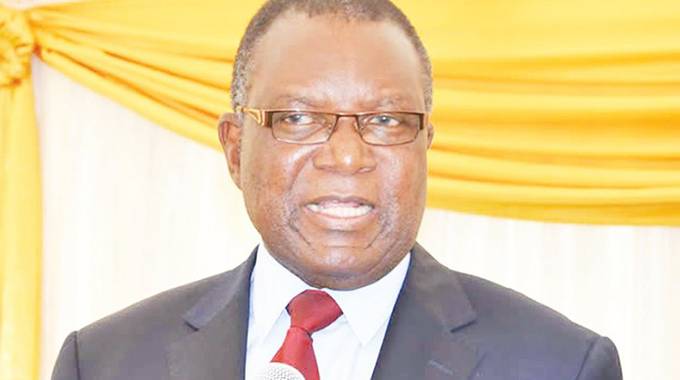
Minister Gumbo

Felex Share Senior Reporter
Cyclone Idai, which has left a trail of destruction in Zimbabwe, Mozambique and Malawi, damaged the Companhiado De Pipeline Mozambique-Zimbabwe (CPMZ) control room at Beira in Mozambique last week, affecting the pumping of fuel and natural gas to Feruka Oil Refinery in Mutare.

Mozambique’s CPMZ controls the pipeline from Beira to Feruka in Mutare.

Officials have been having difficulties in communication since last Thursday and no fuel has been pumped since then.

Energy and Power Development Dr Joram Gumbo confirmed the development, but said Zimbabwe had enough fuel stocks despite the challenges.

He said officials from his ministry, led by secretary Engineer Gloria Magombo had visited the affected area.

“I understand that the control room at Beira was affected and pumping of fuel and natural gas was in turn affected,” Minister Gumbo said.

“We, however, have enough stocks in the country and I am told the repairs at Beira may take a week.”

Minister Gumbo added: “I can comment further after getting a briefing from the ministry officials who are on the ground.”

A source in Mutare said there has been no communication amongst officials since last Thursday.

“The control room was damaged and was filled with water and this made communication difficult between officials in Mutare and Beira,” said the source.

“They have been pumping fuel since last Thursday, but we are glad something is being done to rectify the problem given the importance of fuel.”

The bulk of fuel consumed in Zimbabwe is transported into the country via Mozambique’s CPMZ Holdings operated pipeline from Beira to Feruka in Mutare and further via Government-owned Feruka Oil Pipeline to storage tanks in Mabvuku and Msasa.

Over 100 people have died from Cyclone Idai while others are still missing.

The deaths, mostly due to drowning and injuries sustained during mudslides, have been recorded in Manicaland, Masvingo and Mashonaland East.

Homes, schools, businesses, hospitals and police stations have been destroyed.

Roads have been washed away and thousands are stranded due to heavy flooding.

The post Cyclone damages fuel control room in Beira appeared first on Zimbabwe Situation.

Zimbabwe to host UAE, travel to Netherlands

United Arab Emirates will play four ODIs in Zimbabwe in April, while Netherlands will host Zimbabwe for a pair of ODI and T20I series in June. Source: Zimbabwe to host UAE, travel to Netherlands United Arab Emirates will play four ODIs in Zimbabwe in April, while Netherlands will host Zimbabwe for a pair of ODI […]

The post Zimbabwe to host UAE, travel to Netherlands appeared first on Zimbabwe Situation.

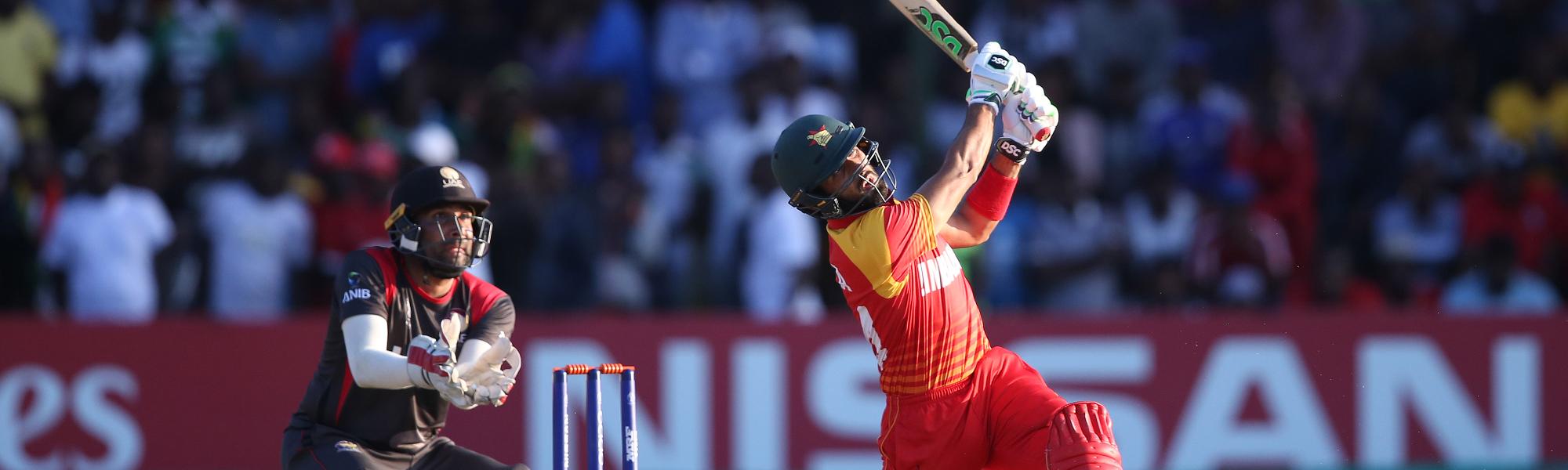
United Arab Emirates will play four ODIs in Zimbabwe in April, while Netherlands will host Zimbabwe for a pair of ODI and T20I series in June.

Source: Zimbabwe to host UAE, travel to Netherlands

United Arab Emirates will play four ODIs in Zimbabwe in April, while Netherlands will host Zimbabwe for a pair of ODI and T20I series in June.

The visit of UAE will replace the cancelled five-match ODI series Afghanistan were set to play in the country in April. The series against UAE will start on 10 April and finish on 16 April.

Zimbabwe will then head to the Netherlands in June, where they will play two ODIs on 19 and 21 June and two T20Is on 23 and 25 June. They will then take on Ireland in a previously announced set of matches.

The post Zimbabwe to host UAE, travel to Netherlands appeared first on Zimbabwe Situation.

So Sad! Madzibaba Masango’s 3 children and relative perish in horror road accident along Mutare road

JOHANNE Masowe Kubata kweVapostori Faith church leader Madzibaba Strive Masango lost ALL three children and a relative in a road traffic accident on Saturday. The children – two girls and a boy – aged 10, five and two. Burial for the four is set for Mt…

JOHANNE Masowe Kubata kweVapostori Faith church leader Madzibaba Strive Masango lost ALL three children and a relative in a road traffic accident on Saturday. The children – two girls and a boy – aged 10, five and two. Burial for the four is set for Mt Darwin today. Madzibaba Masango’s wife – Chipo Mapako – […]

A month of the RTGS: Zimbabwe finance minister says so far so good with new currency

After years of economic swings, the government has a plan to steady the ship Source: A month of the RTGS: Zimbabwe finance minister says so far so good with new currency – The National Just under a month ago, Zimbabwe launched a new pricing system that some – but not the government – are calling […]

The post A month of the RTGS: Zimbabwe finance minister says so far so good with new currency appeared first on Zimbabwe Situation.

After years of economic swings, the government has a plan to steady the ship

Source: A month of the RTGS: Zimbabwe finance minister says so far so good with new currency – The National

Abu Dhabi, March 17, 2019. Interview with the President of Zimbabwe, Emmerson Mnangagwa. Victor Besa/The National

Just under a month ago, Zimbabwe launched a new pricing system that some – but not the government – are calling a currency.

It is part of a plan by Zimbabwe’s new president, Emmerson Mnangagwa, as he seeks to open up the economy to international investment and remove the barriers to doing business after two decades of stagnation and hyperinflation.

“We should put a situation where anyone looking at country ‘B’ and looking at country ‘A’ and looking at Zimbabwe will say no, no I must go to Zimbabwe, things are better, things have changed, this is what we are going to do,” he told The National during a visit to the UAE.

Asked how the new mechanism – officially called the RTGS dollar – fits into this plan, the president invited Finance Minister Mthuli Ncube, who was sitting nearby, to give a comprehensive answer.

He described the move as the culmination of a months-long process to “resolve our currency’s former issues”.

“This is the kind of journey we need to go through to restore the full value of our currency and show investors that we are a normal economy,” he said.

“What it has done is a few things,” Mr Ncube said. “It has restored full monetary policy as a tool to support and work along with fiscal policy – we can now set interest rates, we can now target reserve money, we can now use it as a tool for managing inflation rate exceptions.”

For years, the Zimbabwe dollar was pegged to the US dollar at an exchange rate of 1 to 1. But when inflation peaked in 2009 at 231 million per cent, with prices doubling daily, the government threw out its cash with its famous 100 trillion dollar note in favour of the greenback.

But more US dollars were leaving Zimbabwe than entering and long queues at banks were not uncommon. Attempts to return to some form of local currency were largely unsuccessful and met with distrust.

In the absence of a national currency and with US dollars in short supply, many in Zimbabwe began using numerous foreign currencies, debit cards and – increasingly – money stored on mobile apps.

But this led to prices appearing in numerous currencies, often at different rates depending on the payment method.

The RTGS, an acronym for Real Time Gross Settlement, is an attempt to set a unified price for all methods of payment. But crucially, it is not a physical currency and exists solely on screens.

The RTGS dollar will have a floating exchange rate rather than being pegged.

Mr Ncube said the benefit is that “above all we now have market-determined value for assets in Zimbabwe, we will also improve access to foreign currency because now you can get it at a market price.”

And three weeks in, the finance minister said it has been “so far so good.”

Mr Ncubeexplained that now launched, the administration was staying out of the way to “make sure that we don’t, as a government, distort the market”.

He said they have plans to set up a monetary policy committee to set interest rates and strengthen the reserve bank’s role as the lender of last resort for the country’s banks.

In the long run, he explained, the government may even be able to issue a physical money equivalent to the currently electronic RTGS dollar.

“This is the kind of journey we need to go through to restore the full value of our currency and show investors that we are a normal economy and their value is protected,” Mr Ncube said.

The post A month of the RTGS: Zimbabwe finance minister says so far so good with new currency appeared first on Zimbabwe Situation.