Andy Muridzo double-crosses new yellowbone wife? … Angry fans pelt his band members with beer cans

. . . band members attacked on stage . . . denies double crossing new wife Afro-fusion musician Andy Muridzo abandoned his show in Nyabira last weekend after organisers reportedly failed to meet his expectations. It is said Muridzo only played two song…

. . . band members attacked on stage . . . denies double crossing new wife Afro-fusion musician Andy Muridzo abandoned his show in Nyabira last weekend after organisers reportedly failed to meet his expectations. It is said Muridzo only played two songs before he left the stage, raising the ire of fans who pelted […]

Russian diamond miner Alrosa wants controlling stake to mine in Zimbabwe

Source: Russian diamond miner Alrosa wants controlling stake to mine in Zimbabwe | Reuters LONDON (Reuters) – Russian state-controlled miner Alrosa will assess the quality of Zimbabwe’s diamond reserves over the next six months but would only start mining if it can take a majority stake in such a project, the company’s chief executive said […]

The post Russian diamond miner Alrosa wants controlling stake to mine in Zimbabwe appeared first on Zimbabwe Situation.

Source: Russian diamond miner Alrosa wants controlling stake to mine in Zimbabwe | Reuters

Zimbabwe’s President Emmerson Mnangagwa delivers a speech as he visits an office of Russian diamond producer Alrosa, with Alrosa CEO Sergei Ivanov seen nearby, in Moscow, Russia January 14, 2019. REUTERS/Maxim Shemetov

LONDON (Reuters) – Russian state-controlled miner Alrosa will assess the quality of Zimbabwe’s diamond reserves over the next six months but would only start mining if it can take a majority stake in such a project, the company’s chief executive said on Monday.

Zimbabwe is seeking to attract investment and has scrapped legislation that restricts foreign participation for some commodities. It has yet to do so for diamonds and platinum but has said that it will.

“Of course we’ll only be ready to participate in projects in cases where we can have management control and operational control of the assets,” Alrosa CEO Sergey Ivanov told Reuters.

That would mean a stake of at least 51 percent, he said, adding that he would be confident of achieving that if it gets to the stage of detailed discussions on how to advance a project.

Russia, along with China, has been a political ally of Zimbabwe since the days of its independence war against British rule, and this year Zimbabwe selected Alrosa and China’s Anjin Investments to partner its state diamond company.

Alrosa, the biggest diamond producer by volume, as well as Anglo American’s De Beers, the biggest in value terms, both say supply will shrink in the coming years as mines, such as Rio Tinto’s Argyle project, become depleted.

Laboratory-grown diamonds will add some supply. But Alrosa, like De Beers, says man-made stones are a separate market and have no re-sale value, in contrast to natural gems.

De Beers last year began marketing laboratory diamonds as jewellery for the first time, but Ivanov said that Alrosa has no interest in following suit.

The company is, however, expanding in Africa, where Zimbabwe and Angola remain under-explored.

Last year Alrosa said it was increasing its stake in Angola and Ivanov expects a deal to increase Alrosa’s stake in Angola, first flagged last year, will close “in the near future”. Alrosa and the Angolan government would each have a 41 percent stake, with the rest held by Chinese investors.

Ivanov said stake size is not the only consideration and in Angola the company has reached agreement on corporate governance, transparency and has established an advisory board.

Alrosa is also protecting itself against the impact of U.S. sanctions by building trading infrastructure to allow transactions in currencies other than dollars, amounting to “a couple of percent” of its business.

He said it would not be rational to switch totally from dollars because that could disort the market.

“But in case there’s some geopolitical escalation, we should be able to switch to other currencies,” he said, citing Indian rupees, Chinese RMB and euros.

The post Russian diamond miner Alrosa wants controlling stake to mine in Zimbabwe appeared first on Zimbabwe Situation.

Tropical Cyclone Leaves Ruin Across Mozambique, Malawi And Zimbabwe

Source: Tropical Cyclone Leaves Ruin Across Mozambique, Malawi And Zimbabwe – Nation & World News A powerful cyclone that tore through Mozambique, Malawi and Zimbabwe this past week has destroyed roads, bridges and homes and left more than 200 people dead and tens of thousands displaced across the affected region. About 1.5 million people in […]

The post Tropical Cyclone Leaves Ruin Across Mozambique, Malawi And Zimbabwe appeared first on Zimbabwe Situation.

Source: Tropical Cyclone Leaves Ruin Across Mozambique, Malawi And Zimbabwe – Nation & World News

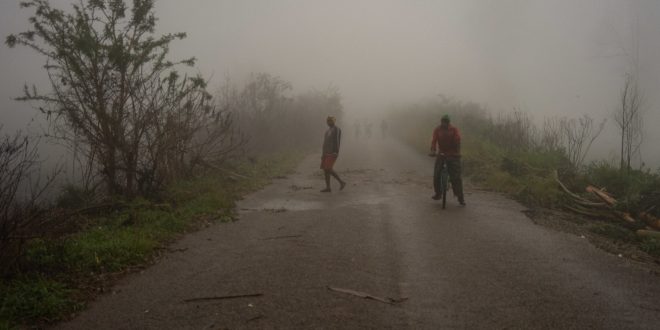
A powerful cyclone that tore through Mozambique, Malawi and Zimbabwe this past week has destroyed roads, bridges and homes and left more than 200 people dead and tens of thousands displaced across the affected region.

About 1.5 million people in total have been affected by Cyclone Idai’s torrential rains and winds that have reached speeds of up to 200 kilometers, or 124 miles, per hour, according to the United Nations.

The tropical cyclone made landfall Thursday near the coastal city of Beira, Mozambique, which lost electricity and communications in the storm. The cyclone weakened as it moved into eastern Zimbabwe, Ish Mafundikwa reports for NPR. Nonetheless, it remained powerful enough to wipe out infrastructure and homes, leaving many people stranded in inaccessible regions in the country’s eastern highlands.

The U.N. reported last week that 122 people had died in Mozambique and Malawi prior to Cyclone Ida’s landfall as a result of flooding caused by the tropical cyclone’s weather system. At least 48 more died after the storm made landfall, the U.N. said citing unverified media reports.

Mozambique’s President Filipe Nyusi said Monday that 84 had been confirmed dead in the country. Speaking on Radio Mocambique, Nyusi said that the scale of the disaster is “huge” and expressed fears that the death toll could rise to around 1,000.

Joshua Sacco, a member of parliament in Zimbabwe, told local media that officials did not have an accurate count of the missing, indicating that death toll reports could increase.

Pictures and video on social media showed roofs torn off buildings and extensive flooding strong enough to sweep along a large car.

Some of the storm’s effects could be felt as far inland as Harare, the nation’s capital city, some 200 miles from the border. Zimbabwe’s president, Emmerson Mnangagwa, declared a state of disaster in affected areas and shortened a visit to the United Arab Emirates, according to Zimbabwe’s Ministry of Information.

Karikoga Kutadzaushe, operations director for the Zimbabwe Red Cross, told the South African Broadcasting Corporation that the situation is “quite dire” in the country’s eastern highlands.

“The immediate needs for people is shelter … because most people have been displaced,” he said. “There is need for food. There is also need for medicals for those who have been injured.”

Two boarding school students were among those killed in eastern Zimbabwe, according to Kutadzaushe. He says they died after a boulder rolled into their dormitory.

Many of those displaced are being housed temporarily at higher ground, including in schools and churches. One hotel in Chimanimani, a mountainous area near the eastern border that was hit particularly hard by the cyclone, is sheltering more than 300 people whose homes have been destroyed, an employee told Mafundikwa.

Rescue efforts were hampered by flash floods and bridges that had been destroyed, Kutadzaushe says. By Sunday, the winds and rain had eased and visibility had improved, allowing Zimbabwe’s air force to ferry some of the injured for medical care, the country’s Ministry of Information reported.

The full extent of the devastation is unclear but will include damage to crops, water supply destruction and increased risk of gender-based violence, according to the U.N.

The post Tropical Cyclone Leaves Ruin Across Mozambique, Malawi And Zimbabwe appeared first on Zimbabwe Situation.

UPDATED: Govt avails $50m for Idai 

Source: UPDATED: Govt avails $50m for Idai | The Herald March 19, 2019 Mr Guvamatanga Tendai Mugabe Senior Reporter Government will disburse $50 million to assist victims of Cyclone Idai and restore infrastructure destroyed by the disaster, with the timely return of President Mnangagwa from his trip to the United Arab Emirates providing the much-needed […]

The post UPDATED: Govt avails $50m for Idai  appeared first on Zimbabwe Situation.

Source: UPDATED: Govt avails $50m for Idai | The Herald March 19, 2019

UPDATED: Govt avails $50m for Idai
Mr Guvamatanga

Tendai Mugabe Senior Reporter
Government will disburse $50 million to assist victims of Cyclone Idai and restore infrastructure destroyed by the disaster, with the timely return of President Mnangagwa from his trip to the United Arab Emirates providing the much-needed resources to rescue efforts after the buffeting disaster that has claimed close to 100 people.

The money will be disbursed to key Government departments to aid the inter-agency response.

In a letter addressed to the Secretary for Local Government, Public Works and National Housing, Mr George Magosvongwe, his Finance and Economic Development counterpart Mr George Guvamatanga confirmed the disbursement.

“In the aftermaths of Cyclone Idai, key infrastructure in Manicaland and Masvingo provinces has been severely damaged and affected families require urgent assistance in the form of medical supporting, clothing and food among other needs,” reads part of the letter.

“We note that Government, through the Department of Civil Protection (DCP), is already on the ground to determine urgent interventions needed to save lives and provide immediate relief for the affected citizens.

“To facilitate work on the ground, Treasury is disbursing $50 million for emergency work and restoration works being undertaken by implementing agencies on the ground.”

He said $20 million is ready for disbursement for immediate use by the DCP. The Department of Roads will get $25 million for trunk roads and bridges that were washed away and other structures while $3 million will be disbursed for operational expenditures for emergency and recovery works by the DCP.

Another $7,2 million was allocated to the District Development Fund for rural feeder roads and $4 million was given to the education sector for reconstruction of destroyed school infrastructure.

The Ministry of Health and Child Care will get $3 million for medical supplies and establishment of mobile clinics and another $2 million will go towards drilling and rehabilitation of boreholes.

The Zimbabwe National Water Authority and ZETDC got a combined $5,8 million for rehabilitation of water supply infrastructure and restoration of electricity transmission and distribution infrastructure.

At 98 deaths have so far been confirmed.

“With regards to basic necessities, such as blankets, clothing and food, the Accountant-General and Zimra are working out modalities of ensuring that current stocks of forfeited goods become available to the families in need. Your officials will need to liase with the Accountant-General on the requirements and modalities of distribution.

“Our team of officials led by Mr B. Mupuriri, the director implementation and monitoring department, will be in Manicaland to provide immediate assistance in the recovery efforts,” said Mr Guvamatanga.

The post UPDATED: Govt avails $50m for Idai  appeared first on Zimbabwe Situation.

‘Effective policy vital to counter transmittable diseases’ 

Source: ‘Effective policy vital to counter transmittable diseases’ – NewsDay Zimbabwe March 18, 2019 BY TONDERAYI MATONHO While Trans-frontier Conservation Areas (TFCAs), which re-established the movement of wildlife within larger landscapes, minus fencing, are a welcome concept in recent years in boosting economic development and biodiversity conservation, the absence of a formal policy on animal […]

The post ‘Effective policy vital to counter transmittable diseases’  appeared first on Zimbabwe Situation.

Source: ‘Effective policy vital to counter transmittable diseases’ – NewsDay Zimbabwe March 18, 2019

BY TONDERAYI MATONHO

While Trans-frontier Conservation Areas (TFCAs), which re-established the movement of wildlife within larger landscapes, minus fencing, are a welcome concept in recent years in boosting economic development and biodiversity conservation, the absence of a formal policy on animal disease control has negative impacts on public health, agriculture, commerce and even conservation itself, experts say.

“Lack of a formal policy on animal disease control is a major problem arising from TFCAs and may be a factor for massive loss of domestic animals especially with reference to Zimbabwe”, said Steve Kasere, a seasoned wildlife management expert, in an interview recently.

TFCAs were also intended to facilitate effective and coordinated management of wildlife by stakeholders in respective countries concerned, especially countries in southern Africa.

However, Kasere noted that it remains to be seen whether this coordination is possible given different economic challenges facing different countries involved and absence of a formal policy.

“For TFCAs to work, each of the countries must contribute effectively towards anti-poaching activities in their respective boundaries,” he said.

“With little benefits accruing to communities, herds of domestic animals have more frequent contact with wildlife and people leading to easy transmission of animal-to-animal diseases”, he added.

Furthermore, he pointed out that: “TFCAs offer growth in tourism but unfortunately, rural communities are still not benefiting much considering that the tourism ventures are capital-oriented and therefore tend to benefit investors of capital rather than communities.

“In other words, benefit-sharing ratios make a mockery of community participation in the projects since income accruing to individual households are so insignificant if any.

“They should be more people-centered rather than being wildlife and capital-centred”, he said.

With TFCAs in place, wildlife, domestic animals and people are coming into unprecedented contact. The recent threat of transmittable diseases like foot-and-mouth, must be urgently addressed, experts urge. Other transmittable diseases include malaria, anthrax and trypanosomiasis (nagana — sleeping sickness of cattle) play a significant role in the overall development within TFCAs.

“When it comes to animal health programmes and policies in trans-boundary landscapes where domestic as well as wild animals cross international borders, being timeous with the right decisions becomes even more critical”, said Willie Nduku, a conservation expert in a recent interview.

“There is trade expansion throughout the region (SADC), the Common Market for Eastern and Southern Africa and rapid globalization, causing these issues to increasingly affect the development dimensions of many African countries.

“Against all this, there is still no formal policy on animal health and disease control for the trans-frontier conservation areas still under development”, he noted.

Examples of TFCAs in the region include, the Great Limpopo Trans-frontier zone, encompassing the Kruger National Park (South Africa), Gonarezhou National Park in both Zimbabwe and Mozambique, to the south-east, Mana-Pools National Park along the Zambezi River on both sides of Zimbabwe and Zambia and Chobe Wildlife Enclave, covering Botswana, Namibia and Zimbabwe.

Recently, Botswana authorities had to shoot a sizeable number of Zimbabwean cattle on sight which had crossed the other side of the boarder, fearing transmission of the dreaded foot-and-mouth disease. The Animal Health for the Environment and Development (AHEAD) initiative, also notes that the management of wildlife and livestock diseases, including zoonoses, bovine tuberculosis and rabies that can be transmitted between animals and people within larger landscapes, remain unresolved and is an issue of major concern for livestock production, export markets and public health.

“With the recent rapid growth in global tourism, the trans- boundary management of natural resources, particularly wildlife, has become a major focus of attention in southern Africa”, notes a recent statement from AHEAD under the auspices of the World Conservation Union.

“Whatever the potential of wildlife-based tourism to generate wealth in such areas, the current reality is that small-scale agro-pastoralists living in adjacent communal lands depend on livestock for their livelihoods,” it further notes.

Nduku said the need to balance livelihoods of agro-pastoralists and environmental security with the development of alternative land uses provide a complex set of development issues.

“In such cases, an integrated approach offers the most promising way to address these issues, one in which the well-being of wildlife and ecosystems, domestic animals and local people are assessed holistically, through a ‘one health’ lens”, he said.

Charlene Hewitt, another conservation expert now based in Victoria Falls, said: “One could argue that the extensive fencing that has separated wildlife and livestock since the late 1950s has in many ways been the simplest approach to minimizing disease problems.

“However, this fencing blocked key migratory pathways that wildlife have used for thousands of years in times of thirst and hunger”, she said.

In addition, she pointed out that conservationists are understandably excited about the possibility of more land for wildlife and benefits linked to sound stewardship of biodiversity.

“However, this excitement should be tampered by the fact that much remains unknown as the TFCA initiative should proceed with caution in the face of ecosystems and processes that are not fully understood”, she said.

Furthermore, experts assert that wildlife corridors, for example, can serve not only as biological bridges for wildlife, but also for vectors and the pathogens they carry. Thorough assessments of disease risks should be made before hand in areas that may have developed different types of pathogen or parasite loads over time to avoid spreading.

Through AHEAD , veterinarians, ecologists, biologists, social and economic scientists, agriculturalists, wildlife managers, public health specialists and others from across eastern and southern Africa, have been constantly brought together to share ideas on how wildlife conservation and development could be mutually reinforcing.

“The need for a holistic approach could not be more urgent. In parts of southern Africa, boundary fences have already come down, allowing wildlife and livestock access to areas and to each other for the first time in decades”, notes AHEAD.

However, while this represents a potential milestone for conservation and the nature-based tourism revenues it supports, it also demands a closer look.

“What effects are these trans-frontier areas having on the health and sustainability of wildlife, domestic animals and human communities”? queried Nduku.

“Whether looking at a large, complex land-use matrix such as a TFCA or at a small, isolated protected area surrounded by human activities, these issues merit more attention than either the conservation or development communities have given them to date”, he noted.

With a formal policy in place, southern African TFCAs could provide excellent models within which to study and mitigate the political and social tensions between biodiversity conservation and livestock agriculture in the broader region. In doing so, will effectively be critical to successful, sustained biodiversity conservation, public health and agri-biosecurity.

The post ‘Effective policy vital to counter transmittable diseases’  appeared first on Zimbabwe Situation.