Econet’s AI Expansion Drives Strong Growth Prospects as Analysts See Significant Share Price Upside

HARARE – Zimbabwe’s largest telecommunications company, Econet Wireless Zimbabwe, could see its share price almost double over the next year as its aggressive investment in artificial intelligence (AI), digital services and network infrastructure strengthens its long-term growth outlook, according to a new equity research report. Investment research firm IH Securities has maintained an “undervalued” recommendation […]

The post Econet’s AI Expansion Drives Strong Growth Prospects as Analysts See Significant Share Price Upside appeared first on The Zimbabwe Mail.

HARARE – Zimbabwe’s largest telecommunications company, Econet Wireless Zimbabwe, could see its share price almost double over the next year as its aggressive investment in artificial intelligence (AI), digital services and network infrastructure strengthens its long-term growth outlook, according to a new equity research report.

Investment research firm IH Securities has maintained an “undervalued” recommendation on the telecoms giant, assigning a 12-month target price of US$0.96 per share, compared with its current over-the-counter (OTC) reference price of US$0.50 following the company’s voluntary delisting from the Zimbabwe Stock Exchange.

The brokerage estimates that the valuation implies an upside of approximately 91 percent, arguing that the current market price reflects the liquidity constraints and pricing inefficiencies associated with Zimbabwe’s OTC market rather than any deterioration in Econet’s underlying business performance.

IH Securities said it had refined its valuation model to place greater emphasis on the company’s intrinsic cash-generating ability, citing confidence in the sustainability of future earnings and cash flows.

The positive outlook follows another year of robust financial performance by the telecommunications operator.

For the financial year ended 28 February 2026, Econet reported revenue of US$1.1 billion, representing a 23 percent increase from the previous year, supported by continued growth across mobile connectivity, broadband data services and digital financial services.

Profitability improved even more sharply, with net profit attributable to shareholders rising 142 percent to US$229 million, largely driven by lower exchange-related losses and improved operational efficiencies. Earnings before interest, tax, depreciation and amortisation (EBITDA) increased to US$459 million, translating into an EBITDA margin of 40.6 percent, highlighting the company’s strong cash generation.

Analysts believe the company’s strategic evolution beyond conventional telecommunications is becoming an increasingly important investment theme.

Econet has accelerated investments aimed at transforming itself into an AI-enabled digital services business, positioning artificial intelligence alongside connectivity as a future driver of revenue growth. The strategy is expected to enhance customer experience, improve operational efficiency and support the development of new digital products and enterprise solutions.

The transformation has been accompanied by continued expansion of network infrastructure.

During the reporting period, Econet commissioned 200 additional base stations, including 95 fifth-generation (5G) sites, significantly increasing network capacity and extending coverage across the country. The investment helped accommodate surging demand for digital connectivity, with mobile data traffic doubling during the year while voice traffic expanded by 35 percent.

The company’s fintech ecosystem also continued to strengthen, with EcoCash Holdings Zimbabwe benefiting from rising transaction volumes, an expanding customer base and ongoing technology upgrades. The introduction of additional digital financial products and financial inclusion initiatives further reinforced the platform’s position within Zimbabwe’s rapidly evolving digital payments landscape.

Data and internet services remained Econet’s largest source of revenue, contributing 41.6 percent of total turnover, followed by airtime sales at 28.3 percent and mobile money services at 11.2 percent, underscoring the company’s ongoing transition towards higher-value digital revenue streams.

Looking ahead, IH Securities forecasts continued earnings momentum.

The brokerage expects revenue to increase by 13.5 percent to approximately US$1.28 billion during the current financial year, supported by sustained growth in mobile data consumption, increased adoption of digital financial services and the commercial rollout of AI-enabled products.

EBITDA is projected to reach US$552 million, with operating margins improving to 43 percent, while net profit is forecast to rise to US$329 million as productivity gains continue and foreign exchange-related losses remain contained.

Analysts also highlighted Econet’s commanding competitive position within Zimbabwe’s telecommunications industry as a major long-term advantage.

According to the latest market statistics from the Postal and Telecommunications Regulatory Authority of Zimbabwe, the company controls approximately 73.75 percent of the country’s active mobile subscriptions, maintaining a dominant lead over its competitors and providing a strong platform from which to expand its AI, digital connectivity and financial services businesses.

The post Econet’s AI Expansion Drives Strong Growth Prospects as Analysts See Significant Share Price Upside appeared first on The Zimbabwe Mail.

The end of anonymity in a state-verified internet

THE internet, long framed as a space of relative freedom, is entering a period of structural change driven by governments acting in parallel. By Onur Ozersin A quieter process is underway across multiple jurisdictions. Authorities are introducing identity verification requirements tied to access and participation. These measures are presented as safeguards for minors, and a […]

The post The end of anonymity in a state-verified internet appeared first on The Zimbabwe Mail.

THE internet, long framed as a space of relative freedom, is entering a period of structural change driven by governments acting in parallel.

By Onur Ozersin

A quieter process is underway across multiple jurisdictions. Authorities are introducing identity verification requirements tied to access and participation. These measures are presented as safeguards for minors, and a number have already been written into law.

From Canberra to Washington, London to Ankara and Abu Dhabi, governments are moving to dismantle the era of anonymous internet access, embedding age restrictions and verification protocols into law and platform design in what amounts to one of the most significant shifts the digital world has seen since its inception.

A coordinated turn

The emerging model links user profiles to verified identities, going beyond routine regulation and altering how expression functions online.

As every digital post becomes indelibly linked to a real-world identity and added to a permanent database, the concept of online privacy is fundamentally inverted. Anonymity is no longer viewed as a civil right, but rather as an illicit activity.

Momentum accelerated in the UK in 2025, where more than 12,000 individuals faced detention and penalties linked to online activity.

A similar trend is unfolding in the US, where states such as Florida, Utah, and California have pushed forward with localized identity mandates. Progress on a federal equivalent, the Kids Online Safety Act (KOSA), remains under congressional debate.

The EU has moved along a parallel track through the Digital Services Act (DSA). Presented as a regulatory framework, it has taken on an enforcement function in practice. Denmark, Greece, Italy, and Spain have been selected as early testing grounds for verification systems.

By 2026, the focus had begun to widen. The debate moved from child protection toward the regulation of political expression. In Germany, Chancellor Friedrich Merz stated in early May, “I want to see the real names of everyone who expresses an opinion against us online. They should not hide behind anonymous accounts.”

Turkiye introduced comparable measures in late April. Parliament approved identity checks and a social media ban for children under 15. Following publication on 1 May, platforms were given nine months to comply.

Justice Minister Akin Gurlek described the internet as “digital chaos” and said the law would apply to platforms with more than one million users. Penalties for non-compliance include aggressive enforcement actions, such as financial sanctions, bandwidth throttling, and total network blocking.

The UAE adopted its own framework in June 2026 through Cabinet Decision No. 106. It set an official age threshold for social media use in the Arab world. Platforms are required to integrate with UAE Pass or deploy biometric verification systems. A 12-month transition period has been granted, with enforcement measures including fines and possible service suspension beginning July 2027.

While neighbouring Gulf states have not yet codified specific age restrictions or identity verification mandates, parallel legislative frameworks are highly anticipated. This is particularly true for countries boasting advanced digitalisation infrastructures, such as Saudi Arabia and Qatar.

Regulators are also cracking down on the primary tool used to bypass these digital borders: VPN services. European Commission Vice President Henna Virkkunen warned that identity verification measures must not be circumvented via VPNs, aligned with existing plans in France and the UK to restrict private network routing.

This crackdown marks a dramatic ideological reversal. Where European leaders previously criticised China’s rigorous internet restrictions under the banner of free speech, they are now deploying the very same enforcement mechanisms within their own borders.

Verification as a condition of access

Several proposals would require users to confirm their identity within fixed timeframes, in some cases as short as 72 hours. Failure to comply could result in account suspension and deletion of associated data.

The choice is reduced to two options. Users either attach their digital history to their legal identity or lose access to accumulated networks and content.

This requirement effectively weaponises your entire digital past. A political argument you had years ago, an obscure question asked on an old forum, or a reckless comment made in the heat of youth will now follow you forever, indelibly stamped onto your official legal identity.

Initially restricted to government agencies, this searchable database could eventually be accessed by insurance corporations and future employers. Cross-border data sharing will likely become standard practice during international travel applications.

A possible scenario illustrates the trajectory. A visa application could include a request for a digital profile from a country of origin. Automated systems would assess that data before any human review.

The EU has already imposed sanctions on journalists covering certain geopolitical issues, including those expressing pro-Palestine views or positions aligned with Russian policy.

The scope of regulation is not limited to public content. The EU has continued to pursue its “Chat Control” initiative, which aims to enable scanning of private communications. After a temporary exemption expired in April 2026, the Council moved on 2 July to restore monitoring provisions through 2028.

This issue has prompted intense resistance from privacy advocates and a coalition of over 500 cryptographers, who warn that requiring platforms to pre-scan message content inherently compromises end-to-end encryption, effectively transforming private messaging spaces into permanently monitored state domains.

Speech under observation

Officials maintain that these measures apply to social media. The infrastructure being built has broader potential applications.

It is only a matter of time before fingerprint, retina, and facial scans become mandatory for every single action you take online.

Once that threshold is crossed, background screening will extend far beyond traditional criminal records; instead, an individual’s digital profile will become the primary determinant of their professional career. This shift seamlessly enables AI algorithms to scan every digital trace left online, pre-emptively labelling users as “risky” or “prone to crime.”

This framework inevitably chills public discourse; criticising state policy, exposing corruption, or merely asking a question will be permanently appended to a citizen’s digital dossier. Consequently, state authorities will no longer need to actively suppress free speech.

When the penalty for dissent risks the destruction of an individual’s lifelong professional achievements, self-censorship manifests organically.

A comparable pattern is visible offline. More than 300 international students involved in pro-Palestine protests at US universities faced visa revocations and deportation last year. If visible protest carries such outcomes, the implications of permanent digital traceability are likely to be more far-reaching.

Speaking to The Cradle, journalist and technology policy expert Fusun Nebil frames the issue in broader terms:

“Perhaps the most critical point in this debate is that the internet is no longer merely a means of communication; it has also become people’s digital memory and identity. It is not enough for governments to cite seemingly legitimate justifications such as child safety, combating disinformation, and fighting cybercrime. We must seriously discuss how a digital order that completely eliminates anonymity will exert pressure on freedom of expression, political pluralism, and the culture of social criticism in the long term.”

From open forum to managed space

The internet has long functioned as a space where citizens learn and shape ideas through open discussion, progressing from early forum sites to modern social networks. However, under a system where every word becomes an official record, the survival of satire, humour, and intellectual exchange is thrown into question.

In a framework where a joke cracked at age 22 can be held up as evidence against an individual at age 40, the internet will cease to be an environment for exploration and instead transform into a vast courtroom where any spoken word can be leveraged as an indictment.

Today, traditional media such as newspapers and television channels are frequently controlled or influenced by powerful interest groups in many countries. As a result, social media platforms have become the primary spaces where citizens can freely exchange ideas.

However, introducing mandatory identity verification will almost certainly restrict the diversity of opinions in these remaining open environments.

In June 2026, the UK government launched a consultation on regulating content distribution on platforms such as YouTube and TikTok. The proposals include requirements for algorithms to prioritise material from designated public service broadcasters and approved outlets.

This introduces a tiered structure within platforms. Certain sources receive visibility by design.

Exit routes and unintended outcomes

Mandating online identity verification could not only alter the nature of social media platforms but also spark a mass exodus to the dark web. Ironically, the primary victims of this shift will be the very children these laws are intended to protect.

When governments force tech giants like Meta, X, and TikTok to implement identity checks, ordinary citizens who value privacy and young people in particular may turn to the dark web. Although mainstream platforms face frequent criticism, their moderation teams and AI systems actively remove the vast majority of harmful content.

In contrast, dark web networks lack any oversight or community guidelines. When a teenager uses the Tor network to bypass restrictions, they would not just be chatting with friends; they would enter an unmonitored environment where exploitation risks are exponentially higher than on monitored platforms.

Data concentration and exposure

The accumulation of identity data introduces another layer of risk. Large databases of biometric and personal information present attractive targets for cyberattacks.

In April 2026, concerns surfaced around the EU Age Verification App shortly after its code was made public. Security researchers identified weaknesses in its structure.

Independent specialists, including cybersecurity consultant Paul Moore and French cryptographer Olivier Blazy, immediately identified critical architectural and design vulnerabilities within the framework.

Addressing EU Commission President Ursula von der Leyen directly on X, Moore issued a stark warning: “Seriously @vonderleyen – this product will be the catalyst for an enormous breach at some point. It’s just a matter of time.”

Telegram founder Pavel Durov also joined the debate, claiming that these security vulnerabilities are a direct result of the system’s fundamental design rather than a simple error: “The EU age verification app was hackable by design – it trusted the device (that’s instant game over).”

A monitored horizon

Although identity verification on the internet may seem like a step taken to protect children, whether it leads to a safe harbour or a dangerous cliff depends on how it is implemented. If the solution is based solely on enacting bans and collecting ID numbers, free communication will inevitably be pushed toward dark web networks where oversight is almost impossible.

The path to protecting children is not to lock digital doors and hand the keys over to the government. Rather, it lies in ensuring that the open internet continues to provide a space where citizens can freely express ideas without the pressure of self-censorship, while making it safe through moderation, education, and transparency.

Otherwise, by the 2030s, we may find ourselves facing not a generation protected from the harmful effects of the internet, but a generation that has grown up in the lawlessness of the dark web.

This article was originally published here by The Cradle.

The post The end of anonymity in a state-verified internet appeared first on The Zimbabwe Mail.

Zimbabwe’s Medical Services Amendment Act, 2026: Can Legislative Reform Rescue a Divided Healthcare System?

A Landmark Reform Confronting a Systemic Crisis: The enactment of Zimbabwe’s Medical Services Amendment Act, 2026 represents one of the most significant reforms of the country’s health legislation since the adoption of the Constitution in 2013. By expanding legal definitions relating to basic healthcare, emergency medical treatment, chronic illness and healthcare providers, the Act seeks […]

The post Zimbabwe’s Medical Services Amendment Act, 2026: Can Legislative Reform Rescue a Divided Healthcare System? appeared first on The Zimbabwe Mail.


A Landmark Reform Confronting a Systemic Crisis: The enactment of Zimbabwe’s Medical Services Amendment Act, 2026 represents one of the most significant reforms of the country’s health legislation since the adoption of the Constitution in 2013. By expanding legal definitions relating to basic healthcare, emergency medical treatment, chronic illness and healthcare providers, the Act seeks to strengthen the statutory protection of patients’ rights and clarify the obligations of healthcare institutions. It reflects an acknowledgement by policymakers that access to healthcare is not merely a policy aspiration but a constitutional entitlement.

By Our Insights Team

However, while the legislation modernises the legal framework, it also exposes a much deeper structural challenge confronting Zimbabwe’s healthcare system. Laws establish rights, responsibilities and standards, but they cannot create functioning hospitals, recruit doctors, procure medicines or finance modern medical equipment. In public health policy, legislation is only one component of an effective health system; sustainable financing, institutional capacity and sound governance are equally indispensable. Without these complementary pillars, legal guarantees risk becoming rights that exist on paper but remain inaccessible in practice.

The Emergence of Zimbabwe’s Two-Tier Healthcare System

Zimbabwe’s healthcare system has progressively evolved into a de facto two-tier model, where the quality and speed of medical treatment increasingly depend upon an individual’s financial capacity rather than medical necessity. Although the country officially operates a mixed healthcare system comprising both public and private providers, economic realities have created two distinctly different health economies operating alongside one another.

The widespread use of the United States dollar alongside the Zimbabwe Gold (ZiG) currency has significantly accelerated this divergence. Private healthcare providers, largely financed through US dollar payments, employer-sponsored medical insurance and private medical aid schemes, have continued to expand their infrastructure, acquire advanced diagnostic technologies and recruit specialist healthcare professionals. Many private hospitals now offer sophisticated surgical procedures, modern intensive care facilities, specialist oncology services, advanced imaging technologies and reliable pharmaceutical supplies comparable to those found in middle-income countries.

By contrast, public hospitals remain heavily dependent upon constrained government allocations largely financed in domestic currency. Years of inflation, exchange-rate instability and fiscal pressures have severely weakened their purchasing power, making it increasingly difficult to procure medicines, maintain equipment, renovate ageing infrastructure or retain experienced healthcare professionals. The result has been the emergence of two parallel healthcare systems serving populations with vastly different economic means.

Currency Dualism and Healthcare Inequality

Few countries illustrate the relationship between macroeconomic instability and healthcare delivery as clearly as Zimbabwe. From a health economics perspective, the coexistence of two currencies has effectively segmented the healthcare market into institutions with access to hard currency and those reliant upon local currency financing.

Healthcare is an import-intensive sector. Medicines, laboratory reagents, diagnostic equipment, dialysis consumables, surgical implants, radiological technology and many specialised medical devices are purchased on international markets using foreign currency. Institutions able to generate US dollar revenues possess significantly greater purchasing power than those financed primarily through domestic budgets.

Consequently, suppliers naturally prioritise customers capable of paying in stable foreign currency. This has enabled private hospitals to maintain relatively stable pharmaceutical inventories, modern medical equipment and uninterrupted clinical services while public hospitals frequently experience stock-outs, delayed maintenance and shortages of essential supplies. Economic theory predicts precisely this outcome whenever two purchasers operate within the same market using currencies of substantially different purchasing power.

The Deterioration of Public Healthcare Infrastructure

Zimbabwe’s public healthcare system was once regarded as one of Africa’s strongest, particularly during the early years following independence when substantial investments were made in primary healthcare, immunisation programmes and rural health infrastructure. During the 1980s and early 1990s, the country achieved impressive improvements in child survival, maternal health and infectious disease control, earning international recognition for its commitment to primary healthcare.

That trajectory has gradually reversed. Decades of economic crises, declining public investment, infrastructure deterioration and healthcare worker migration have significantly weakened institutional capacity. Many public hospitals now operate with ageing buildings, obsolete diagnostic equipment, intermittent electricity and water supplies, overcrowded wards and chronic shortages of medicines and consumables. Preventive maintenance has often been deferred due to fiscal constraints, resulting in equipment failures that further compromise service delivery.

The deterioration extends beyond physical infrastructure. Laboratory capacity has been constrained by shortages of reagents, radiology departments frequently struggle with malfunctioning imaging equipment, operating theatres face shortages of essential surgical supplies and intensive care units often operate below required capacity. These systemic deficiencies have progressively reduced the range and quality of services available within the public sector.

Public Hospitals as Stabilisation and Referral Centres

One of the most visible consequences of this decline has been the changing role of Zimbabwe’s public hospitals. Institutions originally designed to provide comprehensive secondary and tertiary healthcare increasingly function as centres for emergency stabilisation before referring patients elsewhere for definitive treatment.

Patients presenting with complex cardiovascular disease, neurological disorders, cancer, kidney failure or major trauma are frequently stabilised before being referred to private institutions because specialised investigations, surgical equipment or advanced treatment options are unavailable within the public system. In many instances, families must rapidly mobilise thousands of US dollars to secure treatment in private hospitals, regardless of their financial circumstances.

As a result, public hospitals are increasingly perceived as facilities providing emergency care, palliative services and mortuary functions, while specialist medicine has progressively migrated into the private sector. Such perceptions may oversimplify the important work still undertaken by public hospitals, but they reflect growing public concern about declining capacity to provide comprehensive care.

The Growing Burden on Zimbabwean Households

The expansion of private healthcare has transferred an increasing proportion of healthcare financing from the state to individual households. Zimbabwe now relies heavily on direct out-of-pocket expenditure, one of the least equitable methods of financing healthcare, according to the World Health Organisation.

Many households finance medical treatment through savings, the sale of livestock or household assets, informal borrowing, employer assistance or financial support from relatives living abroad. For lower-income families, a serious illness frequently becomes not only a medical emergency but also a financial catastrophe.

Health economists describe this phenomenon as catastrophic health expenditure, whereby medical costs consume such a large proportion of household income that families are forced to reduce spending on food, education, housing or other essential needs. Numerous international studies demonstrate that catastrophic healthcare spending is one of the principal mechanisms through which illness perpetuates poverty, particularly in low- and middle-income countries lacking comprehensive universal health coverage.

Delayed healthcare seeking further compounds the problem. Patients often postpone seeking treatment because of anticipated costs, only presenting when illnesses have progressed to more advanced and expensive stages. This results in poorer clinical outcomes, higher treatment costs and increased mortality from conditions that could have been managed effectively through earlier intervention.

Health Economics: Why Strong Public Healthcare Matters

From a health economics perspective, healthcare should be regarded as a productive public investment rather than recurrent government expenditure. Modern economic theory increasingly recognises health as a critical component of human capital development, alongside education and skills acquisition.

Healthy populations are more productive, experience fewer work absences, remain economically active for longer and contribute more effectively to national economic growth. Conversely, poor health reduces labour productivity, increases disability, lowers educational attainment among children and imposes substantial costs on both families and employers.

Investment in preventive healthcare, vaccination programmes, maternal health services, disease surveillance and primary healthcare consistently yields some of the highest social returns of any public expenditure. Preventing disease is invariably less expensive than treating advanced illness. Every dollar invested in effective primary healthcare reduces future expenditure on hospital admissions, specialist care and long-term disability.

Consequently, weakening public healthcare represents not merely a social challenge but an economic one. Countries that neglect health investment often experience slower economic growth, lower workforce productivity and reduced competitiveness over the long term.

International Lessons from Successful Mixed Healthcare Systems

International evidence demonstrates that successful mixed healthcare systems do not eliminate private healthcare but ensure that it complements rather than replaces a strong public sector. The United Kingdom’s National Health Service (NHS) continues to provide universal healthcare financed primarily through taxation, while private healthcare operates alongside it as an optional alternative rather than a necessity.

Germany and France maintain universal access through compulsory social health insurance, combining public financing with regulated private providers while preserving equitable access to essential services. Canada similarly guarantees publicly funded hospital and physician services regardless of income, despite the presence of private providers in selected sectors.

Singapore offers another instructive model, combining compulsory medical savings accounts, government subsidies, mandatory insurance and carefully regulated private provision. Despite its market-oriented approach, Singapore continues to invest heavily in high-quality public hospitals, ensuring that access to essential healthcare remains affordable across income groups.

These systems differ institutionally, yet they share a common principle: governments continue investing substantially in public healthcare because equitable access improves both health outcomes and long-term economic performance.

Regional Comparisons: Southern Africa’s Different Paths

Zimbabwe’s experience mirrors some regional trends while differing significantly from others. South Africa possesses one of Africa’s most advanced private healthcare industries, yet it also faces profound inequalities between private and public healthcare. A relatively small proportion of the population covered by private medical insurance accounts for a disproportionately large share of national healthcare expenditure, prompting continuing efforts to establish a National Health Insurance system capable of reducing inequities.

Botswana has adopted a different trajectory by consistently investing mineral revenues into strengthening public healthcare infrastructure, workforce development and universal access while allowing private providers to supplement government services. Rwanda, despite substantially lower national income levels, has become an internationally recognised example of successful health system reform through community-based health insurance, decentralised primary healthcare and sustained public investment. The country’s improvements in life expectancy, maternal mortality and child survival demonstrate that effective governance and strategic investment can produce substantial health gains even within limited fiscal environments.

These international experiences demonstrate that private healthcare need not undermine equity. The decisive factor is whether governments maintain a resilient public health system capable of guaranteeing a minimum standard of quality care irrespective of income.

Healthcare Workforce Migration and Institutional Decline

No health system can function effectively without a stable and motivated workforce. Zimbabwe continues to experience significant migration of doctors, nurses, pharmacists, laboratory scientists and other healthcare professionals to both domestic private institutions and higher-income countries. Better remuneration, improved working conditions, greater access to medical technology, and enhanced career development opportunities continue to attract highly trained professionals away from the public sector.

This phenomenon represents a substantial economic loss. The state invests considerable public resources in training healthcare professionals, only for those investments to benefit private providers or foreign health systems. The resulting shortages place additional pressure on remaining staff, contribute to burnout, lengthen waiting times and reduce the quality of patient care. Addressing workforce retention therefore requires not only competitive remuneration but also improvements in working conditions, professional development opportunities, infrastructure and institutional governance.

Legislation Alone Cannot Deliver Universal Health Coverage

The Medical Services Amendment Act, 2026, provides an important legal foundation for strengthening patient rights and clarifying healthcare obligations. However, legislation cannot substitute for sustainable financing, macroeconomic stability or institutional capacity. The effectiveness of the Act will ultimately depend upon whether the government can invest sufficiently in hospitals, healthcare workers, pharmaceuticals, medical equipment, digital health systems and primary healthcare services.

Universal health coverage cannot be achieved through legal reform alone. It requires a comprehensive strategy encompassing fiscal discipline, health financing reform, efficient procurement systems, transparent governance and sustained investment in public healthcare infrastructure. Without these complementary reforms, the gap between Zimbabwe’s public and private healthcare sectors is likely to continue widening.

Healthcare as an Investment in National Development

Ultimately, the future of Zimbabwe’s healthcare system should be viewed through the broader lens of national development rather than public expenditure alone. Countries with healthier populations consistently enjoy higher labour productivity, stronger educational outcomes, greater economic resilience and increased investor confidence. Health is therefore not simply a social service; it is one of the most valuable forms of national capital.

Zimbabwe’s Medical Services Amendment Act, 2026, signals an important recognition that healthcare requires a stronger legal framework. Nevertheless, the country’s most pressing challenge is no longer legislative but economic. Unless the structural causes of public sector decline—including chronic underinvestment, macroeconomic instability, workforce migration and infrastructure deterioration—are comprehensively addressed, Zimbabwe’s healthcare system will continue to move further towards a two-tier model in which access to quality medical care is increasingly determined by wealth rather than medical need. The long-term success of the Act will therefore depend not on the words contained in legislation, but on the political will and economic capacity to transform those legal rights into accessible, affordable and high-quality healthcare for every Zimbabwean.

The post Zimbabwe’s Medical Services Amendment Act, 2026: Can Legislative Reform Rescue a Divided Healthcare System? appeared first on The Zimbabwe Mail.
Stop moaning: Egypt’s ref excuses can’t obscure Argentina and Messi’s timeless genius

Tuesday’s nail-biting encounter between Argentina and Egypt should have been remembered for a spectacular footballing comeback. Instead, the post-match fallout has been utterly dominated by Egypt’s fury over what they claim was blatantly unfair refereeing. It wasn’t just a claim though, as that single controversial moment at the death of the game became the focal […]

The post Stop moaning: Egypt’s ref excuses can’t obscure Argentina and Messi’s timeless genius appeared first on The Zimbabwe Mail.

Tuesday’s nail-biting encounter between Argentina and Egypt should have been remembered for a spectacular footballing comeback. Instead, the post-match fallout has been utterly dominated by Egypt’s fury over what they claim was blatantly unfair refereeing.

It wasn’t just a claim though, as that single controversial moment at the death of the game became the focal point.

It even got me emotional because of how blatant the referee swept the foul under the rug and moved on with the game, as compared to when Argentina called for a review minutes before. But that one decision should not take light away from the fact that Argentina completely dominated Egypt, especially in the latter moments of the match

Not just Lionel Messi. Argentina as a whole.

Egypt scored two goals off a lapse in concentration because Argentina played such an aggressive brand of football. Not to take anything away from Egypt, but they were two counter-attack goals.

Argentina, on the other hand, looked like a team with purpose. Free-flowing passes, dissecting through-balls, and pressing at every second of the game. A majority of that match was spent in Egypt’s half, and the driving force behind those attacks was undoubtedly Lionel Messi.

At 38-year old, Messi showed why many still consider him the GOAT, despite having all the “Fifa Golden Boy” conspiracy theories behind him.

Messi missed a penalty in the first half but then proceeded to make up for it by playing like he was a 19-year-old back at the Camp Nou in Barcelona, weaving and swerving through the Egyptian defence. But like those days at Barcelona, Messi had a support system around him that cannot be ignored in Enzo Fernandez, Rodrigo de Paul, Alexis Mac Allister, and Julian Alvarez.

Fikile Mbalula counters EFF’s defamation claims and highlights hypocrisy

Haissem Hassan gave De Paul a heap of trouble off the right flank before the Egyptian went off injured, which brought on the Argentine substitute Lautaro Martinez in the 66th minute.

Martinez changed the game with his presence alone and added to the aura Messi already played with. Together, Argentina looked like champions clawing back from the grave, and not some impostors who didn’t belong on the biggest stage in football.

It is a shame that the referee’s decision has somehow overshadowed their performance on Tuesday evening. They didn’t need that decision; Argentina would have closed the game inside 97 minutes anyway.

If I had to compare Argentina as a unit to Portugal, there are lightyears between them. Portugal also have big names like Bruno Fernandes, who completely wet the bed this World Cup.

Like Messi for Argentina, Cristiano Ronaldo was the centre of focus for Portugal. But unlike Messi with Argentina, CR7 didn’t receive the same level of support from his teammates. Neither did he play with the same vigour during the course of this tournament as the Argentine captain.

Messi was not all hype; he delivered. Ronaldo sat around the 18-yard box and waited for opportunities, while Messi created them and even scored a peach of a goal at a clutch moment when his team needed a captain.

The pressure was visible on his face after missing the first-half penalty which would have levelled the game. But then he geared up, and the entire match shifted.

The GOAT debate for this era, between CR7 and Messi, has been settled after Tuesday’s performance. There is no doubt that, even on the dark side of his 30s, Messi is still one of the most influential players in world football.

Source: IOL

The post Stop moaning: Egypt’s ref excuses can’t obscure Argentina and Messi’s timeless genius appeared first on The Zimbabwe Mail.

Police release picture of mother and two children found dead in home – as father suspected of killing them ‘on the run’ 

Ndodana Mkhanyisi Tshuma is suspected of killing his wife and daughters before fleeing the UK to Zimbabwe. Police released a CCTV image of him at Heathrow airport on Saturday. Source: Police release picture of mother and two children found dead in home – as father suspected of killing them ‘on the run’ | UK News […]

The post Police release picture of mother and two children found dead in home – as father suspected of killing them ‘on the run’  appeared first on Zimbabwe Situation.

Ndodana Mkhanyisi Tshuma is suspected of killing his wife and daughters before fleeing the UK to Zimbabwe. Police released a CCTV image of him at Heathrow airport on Saturday.

Source: Police release picture of mother and two children found dead in home – as father suspected of killing them ‘on the run’ | UK News | Sky News

Nothabo Zandile Tshuma and daughters Nala (centre) and Natalie. Pic: Bedfordshire Police
Image:Nothabo Zandile Tshuma and daughters Nala (centre) and Natalie. Pic: Bedfordshire Police

A man suspected of murdering his family and going on the run has been pictured in a CCTV image – as police also shared a photo of the alleged victims.

Ndodana Mkhanyisi Tshuma is thought to have fled to Zimbabwe two days before his wife and daughters were found dead.

Sponsored stories

Get Ready For More Personalised Recommendations HereDiscoveryfeed

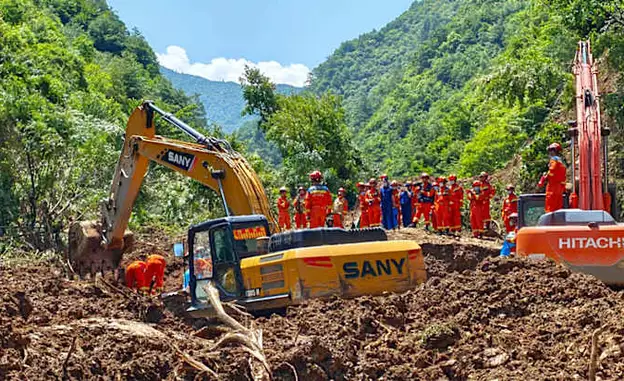
China landslide leaves at least five dead with 12 more trapped

Police forced entry into their house in Great Denham, Bedfordshire, after Nothabo Zandile Tshuma, 42, Natalie, 15, and Nala, five, hadn’t been seen for several days.

The suspect, who goes by the name Mark, is from Bedford and is a British citizen of Zimbabwean heritage.

Officers believe the 45-year-old flew from London Heathrow to Zimbabwe on Saturday.

Detective Inspector Lee Martin appealed directly to the suspect to hand himself in.

“Unthinkable harm has been caused to those around you,” he said.

“Three innocent people have lost their lives in the worst possible circumstances, leaving your relatives and friends devastated.”

We are throwing the full weight of the law behind this investigation. Criminal investigations know no borders,” DI Martin added.

“We are actively working with national and intentional agencies to pursue every available line of inquiry to track you down – and we will find you.

“So please do the right thing. Come forward and hand yourself in to local authorities.”

Police found the three bodies in their house in Great Denham on Monday
Image:Police found the three bodies in their house in Great Denham on Monday

Nala’s school, Pilgrims Pre Prep in Bedford, called her “a much-loved member of our school community who brought joy to those around her every day”.

“Many of our staff had known her since she was just seven months old and had the privilege of watching her grow,” said head teacher Jo Webster.

“She was a little ray of sunshine, known for her inquisitive and bubbly nature, her positivity, happiness and her wonderful sense of humour.”

Tshuma is now believed to be in Zimbabwe, but the African country does not appear on a list of the UK’s extradition treaty partners.

He owns and runs a property business called Nexus Trove Holdings from his address in Great Denham, according to Companies House.

Most recent filings show that the business had just over £1m in assets at the end of 2024, with the firm, of which he is the sole director, making £48,277 profit that year.

According to Rightmove, the property was bought for £1,270,000 in May 2024, and has a swimming pool, four bedrooms and four bathrooms.

The post Police release picture of mother and two children found dead in home – as father suspected of killing them ‘on the run’  appeared first on Zimbabwe Situation.