Property developer launches US$14m housing project

Source: Property developer launches US$14m housing project – herald Michael Tome SUNWAY CITY has unveiled a US$14 million integrated residential development that will deliver more than 800 serviced stands, as the property developer accelerates investment in urban infrastructure to support the drive to reduce the national housing backlog. The flagship high- and medium-density residential programme, […]

The post Property developer launches US$14m housing project appeared first on Zimbabwe Situation.

Source: Property developer launches US$14m housing project – herald

Michael Tome

SUNWAY CITY has unveiled a US$14 million integrated residential development that will deliver more than 800 serviced stands, as the property developer accelerates investment in urban infrastructure to support the drive to reduce the national housing backlog.

The flagship high- and medium-density residential programme, launched last week, represents one of the company’s largest housing investments and is expected to create modern, fully serviced communities supported by schools, commercial facilities, recreational amenities and other essential public infrastructure.

The development comes as demand for planned residential housing continues to rise, with the Government encouraging private sector participation to complement public investment in sustainable urban settlements under Vision 2030 and the National Development Strategy 2 (NDS2).

The project carries a total planned investment of approximately US$14 million (about ZiG380 million) and will ultimately provide around 820 serviced high- and medium-density residential stands.

The first phase, under implementation at a cost of approximately US$5 million, comprises 254 serviced medium-density residential stands.

The development has reserved land for a primary school, an early childhood development centre, neighbourhood commercial facilities, churches, recreational open spaces and a police post.

Speaking during a tour of the development last week, Sunway City acting chief executive officer Engineer Valentine Zvomuya said the project reflects the company’s long-term vision of building complete urban communities rather than merely servicing land.

“One of the flagship developments that you have toured today is our high- and medium-density residential development programme, representing a total planned investment of approximately US$14 million, the equivalent of about ZiG380 million,” he said.

“This development is founded on a simple principle: that successful housing is not measured by the number of stands produced, but by the quality of communities created.”

Eng Zvomuya said the company was deliberately pursuing an integrated mixed-use development model that combines residential, commercial and industrial activities within a single urban ecosystem.

“We are deliberately developing an integrated, mixed-use urban environment that brings together industry, commerce, housing, education, recreation and public services into a modern, self-sustaining development where people can live, work, invest and shop within one well-planned community,” he said.

Eng Zvomuya said the approach aligns with Vision 2030 and NDS2, both of which identify infrastructure development, industrialisation, sustainable human settlements and private sector investment as key pillars of Zimbabwe’s economic transformation.

The residential programme will include a high-rise apartment development elsewhere within the East End area, supporting the Government’s urban densification strategy and promoting efficient utilisation of serviced land.

The apartment project, together with the medium- and high-density housing developments, is reportedly meant to provide diverse housing solutions that meet the evolving needs of Zimbabwe’s growing urban population.

Sunway City says it will ensure that all supporting infrastructure is completed before occupation.

This includes road networks, water reticulation, sewer systems, storm-water drainage, street lighting and access roads.

Beyond housing delivery, the project is expected to generate significant economic activity through employment creation and opportunities for local businesses.

Eng Zvomuya said the development employs close to 100 Zimbabweans during peak construction, with deliberate efforts to recruit workers from surrounding communities.

He said the project continues to create business opportunities for local contractors, building material suppliers, transport operators, artisans and numerous small and medium enterprises participating across the construction value chain.

“Sunway City is not simply developing land; we are building industries, we are creating communities, we are unlocking investments, we are creating employment and, in our own way, we are helping build the Zimbabwe envisioned under Vision 2030, and that remains our commitment,” he said.

Eng Zvomuya said the company remains focused on delivering sustainable commercial returns for shareholders, while supporting the Government’s development priorities and creating an attractive environment for investment.

“To our shareholders, we remain committed to creating sustainable commercial value,” he said. “To the Government, we remain committed to advancing national development priorities.

“To our investors, we remain committed to creating an environment where investment can flourish with confidence, and to the people of Zimbabwe, we remain committed to developing communities that future generations will be proud to inherit.”

The post Property developer launches US$14m housing project appeared first on Zimbabwe Situation.


ZACC, Zimra bust lithium smuggling syndicate 

Source: ZACC, Zimra bust lithium smuggling syndicate – herald Sunday Mail Reporter A JOINT operation between the Zimbabwe Anti-Corruption Commission (ZACC) and the Zimbabwe Revenue Authority (ZIMRA) has uncovered a well-coordinated lithium smuggling syndicate involving locals and a foreign national. ZACC has already arrested a local businesswoman. The net is also closing in on other […]

The post ZACC, Zimra bust lithium smuggling syndicate  appeared first on Zimbabwe Situation.
Source: ZACC, Zimra bust lithium smuggling syndicate – herald

Sunday Mail Reporter

A JOINT operation between the Zimbabwe Anti-Corruption Commission (ZACC) and the Zimbabwe Revenue Authority (ZIMRA) has uncovered a well-coordinated lithium smuggling syndicate involving locals and a foreign national.

ZACC has already arrested a local businesswoman. The net is also closing in on other accomplices, who are still at large.

Tsitsi Manyumwa, a director at Kunshan Mineral Consultancy (Pvt) Limited, was recently arrested by ZACC for contravening Section 189 of the Criminal Law (Codification and Reform) Act and the Base Minerals Export Control (Unbeneficiated Base Mineral Ores) Order, 2023.

It is alleged that Manyumwa, acting in connivance with Simbarashe Shaza, a clearing agent who is still at large, and Li Dewen, a foreign national who is also on the run, hatched a plan to fraudulently export lithium ore to China through the Forbes Border Post.

They allegedly used six haulage trucks between May 15 and 17, 2026 to collect cargo containers from MSC to transport lithium ore from CEVAFRICA Logistics in Harare.

The ore was transported to the Forbes Border Post on May 20, where two trucks were intercepted by ZIMRA officials after misrepresenting that they were carrying empty containers.

After questioning, the drivers admitted to carrying lithium ore, leading to seizure of the trucks. Further investigations revealed that one of the drivers had a Mozambican transit declaration form indicating he was transporting lithium to Beira.

Four of the six trucks reportedly returned to Harare after it was realised that two had been busted.

Subsequent investigations led to the recovery of two containers on June 18, 2026.

Another truck was intercepted in Goromonzi and seized at a BAK storage facility.

Investigations further established that on May 28, 2026, a container and cargo were trans-shipped to another haulage truck in Msasa.

The truck reportedly proceeded with the consignment, and the driver was handed fraudulent export documents by Simbarashe Shaza, which enabled him to exit Zimbabwe.

Investigations established that the syndicate cloned an expired Bikita Minerals and Zim Alloy-Chrome export permit for petalite concentrate to facilitate the smuggling of 204 tonnes, although only 34 tonnes were successfully shipped out. Manyumwa has since appeared before Harare magistrate Ruth Mutare. He was remanded to July 23, 2026 on US$1 000 bail. Takudzwa Jambaya represented the State.

The lithium ore that was seized was valued at US$100 000. ZACC spokesperson Ms Simiso Mlevu said the commission is working with ZIMRA in investigating cases of smuggling.

“The commission complements the Government policy banning exportation of raw minerals, including lithium, through interagency cooperation and collaboration.

“We are collaborating with ZIMRA in monitoring cargo and investigating suspected cases of smuggling. This is intended to deter would-be smugglers,” she said.

Local beneficiation

The Government recently banned the export of lithium and other precious minerals in raw form. Since the ban, ZACC and ZIMRA have been monitoring all border posts to prevent the shipment of lithium ore or concentrates.

The interventions are meant to maximise export earnings, create skilled jobs and establish Zimbabwe as a regional battery minerals processing hub.

The Government and the private sector are presently investing in advanced mineral laboratories, which are expected to improve mineral valuation, boost beneficiation and maximise export earnings. Lithium producers have collectively invested about US$6,1 million in advanced mineral laboratories.

Bravura, Bikita Minerals, Kamativi and Prospect Lithium Zimbabwe have all spent US$1 million each on laboratories, while Gwanda Lithium and Sabi Star have invested US$850 000 and US$810 000, respectively. Sandawana is also finalising its facility at a cost of US$200 000.

The investments will help to determine the composition of mineral ores.

Lithium, for example, contains associated minerals such as tantalum, caesium, tin and feldspar, which command premium prices.

Without sophisticated analysis, these minerals can remain unrecovered, resulting in lost revenue.

Mining analyst Mr Walter Sakala said the recent development marks an important evolution in Zimbabwe’s mining sector.

“Historically, mining in many developing countries focused primarily on extracting the headline mineral while overlooking associated minerals that could significantly improve project economics,” he said.

“Laboratories change that equation because they provide precise data on everything contained in the ore body.”

Zimbabwe has emerged as one of the world’s most important lithium producers, attracting more than US$3,45 billion in investment over the past few years. The country’s hard-rock lithium deposits have drawn major global investors including Sinomine Resource Group, Zhejiang Huayou Cobalt, Chengxin Lithium Group, Kamativi Mining Company, Bravura Zimbabwe, Gwanda Lithium and Kuvimba Mining House.

The post ZACC, Zimra bust lithium smuggling syndicate  appeared first on Zimbabwe Situation.

Junior Parliament, Day of the African Child commemorations to be held on Wednesday

Source: Junior Parliament, Day of the African Child commemorations to be held on Wednesday – herald Mr Ranson Madzamba Sunday Mail Reporter THIS year’s Zimbabwe Junior Parliament session and commemoration of the Day of the African Child are set to be held at the new Parliament building on Wednesday. The two events are expected to […]

The post Junior Parliament, Day of the African Child commemorations to be held on Wednesday appeared first on Zimbabwe Situation.

Source: Junior Parliament, Day of the African Child commemorations to be held on Wednesday – herald

Sunday Mail Reporter

THIS year’s Zimbabwe Junior Parliament session and commemoration of the Day of the African Child are set to be held at the new Parliament building on Wednesday.

The two events are expected to bring together young people, policymakers, development partners, community leaders, civil society organisations and other stakeholders.

Ministry of Youth Empowerment, Development and Vocational Training director of communication and advocacy Mr Ranson Madzamba said the Junior Parliament session remained a key platform for promoting meaningful child participation in governance and national decision-making processes.

Through the initiative, young people drawn from across Zimbabwe are given an opportunity to engage on issues affecting their lives, contribute to national discourse and develop leadership skills that prepare them to become responsible citizens and future leaders.

“The Junior Parliament session remains a key platform for promoting meaningful child participation in governance and decision-making processes,” said Mr Madzamba.

He said the commemoration of the Day of the African Child also provides Zimbabwe with an opportunity to reflect on the progress made in advancing children’s rights and welfare while reaffirming the country’s commitment to addressing challenges that continue to affect young people.

Mr Madzamba said this year’s commemorations will celebrate achievements of Zimbabwe’s children while providing a platform for dialogue on issues relating to their development, protection, education, health and participation in national affairs.

He said the ministry was working closely with all relevant partners to ensure the events are inclusive, child-friendly and secure, while reflecting the aspirations of Zimbabwe’s young people.

Particular emphasis, he said, had been placed on ensuring the participation of children from diverse backgrounds, including children with disabilities and those from vulnerable communities.

“All the necessary measures have been put in place to ensure the successful double hosting of the Junior Parliament session and the Day of the African Child commemorations on July 8 at the new Parliament building,” he said.

The annual events are expected to reinforce the Government’s commitment to promoting children’s rights, youth empowerment and inclusive participation, while providing a platform for young Zimbabweans to contribute to discussions on issues that shape their future.

Meanwhile, the Junior Parliament has elected Tinashe Mugodhi of St Mary’s High School in Harare as the country’s new Child President, ushering in a new leadership expected to champion children’s rights and amplify voices of young people in national development.

Mugodhi succeeds Lionel Mazarire, who served as the 33rd Child President after his election last year.

During his tenure, Mazarire used the platform to advocate for children’s rights, improved education, action against drug and substance abuse, and child marriages, and greater youth participation in governance.

Mugodhi will be deputised by Coline Mutepfa of St Augustine’s High School in Manicaland province and Kundi P. Chimbuya of Thornhill High School in Midlands province, who were elected as vice presidents.

Tarirana Prince Marley of Masvingo province was elected Speaker of the Junior Parliament.

The elections come as the Junior Parliament continues to serve as Zimbabwe’s premier platform for children’s participation in governance, allowing young representatives to debate issues affecting their peers and engage directly with policymakers.

The institution mirrors the country’s Parliament, with child legislators representing constituencies from across all provinces.

Established in 1991 following Zimbabwe’s commitment to the United Nations Convention on the Rights of the Child, the Junior Parliament was created to ensure children have a structured platform to influence policies and advocate for legislation that promotes their welfare.

It has since become one of the country’s longest-running youth leadership programmes.

The Child President serves as the symbolic head of the Junior Parliament and represents millions of Zimbabwean children, presenting their concerns on issues ranging from education, health and child protection to climate change, mental health, digital safety and substance abuse.

The post Junior Parliament, Day of the African Child commemorations to be held on Wednesday appeared first on Zimbabwe Situation.

VP Chiwenga commends Church for deepening education drive

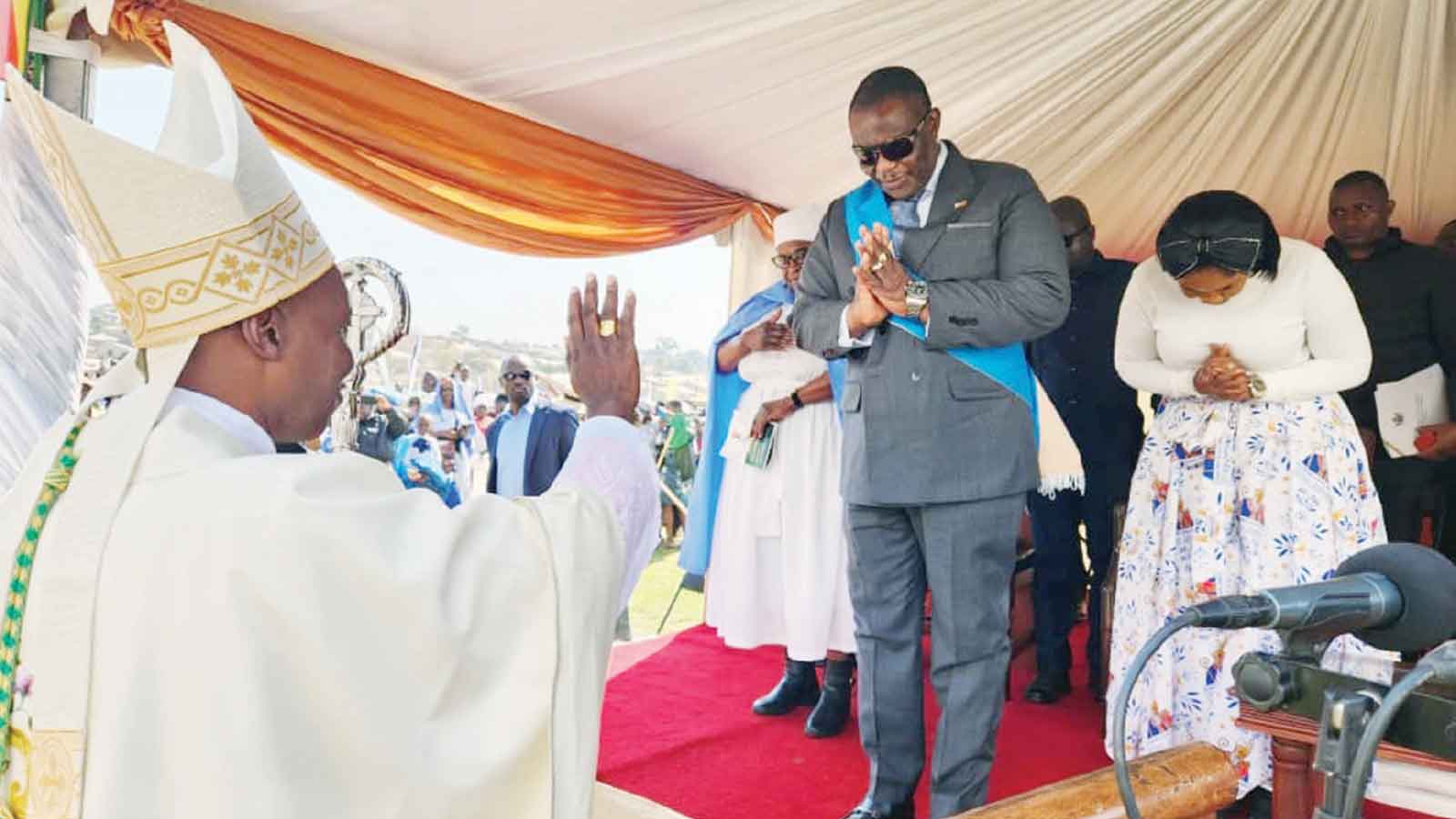
Source: VP Chiwenga commends Church for deepening education drive – herald Vice President Dr Constantino Chiwenga and his wife Colonel Miniyothabo Chiwenga receive blessings from the newly ordained Bishop of Chinhoyi Diocese Monsignor Patrick Ngwenya yesterday. — Picture: Mukudzei Chingwere Mukudzei Chingwere in CHINHOYI VICE PRESIDENT Dr Constantino Chiwenga has commended the Catholic Church for […]

The post VP Chiwenga commends Church for deepening education drive appeared first on Zimbabwe Situation.

Source: VP Chiwenga commends Church for deepening education drive – herald

Mukudzei Chingwere in CHINHOYI

VICE PRESIDENT Dr Constantino Chiwenga has commended the Catholic Church for its contribution to education and human development, pointing to tangible progress within the Diocese of Chinhoyi.

He made the remarks during the episcopal ordination of Bishop Patrick Ngwenya in Chinhoyi yesterday, which he attended in the company of his wife Colonel Miniyothabo Chiwenga.

He recalled that in 2021, he was at the same site during the groundbreaking ceremony for the construction of Our Lady of Perpetual Help Primary School, saying the hilltop then appeared largely undeveloped.

VP Chiwenga also commended the ongoing efforts in Chinhoyi, where the diocese is constructing Perpetual Help Secondary School, noting that the project includes a strong focus on science education.

“His Lordship, Bishop Patrick Ngwenya, assumes this sacred responsibility at a particularly exciting chapter in the life of the Diocese of Chinhoyi, a diocese whose spiritual growth has been matched by remarkable institutional and infrastructural development,” said VP Chiwenga.

“I vividly recall standing on this very site in 2021 during the groundbreaking ceremony for the construction of Our Lady of Perpetual Help Primary School. At that time, this hilltop was largely undeveloped, and one could easily have questioned whether such an ambitious vision could become reality.

“Yet vision, when anchored in faith and sustained by determination, has an extraordinary way of transforming landscapes. Today, I return once again to witness an even greater milestone, the ordination of a new bishop within this very institution.

“It is equally gratifying to note the remarkable progress taking place just beyond this hill, where the diocese is constructing the impressive Perpetual Help Secondary School with a strong focus on science education.

“These investments demonstrate that the church’s mission extends beyond the sanctuary into education, human development and nation-building.

“I, therefore, commend the Diocese of Chinhoyi for its foresight and commitment to building not only places of worship but institutions that will shape future generations.

“This is in line with the Government’s developmental trajectory.”

VP Chiwenga also lauded Bishop Ngwenya for having discharged every responsibility entrusted to him with integrity and humility, which earned him the confidence and respect of both clergy and laity alike.

“Your Lordship, Bishop Patrick Ngwenya, as you assume this sacred office today, may you continue to shepherd God’s people with wisdom, compassion and unwavering fidelity to the Gospel.

“The Word of God, in 1 Peter 5 verses 2, is instructive: ‘Shepherd the flock of God which is among you, serving as overseers, not by compulsion but willingly, not for dishonesty gain but eagerly.’

“On behalf of the Government and the people of Zimbabwe, I once again extend my heartfelt congratulations to you, the Diocese of Chinhoyi, the Zimbabwe Catholic Bishops’ Conference and the entire Catholic faithful on this historic occasion,” added VP Chiwenga.

Mashonaland West Minister of State for Provincial Affairs and Devolution Marian Chombo said the school has been producing excellent results.

She noted that, in an effort to further motivate teachers, she reached out to the business community, whose support has proven invaluable.

Minister Chombo commended Vincity Construction (Pvt) Ltd, a Chinhoyi-based land developer, for donating six residential stands to the school’s top five teachers and the head teacher.

The excelling teachers received their agreements of sale at the end of the ordination ceremony.

The Roman Catholic Church has long held a strong foothold in Zimbabwe’s education sector, playing a key role in educating generations of Zimbabweans from the colonial era.

Through schools, scholarships and other learning programmes, the church has contributed to human development by expanding access to quality education, nurturing moral values and empowering young people to acquire knowledge and skills essential for national progress.

The post VP Chiwenga commends Church for deepening education drive appeared first on Zimbabwe Situation.

Civil servants to receive better pay without moving into management 

Source: Civil servants to receive better pay without moving into management – herald Sunday Mail Reporter CIVIL SERVANTS will soon be able to advance and earn better salaries while continuing to perform the work they are trained and skilled to do without necessarily having to move into management positions. The initiative, which is being rolled […]

The post Civil servants to receive better pay without moving into management  appeared first on Zimbabwe Situation.

Source: Civil servants to receive better pay without moving into management – herald

Sunday Mail Reporter

CIVIL SERVANTS will soon be able to advance and earn better salaries while continuing to perform the work they are trained and skilled to do without necessarily having to move into management positions.

The initiative, which is being rolled out after the recently completed job evaluation by the Public Service Commission (PSC), is expected to help retain specialist skills and promote professional excellence across the public service.

On the other hand, workers whose posts were assigned lower grades as a result of the exercise will retain existing salaries, allowances and other benefits. However, new entrants will earn according to the newly evaluated grade.

In a statement, the PSC said outcomes of the first comprehensive job evaluation in the nation’s public service since 2003, which resulted in a new remuneration framework, were effected from April 1 this year. The job evaluation began in 2022.

In September 2024, Cabinet approved its recommendations and directed their implementation across the public sector.

Under the parallel progression framework, workers with special skills and experience, such as teachers, engineers, nurses or technical experts, will be rewarded for being good at their jobs instead of being forced to go for supervisory or administrative positions to earn more.

“The framework is designed to recognise that not every employee’s career aspiration is to become a manager,” said the PSC.

“Many public servants develop highly specialised knowledge and technical expertise that are critical to effective service delivery. Traditionally, career advancement in many organisations has depended largely on promotion into management or administrative roles. This often meant that highly skilled professionals had to move away from the work they excelled in simply to improve their remuneration and career prospects.”

The PSC said, by providing multiple pathways for career advancement, the framework will enable public servants to grow, excel and contribute more effectively to national development and Zimbabwe’s Vision 2030 objectives.

One of the key safeguards brought by the job evaluation, it said, was the personal-to-holder principle, a provision that protects an employee’s existing salary, allowances and benefits where a job was assigned a lower grade than it previously held.

“In other words, the protection applies to the current holder of the post and ensures that they do not suffer an immediate loss of remuneration because of the job evaluation outcome,” said the PSC.

“However, once the current holder leaves the position through retirement, resignation, promotion or any other reason, the post will thereafter be filled at its newly evaluated grade. The protection applies only to the current holder and does not permanently attach to the position.”

The move was envisaged to correct historical grading anomalies, while safeguarding the legitimate interests of serving public officers.

The PSC said the job evaluation had since corrected longstanding anomalies.

“Chief directors, previously misclassified at grade F2, are now correctly placed at E4, while directors have moved from F1 to E1 and deputy directors from E5 to D1,” said the PSC.

“Skilled professionals such as engineers, teachers and human resources officers, previously inflated to Band D and E, have been correctly placed in Band C, consistent with the specialised, technocratic nature of their work.”

Concerns and appeals

To promote transparency and confidence in the process, a multi-sectoral Job Evaluation Appeals Committee has been established to consider concerns and appeals from employees and institutions.

The committee became operational on June 1, 2026 and will receive and process appeals until August 31, 2026, providing public servants with an opportunity to seek clarification and review of perceived anomalies in job grading outcomes.

“The commission has assured employees that every appeal will be considered in accordance with established job evaluation principles and procedures,” added the PSC.

“The process is governed by standard principles applicable across all evaluation methods: jobs, not people, are graded; reporting lines do not determine a grade; longevity and additional qualifications are not grounds for regrading; and no single individual may unilaterally determine an outcome.”

The job evaluation, the PSC said, was necessitated by disparities in grading structures, overlapping responsibilities and some general inconsistencies that created perceptions of inequity.

Similar jobs were often graded differently, while some employees faced limited opportunities for career growth despite possessing valuable skills and experience, it said.

“One of the most significant benefits of the exercise is the promotion of equity across the public service. Employees can now have greater confidence that grading decisions are based on objective criteria applied consistently across ministries, departments and agencies. The job evaluation exercise is also expected to strengthen organisational effectiveness. By aligning grades with responsibilities, Government institutions can establish clearer reporting structures, eliminate duplication of roles and improve accountability.”

The post Civil servants to receive better pay without moving into management  appeared first on Zimbabwe Situation.