
Government warns public transport operators against carrying hazardous goodsGovernment warns public transport operators against carrying hazardous goods

Source: Government warns public transport operators against carrying hazardous goodsGovernment warns public transport operators against carrying hazardous goods – herald Government, through a statement issued by the Ministry of Transport and Infrastructural Development warned that carrying explosives, fuel, hazardous chemicals and other dangerous goods in public service vehicles is prohibited under the law because of […]

The post Government warns public transport operators against carrying hazardous goodsGovernment warns public transport operators against carrying hazardous goods appeared first on Zimbabwe Situation.

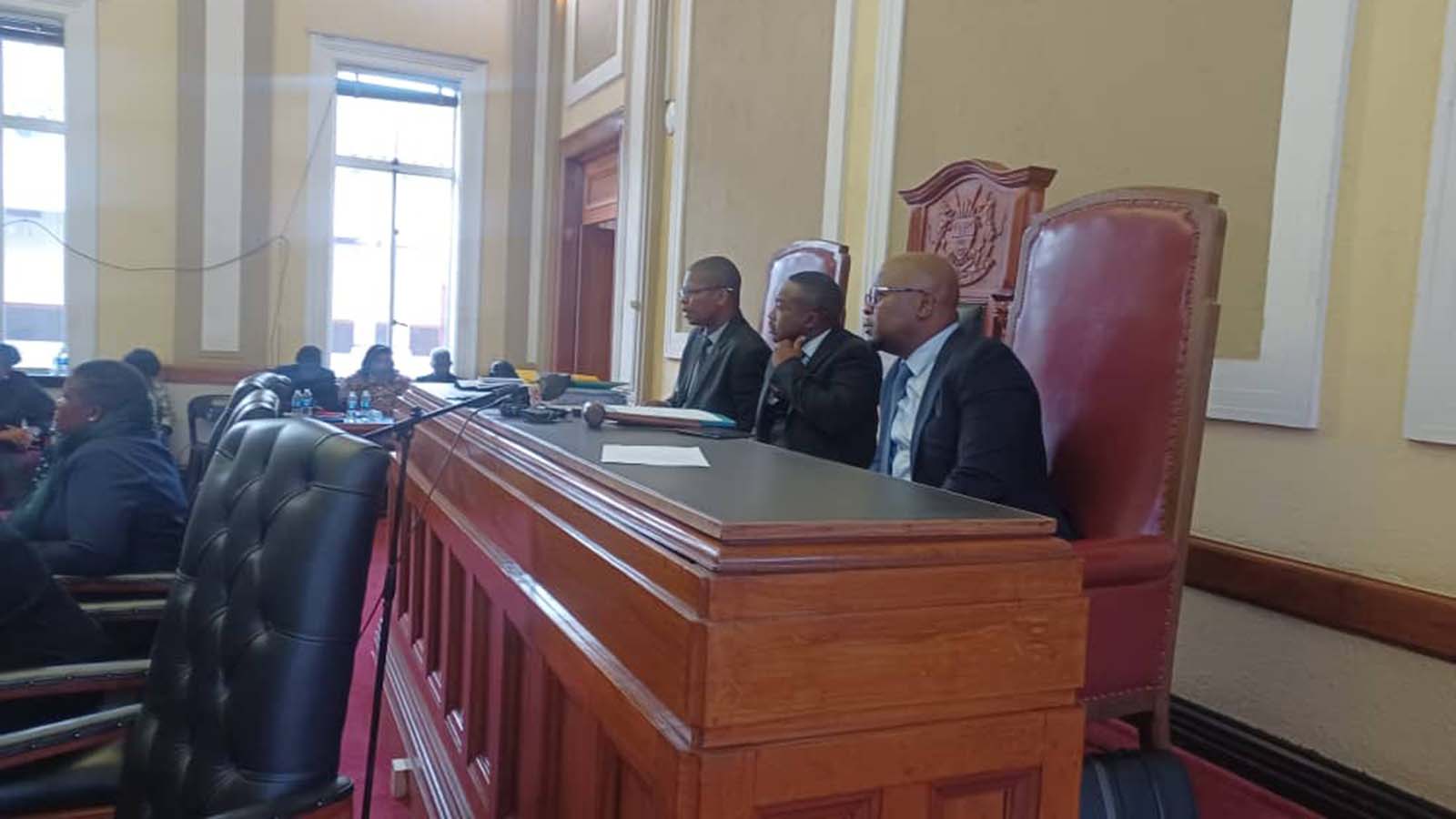
Source: Government warns public transport operators against carrying hazardous goodsGovernment warns public transport operators against carrying hazardous goods – herald

Freeman Razemba-Senior Reporter

GOVERNMENT has warned public service vehicle operators against transporting fuel, explosives, hazardous chemicals and other prohibited substances, saying offenders risk prosecution under the law.

The warning follows last month’s tragic kombi fire in Gweru that claimed the lives of seven primary school pupils after a vehicle they were travelling in caught fire and exploded.

Authorities said preliminary investigations established that the driver and conductor had placed a 10-litre jerry can containing petrol near the vehicle’s battery after boarding passengers, including schoolchildren.

The kombi, which was carrying 23 pupils from Matongo and Stanley primary schools, caught fire near Senga Shopping Centre.

Seven pupils who were seated at the rear of the vehicle were burnt beyond recognition and died at the scene, while other passengers sustained varying degrees of injuries.

Government, through a statement issued by the Ministry of Transport and Infrastructural Development warned that carrying explosives, fuel, hazardous chemicals and other dangerous goods in public service vehicles is prohibited under the law because of the serious risk such materials pose to passengers and other road users.

Authorities urged public transport operators to strictly observe safety regulations and prioritise passenger welfare, warning that those found violating the law will face prosecution.

The Government also appealed to passengers to remain vigilant and report operators who transport hazardous substances in public service vehicles to help prevent similar tragedies.

In April, 12 bodies were recovered following a fatal explosion involving a Toyota Quantum at the 27km peg along Bulawayo–Beitbridge Road near Esigodini.

The incident occurred on April 16 at around 12.45 pm when the vehicle exploded.

TSCZ managing director Mr Munodawafa then appealed to the motoring public to avoid carrying items that have the potential to explode.

The post Government warns public transport operators against carrying hazardous goodsGovernment warns public transport operators against carrying hazardous goods appeared first on Zimbabwe Situation.

Madhuku trashes CAB 3 Senate amendments 

Source: Madhuku trashes CAB 3 Senate amendments -Newsday Zimbabwe CONSTITUTIONAL lawyer Lovemore Madhuku has dismissed the National Assembly’s adoption of Senate amendments to the controversial Constitution Amendment Bill No. 3 (CAB3), describing the process as “heavily flawed” and arguing that legislators approved what he termed a “nullity”. Madhuku was speaking to NewsDay shortly after the […]

The post Madhuku trashes CAB 3 Senate amendments  appeared first on Zimbabwe Situation.

Source: Madhuku trashes CAB 3 Senate amendments -Newsday Zimbabwe

CONSTITUTIONAL lawyer Lovemore Madhuku has dismissed the National Assembly’s adoption of Senate amendments to the controversial Constitution Amendment Bill No. 3 (CAB3), describing the process as “heavily flawed” and arguing that legislators approved what he termed a “nullity”.

Madhuku was speaking to NewsDay shortly after the Bill cleared its final parliamentary hurdle on Tuesday after legislators reconsidered amendments made by the Senate during an extraordinary sitting convened by President Emmerson Mnangagwa.

The Bill, which had been recommitted by the Senate for further consideration after several amendments were proposed, was approved by 226 votes, while 41 opposition Citizens Coalition for Change (CCC) legislators voted against it.

It will now be transmitted to President Mnangagwa for assent.

However, Madhuku said the manner in which the Senate introduced the amendments violated constitutional law-making procedures and would form the basis of another court challenge.

“They were delaying us from our own processes to challenge them. They were failing to constitutionally follow their own parliamentary processes. The amendments by the Senate were not competent. They approved a nullity in the National Assembly today,” Madhuku told NewsDay.

“They are saying they are amendments, but it seems the Senate had its own Bill, which was not put to the people.

“There were consultations that were held, but they came up with completely new provisions in the form of amendments. I will not list all the flaws. This is another third case that we are going to lodge.”

He said what Parliament described as corrective amendments had instead created fresh constitutional contradictions.

“They said they wanted to correct some anomalies, but these amendments are just the tip of the iceberg.

“There are contradictions left, right and centre emanating from them hurrying the law-making process, particularly on this Bill.

“It required much more intellect than they used in the hurried process.

“They made a bigger mistake trying to correct the error they made. Senate had no authority to make amendments of that nature.”

Madhuku singled out the Senate’s amendment to Section 145 of the Constitution, arguing that it fundamentally altered the constitutional framework instead of merely correcting drafting errors.

The amendment repeals and substitutes Section 145, titled “First sitting of Parliament following a general election”, to provide that: “The first sitting of Parliament after a general election must take place on a date determined by the Clerk of Parliament through a notice published in the Government Gazette, but not later than 14 days after election results have been declared.

“Until the election of the Speaker of the National Assembly and the President of the Senate, the first meeting of each House must be presided over by the Clerk of Parliament.”

According to Madhuku, those changes introduce an entirely new constitutional arrangement that could not lawfully originate as Senate amendments.

“For example, to say that the Clerk of Parliament will convene the first sitting of Parliament after a general election is a fundamental provision of the Constitution which can never be legislated at the point at which they did that. It requires debate.”

He questioned why Parliament had entrusted such constitutional authority to the Clerk of Parliament.

“The Clerk of Parliament does not have a recognisable deputy. What if he is intimidated or he runs away?

“It is different from the office of the Chief Justice because that office is constitutionally entrenched and we know what happens if the Chief Justice is unavailable.

“But the Clerk of Parliament is simply an official whose office has no constitutional independence. It does not represent any institution.

“Imagine the stupidity of not realising that the outgoing Speaker would still be there. What if the Clerk is manipulated? No country is run in such a way.”

Madhuku maintained that such a substantive constitutional amendment could not lawfully emerge during the Senate committee stage.

“It can’t start from the Senate committee stage.

“This is just one example. More flaws will be highlighted in court.”

The constitutional law expert said yesterday’s proceedings would now give litigants fresh grounds to challenge the legislation before the courts.

CAB 3 has sparked intense political and legal debate as it seeks to make sweeping changes to Zimbabwe’s constitutional framework.

Among its key provisions, the Bill seeks to extend Mnangagwa’s term of office, as well as the tenure of the current Parliament and local authorities, by two years until 2030.

It also proposes increasing the electoral term for future presidents, Parliament and local authorities from five years to seven years.

The Bill further seeks to amend the Constitution to allow a vacancy in the office of President to be filled through a joint sitting of the National Assembly and Senate instead of by a national election.

The Bill first passed the National Assembly with 216 votes after receiving support from 34 legislators aligned to self-imposed CCC secretary-general Sengezo Tshabangu before being recommitted by the Senate for amendments.

Despite clearing Parliament, the legislation is expected to face further legal hurdles.

Several court challenges against CAB 3 are already pending, while some constitutional lawyers argue that the proposed amendment to Section 328(7), a protected constitutional provision, cannot become law through presidential assent alone and must first be approved by Zimbabweans in a national referendum conducted by the Zimbabwe Electoral Commission.

The post Madhuku trashes CAB 3 Senate amendments  appeared first on Zimbabwe Situation.

China tightens grip on Zimbabwe lithium

Chinese investors now control more than 80% of Zimbabwe’s lithium production, cementing Beijing’s dominance over one of the country’s most strategic mineral sectors even as a global price slump exposed the industry’s vulnerability and led to significant job losses. According to Lithium Producers Association of Zimbabwe chairman Innocent Rukweza, Chinese-owned and Chinese-backed companies now account […]

The post China tightens grip on Zimbabwe lithium appeared first on The Zimbabwe Mail.

Chinese investors now control more than 80% of Zimbabwe’s lithium production, cementing Beijing’s dominance over one of the country’s most strategic mineral sectors even as a global price slump exposed the industry’s vulnerability and led to significant job losses.

According to Lithium Producers Association of Zimbabwe chairman Innocent Rukweza, Chinese-owned and Chinese-backed companies now account for the overwhelming majority of operational lithium projects in the country.

“More than 80% of production is coming from Chinese-owned or Chinese-partnered projects,” Rukweza said in a recent interview.

“In fact, of all operational projects, they are effectively running production.”

The dominance of Chinese firms spans mining, processing and export channels, reflecting China’s broader global strategy of securing supplies of critical minerals such as lithium and cobalt, which are essential for the manufacture of electric vehicle batteries and energy storage technologies.

Zimbabwe’s lithium sector has been recovering from a severe downturn after global lithium prices tumbled from record highs during the electric vehicle boom. The price collapse resulted in companies scaling back operations, delaying expansion plans and shedding jobs.

Rukweza said the industry lost more than 1,000 direct jobs during the downturn.

“When prices went down, we lost more than 1,000 direct jobs,” he said.

“Companies had to lay off workers and some projects were delayed because of viability concerns.”

Despite the setback, the industry is forecasting a strong recovery, underpinned by substantial investment and expanding processing capacity.

Approximately US$2 billion has already been invested in Zimbabwe’s lithium sector, while projects worth a further US$1.5 billion are under development.

Export earnings are projected to double to about US$1 billion this year from roughly US$500 million last year as beneficiation projects begin to add value to locally mined lithium.

Zimbabwe banned the export of raw lithium ore in 2022 in an effort to encourage local processing and increase export revenues.

According to Rukweza, the policy has significantly improved the sector’s earnings.

“From about US$60 million in raw exports, we moved to more than US$500 million annually, and we are now targeting US$1 billion,” he said.

A major focus of the industry’s next phase is the production of lithium sulphate, an intermediate product used in battery manufacturing that commands higher value than raw ore.

One lithium sulphate plant has already begun production, with the industry targeting annual output of about 50,000 tonnes as capacity expands.

At least six beneficiation projects, including concentrators and lithium sulphate plants, are currently under construction and are expected to become operational from 2027.

However, despite Zimbabwe’s push to move further up the value chain, ownership of most operational assets remains concentrated in Chinese hands.

Rukweza said Chinese companies dominate both wholly owned mines and joint ventures, giving them significant influence across the entire lithium supply chain.

“It is very much a Chinese phenomenon,” he said.

“They went through the whole supply chain.”

While new players such as Ghana-based Bravura and the state-linked Sandawana lithium project are entering the market, they remain relatively small compared to the established Chinese operators.

The concentration of ownership has raised questions about how much long-term strategic control Zimbabwe will retain over a mineral expected to remain one of its leading export earners as global demand for electric vehicles and renewable energy storage continues to grow.

Rukweza cautioned that the sector remains highly exposed to international price movements, noting that most operations become economically challenging when lithium carbonate prices fall below between US$17,000 and US$18,000 per tonne.

“Below that level, it becomes very difficult to operate,” he said.

Source – newsday

The post China tightens grip on Zimbabwe lithium appeared first on The Zimbabwe Mail.

Harare close to clearing salary backlog, says Mafume

Source: Harare close to clearing salary backlog, says Mafume – herald Harare Mayor Cllr Jacob Mafume chairing the 1949th Ordinary Council Meeting at Town House on Tuesday Diana Nherera Herald Reporter HARARE Mayor Councillor Jacob Mafume has commended the Human Resources and Finance committees for eliminating the City of Harare’s employee salary backlog, describing the achievement […]

The post Harare close to clearing salary backlog, says Mafume appeared first on Zimbabwe Situation.

Source: Harare close to clearing salary backlog, says Mafume – herald

Diana Nherera

Herald Reporter

HARARE Mayor Councillor Jacob Mafume has commended the Human Resources and Finance committees for eliminating the City of Harare’s employee salary backlog, describing the achievement as a major milestone for the local authority.

Speaking while chairing the 1949th Ordinary Council Meeting at Town House on Tuesday, Clr Mafume said the city had struggled for years to pay employees on time, with salary arrears at one point stretching to seven months.

He said the council has now cleared salary payments up to May and is on course to pay June salaries by July 15, bringing the local authority back onto a normal payment schedule.

“I want to commend the Human Resources Committee and the Finance Committee for this huge achievement,” he said.

“We have been chasing our tails for so many years, and I know this because I was the Human Resources Committee chair when I joined council in 2018. At that time, we ended up offering employee residential stands in lieu of their salaries because we could not catch up.

“So for us to have cleared May salaries and be in a position to pay June salaries by July 15 is highly commendable. It has taken us a long time to get here, and I applaud everyone who worked to make this possible.

“And we hope that we will be able to maintain that momentum and we will not go back. Once we are able to deal with the salaries timeously, we should then be able to move to the other areas of service delivery that we need to move and there won’t be excuses from anyone about issues relating to this,” he said.

The post Harare close to clearing salary backlog, says Mafume appeared first on Zimbabwe Situation.

Doctor Madzikanda accepts his two girlfriends in court

Source: Doctor Madzikanda accepts his two girlfriends in court. – herald Dr David Madzikanda, who is involved in a messy love triangle with two women, has accepted the two as his girlfriends. Prosper Dembedza-Herald Correspondent PROMINENT Harare business executive, Dr David Madzikanda, who is involved in a messy love triangle with two women, has accepted […]

The post Doctor Madzikanda accepts his two girlfriends in court appeared first on Zimbabwe Situation.

Source: Doctor Madzikanda accepts his two girlfriends in court. – herald

Prosper Dembedza-Herald Correspondent

PROMINENT Harare business executive, Dr David Madzikanda, who is involved in a messy love triangle with two women, has accepted the two as his girlfriends.

Dr Madzikanda revealed this while testifying as a State witness before Harare magistrate Ms Lisa Mutendereki in a matter in which one of his girlfriends, Tsitsi Mutseriwa, dragged her nemesis, Millicent Murape, to court accusing her of cyberbullying after the two women traded witchcraft accusations.

Millicent is also facing allegations of malicious damage to property.

Dr Madzikanda told the court that Mutseriwa and Murape are both his girlfriends.

He said he started dating Mutseriwa way back and never got married to her.

Dr Madzikanda said in the first week of July last year he had gone for lunch at Mutseriwa’s place when Murape came there, resulting in an altercation between his two girlfriends.

He said he is the owner of the house where Mutseriwa lives and blamed her for accusing Murape of destroying property which does not belong to her.

“I am the owner of that property, therefore, the only person who had the right to report any property damage is me, not Mutseriwa,” he said.

Dr Madzikanda said he tried to persuade Mutseriwa to withdraw the matter, but instead she held him to ransom and asked him to build her a house and buy a car for her to withdraw the case.

“I never married Mutseriwa and will never marry her. I have only one wife at home who works in a bank,” he said.

Dr Madzikanda added that Murape was just his girlfriend and the child they have together came as a result of an arrangement between them.

He told the court that the altercation between his two mistresses began when Murape got pregnant, which did not go down well with Mutseriwa, who became jealous.

According to State papers, on July 5 last year, at around 9 pm, Mutseriwa received abusive WhatsApp messages from Millicent’s phone number.

The following day, Millicent allegedly sent more abusive text messages via WhatsApp. On both occasions, Mutseriwa did not reply.

Murape is also accused of using stones to break window panes at Mutseriwa’s house. Millicent was a tenant at Mutseriwa’s house before she started dating Dr Madzikanda.

During the previous sitting Mutseriwa claimed Murape, in her abusive messages, allegedly claimed she was no longer a tenant but was taking over the property as Dr Madzikanda’s wife.

She claims Murape allegedly boasted in her messages that she would soon become the boss and landlady at the property.

Mutseriwa told the court that Murape also accused her of bewitching her when she was pregnant by allegedly placing some juju on her doorstep so that she would suffer a miscarriage.

“This woman (Murape) is our lodger and now my husband’s girlfriend. She insulted me on WhatsApp and also broke my property’s windows,” Mutseriwa said.

“She accused me of bewitching her by saying that l placed a charm on her doorstep so that she would miscarry her pregnancy (and lose) Dr Madzikanda’s child”.

Mutseriwa told the court that when she went to Murape’s apartment to ask her about the messages she had sent her on WhatsApp, she found Dr Madzikanda inside Murape’s apartment.

She claimed she was made to wait outside for about an hour. She told court that Dr Madzikanda has four other wives.

She said she reported Millicent to the police not because she was jealous of her romantic affairs with her husband but because she wanted to protect herself.

The post Doctor Madzikanda accepts his two girlfriends in court appeared first on Zimbabwe Situation.