Govt commends local contractors

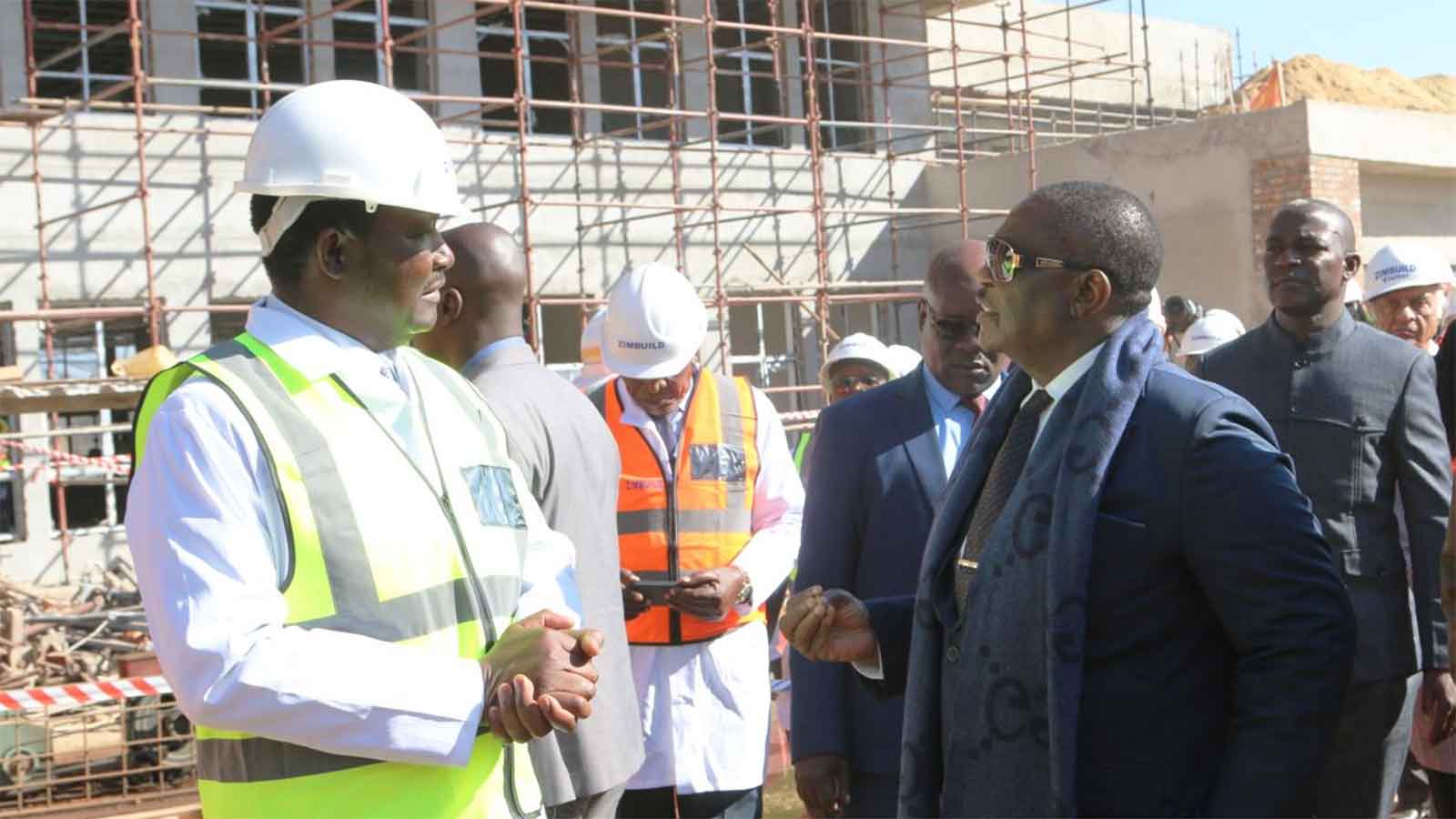
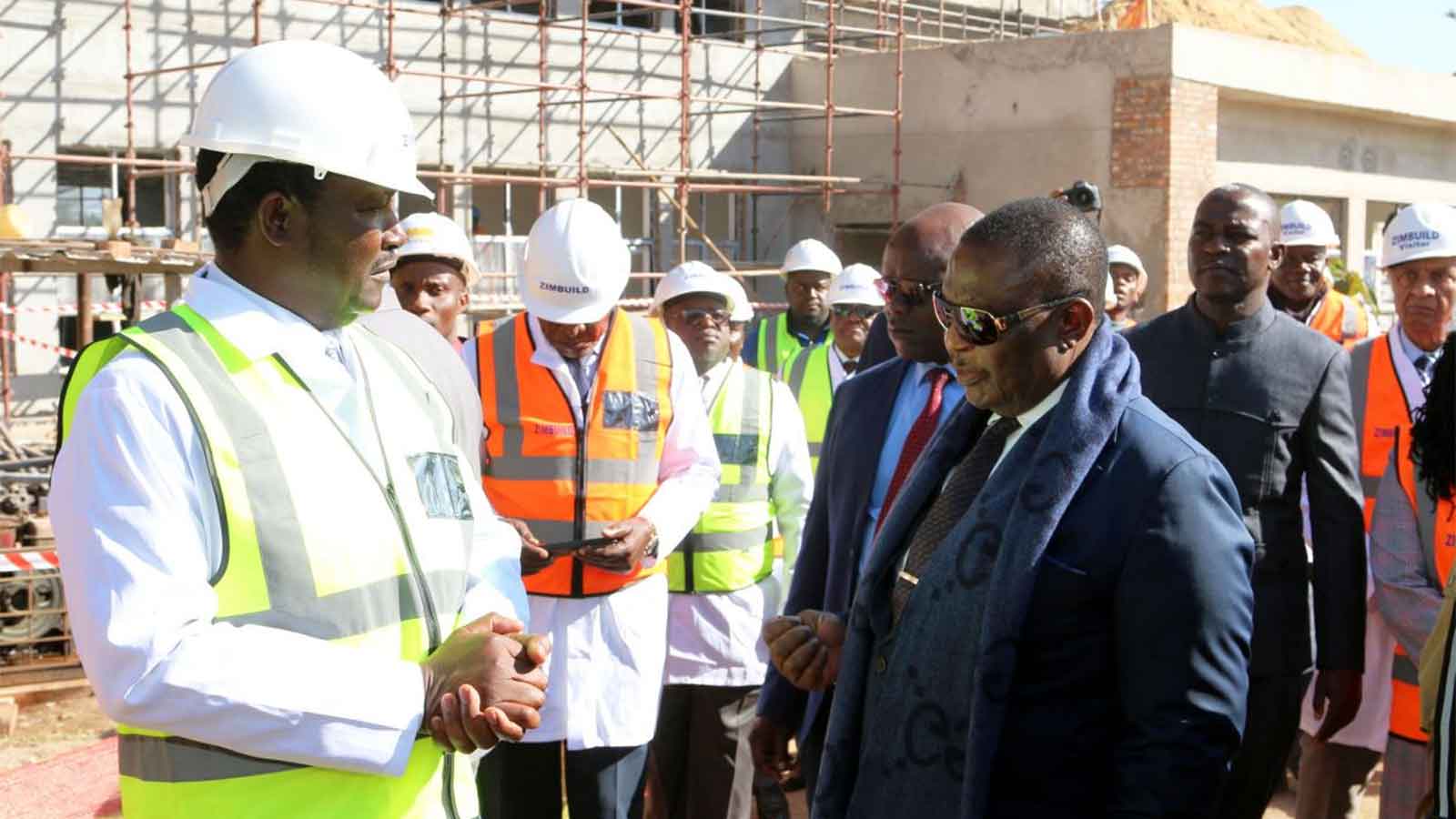
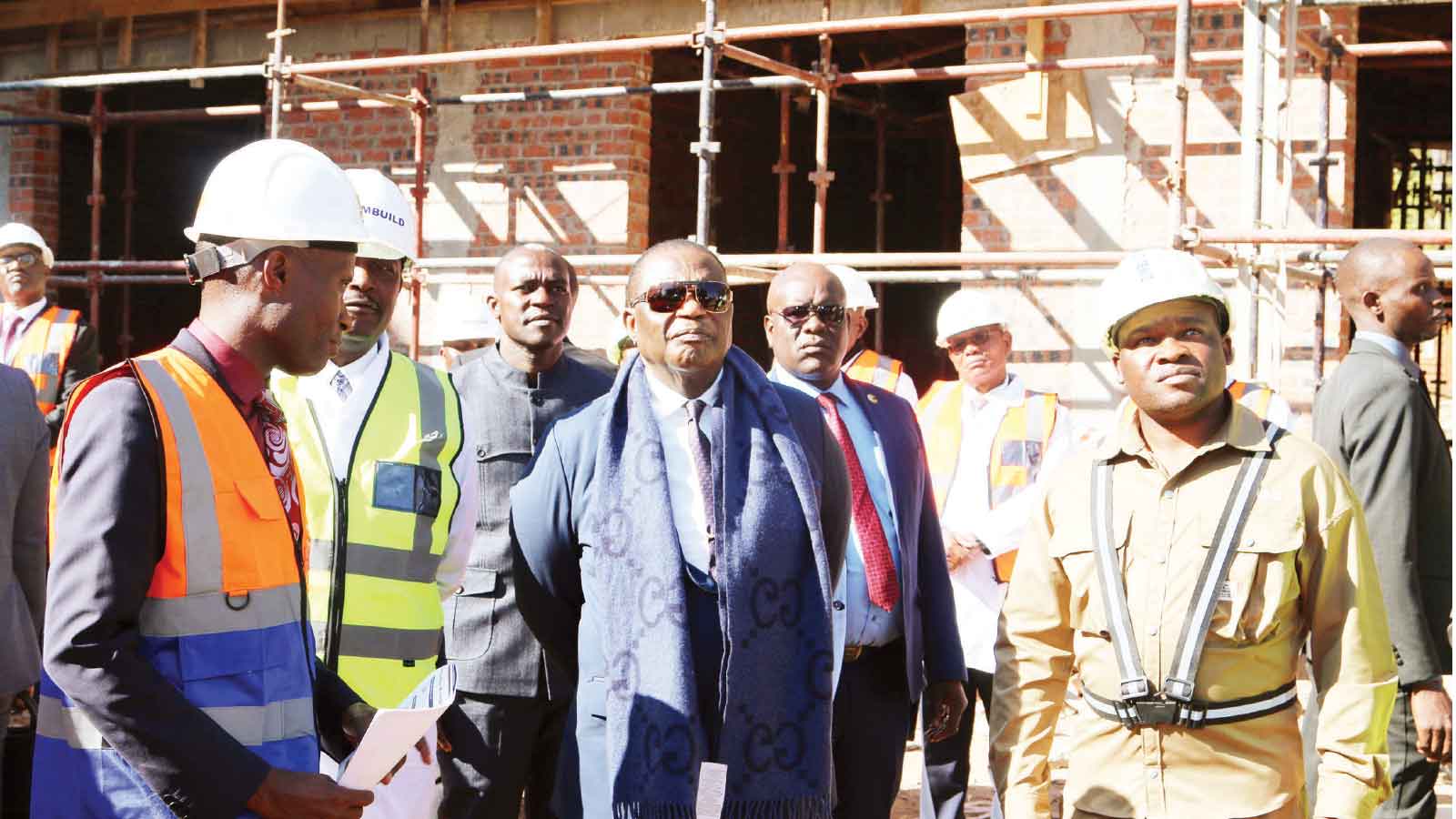
Source: Govt commends local contractors – herald Vice President Dr Constantino Chiwenga (centre) flanked by Procurement Regulatory Authority of Zimbabwe (PRAZ) chief executive Dr Clever Ruswa (second from left) and chief executive of Zimbuild Property Investments Dr Tinashe Manzungu (right) at a tour of the authority’s new head office under construction in Harare on Wednesday. […]

The post Govt commends local contractors appeared first on Zimbabwe Situation.

Source: Govt commends local contractors – herald

Mukudzei Chingwere

Senior Reporter

VICE PRESIDENT Dr Constantino Chiwenga has toured the construction site of the new Procurement Regulatory Authority (PRAZ) head office, expressing satisfaction with progress made by the firm undertaking the project.

The tour took place after the Vice President had officially opened the inaugural Southern African Public Procurement Forum and presided over the launch of the Zimbabwe Methodology for Assessing Procurement Systems Report 2026.

The activities formed part of the Second Republic’s wider drive to modernise public procurement systems and strengthen transparency, value for money and accountability in Government contracting.

Speaking at the site, VP Chiwenga said he was impressed by what he observed, particularly the structural works and the pace of delivery.

“I am quite impressed by the progress that has been made so far,” said VP Chiwenga.

“The building looks solid, strong and the dates they have given me is that soon after Christmas they will be done. I hope they are going to beat that deadline with what I have seen.”

The Vice President said the new offices will be ideal for PRAZ as they will cut rental costs.

“The economy is growing and you really want things to move very fast not to say, when a decision needs to be taken in a day or in a matter of hours it takes weeks to be taken because people are scattered all over.

“Once they are all grouped here as PRAZ staff, it will improve efficiency,” said VP Chiwenga.

The Second Republic has emphasised the need to grow the economy and has along the way implemented practical steps anchored on the “Zimbabwe is open for business” strategy meant to attract Foreign Direct Investment in the country and drive the economy towards upper middle-income status by  2030.

As a result, several capital-intensive projects are taking shape in the and construction companies are lurching onto the infrastructure development activity with different start-ups and operations taking advantage.

The contractor at the PRAZ site Dr Tinashe Manzungu commended the Second Republic’s approach to contract local companies in the construction of the country’s key infrastructure.

“The construction here is on course and we will meet the deadline, we are supposed to hand over this project on December, 27 and we will meet that deadline,” said Dr Manzungu.

“As contractors we are happy and grateful that the government is giving local companies these big contracts to participate in the infrastructure development of our country.

“The honours are now on us to ensure that we do not betray this trust bestowed on us by the Government, we should do quality work.”

Prioritising local companies is informed by the Government’s mantra that ‘Nyika inovakwa Nevene Vayo/ ilizwe lakhiwa ngabanikazi balo mantra which encourages citizens to take full ownership and responsibility for developing their own country without relying solely on external help.

The post Govt commends local contractors appeared first on Zimbabwe Situation.

We’re exploring alternative funding models: Minister Ncube 

Source: We’re exploring alternative funding models: Minister Ncube – herald Minister Mthuli Ncube Oliver Kazunga Senior Reporter ZIMBABWE is exploring using future mining revenues and toll-road income to unlock billions of dollars for infrastructure projects under a new financing model being discussed with international lenders. The proposed framework, discussed with international financiers during the ongoing […]

The post We’re exploring alternative funding models: Minister Ncube  appeared first on Zimbabwe Situation.

Source: We’re exploring alternative funding models: Minister Ncube – herald

Oliver Kazunga

Senior Reporter

ZIMBABWE is exploring using future mining revenues and toll-road income to unlock billions of dollars for infrastructure projects under a new financing model being discussed with international lenders.

The proposed framework, discussed with international financiers during the ongoing World Economic Forum Annual Meeting of the New Champions in Dalian, China, could unlock fresh funding for roads and other strategic infrastructure, while reducing pressure on conventional public borrowing.

Responding to questions from journalists during a virtual Press conference from China on Wednesday, Finance, Economic Development and Investment Promotion Minister, Prof Mthuli Ncube said discussions held with potential financiers had focused on the principles underpinning resource-linked debt instruments, which would combine income from infrastructure projects and mineral assets to service loans.

“Here the discussions were not specific in terms of amounts and in terms of a specific project, but rather principles.

“These principles, I must admit, wherever we went and discussed, were generally accepted that we could foresee a situation where we want to develop a specific road, and this road is going to attract toll gates that are developed and will be receiving toll fees.

“But as collateral for a loan to develop the road, the Government could then co-invest in a mine with a company that is extending the loan in the first place,” he said.

Resource-linked debt instruments involves using a country’s natural resources such as future commodity exports as collateral or direct repayment for loans.

The model is primarily driven by China’s State banks and private commodity traders, this model swaps natural resources for large-scale infrastructure and cash advances.

In Africa, countries such as South Sudan have secured up to US$12,9 billion in loans from United Arab Emirates companies and international traders, collateralised by long-term oil production.

The Democratic Republic of Congo has secured up to US$7 billion for its massive cobalt and copper reserves under a joint-venture mining and infrastructure swaps with Sinohydro and China Railway International Group (CRIG).

Nigeria has utilised oil-backed funds from Chinese institutions with a combined value of US$80 billion to finance several gas-to-electricity power — and infrastructure projects such as the US$2,8 billion Ajaokuta-Kaduna-Kano (AKK) gas pipeline venture, and the US$1,2 billion project to revitalise key gas processing and aluminium production facilities.

Outside Africa, a number of countries that include Peru, Venezuela, Brazil, and Ecuador have secured resource linked debt instruments.

For instance, Brazil’s State-run energy company, Petrobras has secured a US$10 billion loan from the China Development Bank for a power development project.

Prof Ncube said under the proposed arrangement, the Government and the financier could establish a joint venture in a mining project, creating an additional revenue stream to support debt repayment.

On account of its vast mineral wealth endowment, Zimbabwe can secure resource-based loans leveraging gold, diamond, platinum, chrome, lithium, copper, and coal among others.

“So we have a joint venture on a copper mine or whatever with this company, and then they extend the loan for us to develop the road.

“We’re also going to use the toll fees to support the loan repayment.

“The earnings that the company earns from the mine will also go towards extinguishing the loan from the company,” he said.

Prof Ncube said the structure would provide two distinct sources of repayment, strengthening the viability of infrastructure financing while ensuring projects generate the resources needed to settle obligations.

“So, basically the investment in the mine plus toll fees are two sources of revenue that will help us to pay off this loan.”

“So that’s the idea about this resource-linked debt instrument.

“And we have discussions for various projects.”

The remarks provide the clearest indication of Government’s thinking on alternative financing mechanisms as authorities seek to accelerate infrastructure development without relying solely on traditional sovereign borrowing.

Over the years, the Government has prioritised the rehabilitation and expansion of roads, railways, dams, energy infrastructure and border posts to support economic growth and regional trade integration.

Such projects include the US$300 million Beitbridge Border Post modernisation project — the US$109 million Kunzvi Dam project — the US$1,5 billion Hwange Thermal Power Station Expansion project — and the US$88 million Mbudzi Interchange investment, among others.

The new financing approach comes at a time when competition for development capital is intensifying globally, prompting many countries to seek innovative funding structures that can unlock infrastructure investment while preserving fiscal sustainability.

Prof Ncube indicated that the resource-linked financing model would extend beyond rail projects and could be applied to a broader range of infrastructure developments.

Addressing questions on a feasibility study undertaken by CRIG regarding Zimbabwe’s rail infrastructure, he said the process had been completed and was now under consideration by the Mutapa Investment Fund.

“The study has now been completed and we have given it to Mutapa Investment Fund, who are the holding company for NRZ.

“They are looking into that and having discussions around the railway infrastructure in the first place.

“So they’re having conversations about how best to proceed.

“What I mentioned was much broader instruments for other infrastructure beyond rail, such as roads, which could be resource-linked,” he said.

Last year, Prof Ncube announced that a US$600 million deal was being negotiated between CRIG and NRZ for infrastructure rehabilitation, which could transform Zimbabwe into Southern Africa’s logistical nerve centre.

The proposal is likely to attract interest from investors and development financiers given Zimbabwe’s vast mineral wealth, which includes significant deposits of lithium, platinum, gold, chrome, coal, copper and rare earth minerals.

Economic commentator Mr George Nhepera said linking infrastructure development to productive mineral assets could create a self-sustaining financing model capable of accelerating project implementation while generating long-term economic benefits.

“From a capital markets perspective it’s very good and less risky to use resource-linked debt instruments to raise funding for infrastructure projects.

“This is a self-funding financing model which in the long run could create national assets for the country and ultimately benefit the next generation,” he said.

“Once done the same resource linked debt assets could them be listed on Victoria Falls stock exchange so that we create a secondary market for the instrument and deepen of capital markets which of late have started to attract foreign investors.”

Mr Nhepera said listing the instrument would give a liquidity exit mechanism to holders of the instrument while at the same time promoting active trading and revenue generation for the Government through capital gain taxes.

Another economic commentator, Mr Peter Mhaka said the danger with resource-backed financing is that countries can become overcommitted if commodity prices decline or infrastructure projects fail to generate expected revenues.

“Zimbabwe can mitigate these risks through transparent contracts, independent project valuation, strict debt sustainability assessments and ensuring that only a portion of future mineral revenues is pledged.

“If properly designed, this model can accelerate infrastructure development while preserving long-term national wealth,” he said.

If successfully implemented, the initiative could open a new chapter in infrastructure financing and provide the Government with additional options to fund projects such as NRZ rail infrastructure, a strategic asset to Zimbabwe’s industrialisation and economic transformation agenda.

In line with its development thrust, Zimbabwe requires billions of dollars for infrastructure development — for example, as enunciated in its National Energy Compact launched last year, the country requires US$9,13 billion to achieve sustainable energy development, boosting economic growth and achieving energy security across the country by 2030.
The post We’re exploring alternative funding models: Minister Ncube  appeared first on Zimbabwe Situation.

Chamisa’s return raises questions

Source: Chamisa’s return raises questions -Newsday Zimbabwe OPPOSITION politician Nelson Chamisa’s return to active politics has been dismissed as a “massive distraction” during a critical moment for Zimbabwe’s controversial constitutional amendments. The claims gain weight given his turbulent history as an opposition figure, marked by organisational failure and a pattern of retreat. The former Citizens […]

The post Chamisa’s return raises questions appeared first on Zimbabwe Situation.

Source: Chamisa’s return raises questions -Newsday Zimbabwe

OPPOSITION politician Nelson Chamisa’s return to active politics has been dismissed as a “massive distraction” during a critical moment for Zimbabwe’s controversial constitutional amendments.

The claims gain weight given his turbulent history as an opposition figure, marked by organisational failure and a pattern of retreat.

The former Citizens Coalition for Change (CCC) leader yesterday posted on X (formerly Twitter), promising “a whole new citizens movement and a new citizens government”.

“The new… new ways, new strategies, new tactics, new voices and new faces. A whole new citizens movement and a new citizens government,” he posted. Critics said this was a familiar refrain that has become something of a cycle for the opposition politician.

Since abruptly quitting the CCC in early 2024 after the party was hijacked by rival Sengezo Tshabangu — a move that sparked fierce internal factional battles — Chamisa has repeatedly used his social media platform to dangle visions of transformation.

Yet critics point to a glaring disconnect where his digital declarations rarely translate to tangible political infrastructure.

“From his MDC days through to the CCC, his leadership has been characterised by a reliance on personality over institutions,” one observer said.

The timing of Chamisa’s latest proclamation has drawn particular scrutiny from analysts.

As Parliament pushed through Constitution Amendment No 3 Bill (CAB 3), which seeks to extend President Emmerson Mnangagwa’s term expiry from 2028 to 2030, Chamisa remained largely silent.

The Bill secured a two-thirds majority in the National Assembly and was remitted to the Senate.

Chamisa’s fondness for posting Bible verses, often with cryptic captions, has earned him both devotion and derision.

His followers have repeatedly accused him of selling false hope, pointing to ambiguous promises that never materialise into coalitions, street movements or clear political strategies.

“What we are witnessing is simply a continuation of the same ‘strategic ambiguity’ and endless false starts that have characterised his politics since 2023,” analyst Ruben Mbofana said.

“We are once again being promised a ground-shaking new direction, yet it remains completely devoid of actionable substance or a clear roadmap”.

As CAB 3 advances and Zimbabwe’s political temperature rises, critics argue that the country cannot afford another cycle of Chamisa’s ambiguous promises. Mbofana went further, framing Chamisa’s tactics as inadvertently beneficial to the status quo by keeping the populace docile.

“In this context, his return does, indeed, act as a massive distraction. It creates a false sense of hope that someone else is handling the crisis behind closed doors, which neutralises the organic anger of the people and stops them from organising on the ground,” he added.

“When the opposition’s strategy consists only of social media hashtags and cryptic promises while the regime systematically rewrites the Constitution, they cease to be a resistance and effectively become complicit in maintaining the status quo”.

Mbofana said without a courageous programme of action, Chamisa’s announcements are nothing more than a safety valve that “blows out the steam of those who are genuinely trying to fight the system”.

Analyst Rashweat Mukundu echoed similar sentiments.

“Announcements on social media that are not accompanied by action tend to be performative and will soon fizzle out and be forgotten,” he said.

“The opposition base is looking for action and impact on the ground, not another tweet.”

Netizens were also swift to mock Chamisa’s announcement.

Mukundu, however, acknowledged that Chamisa retains a residual following and name recognition.

“Chamisa remains a key political figure in Zimbabwe, though diminished in terms of influence and organisational capacity to be a change agent,” he said.

“His comeback will make more meaning in terms of the leadership he puts in place to support him and action programmes on the ground.”

A lawyer and a pastor, Chamisa was President Emmerson Mnangagwa’s most formidable opponent in the 2018 and 2023 elections.

He took over the reins in the opposition from Morgan Tsvangirai, who died in 2019 while still leader of the MDC Alliance.

Chamisa was ousted by Douglas Mwonzora, who won controversial court judgments that declared the youthful politician’s rise to the MDC Alliance leadership unconstitutional.

He is over three decades younger than the 83-year-old Mnangagwa and his youthfulness was a major issue in the previous elections.

At least 62% of the Zimbabwean population is under 25.

These young people have no connection with the liberation war and are frustrated by lack of opportunities in the economy.

The post Chamisa’s return raises questions appeared first on Zimbabwe Situation.

US$108 000 rural enterprise drive transforms Shamva communities

Source: US$108 000 rural enterprise drive transforms Shamva communities – herald 23-year-old Anisha Masai Theseus Mauruki Shambare recently in SHAMVA A US$108 500 rural enterprise drive is reshaping livelihoods in Shamva District, with community poultry and piggery projects, youth skills development and entrepreneurship support helping families and young people create sustainable income streams. The initiative implemented by […]

The post US$108 000 rural enterprise drive transforms Shamva communities appeared first on Zimbabwe Situation.

Source: US$108 000 rural enterprise drive transforms Shamva communities – herald

Theseus Mauruki Shambare recently in SHAMVA

A US$108 500 rural enterprise drive is reshaping livelihoods in Shamva District, with community poultry and piggery projects, youth skills development and entrepreneurship support helping families and young people create sustainable income streams.

The initiative implemented by SOS Children’s Villages Zimbabwe under its Family Strengthening Programme targets community empowerment through productive enterprises rather than direct assistance.

The investment includes a US$44 000 Madziwa Community Poultry Project, a US$50 000 Ward 3 Community Piggery Project and a US$14 500 Madziwa Youth Incubation Hub.

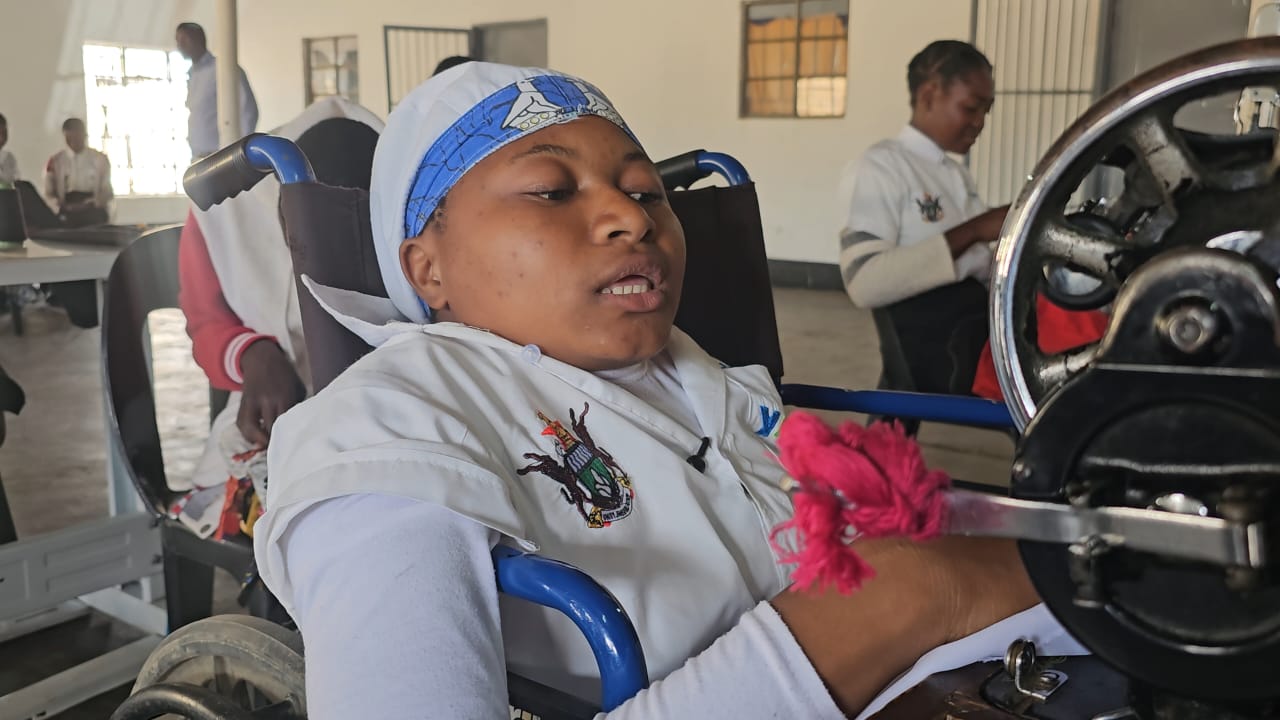
At the Madziwa Youth Incubation Hub, 23-year-old Anisha Masaire is among young people using the skills she acquired to generate income.

Masaire, who was born with Osteogenesis Imperfecta, said the centre had allowed her to pursue fashion design and become economically independent.

“I am learning cutting and designing here, and the skills I have gained are already helping me make money. I am producing apostolic sect garments as well as African-inspired attire,” she said.

“This programme has given me confidence because I can now use my skills to create something for myself.”

The hub provides young people with access to equipment, workspace, mentorship and entrepreneurship support.

Shamva District Development Officer in the Ministry of Youth Empowerment, Development and Vocational Training Mrs Patience Fungai Mkwanda, said the facility was addressing challenges that often-prevented trained youths from starting businesses.

“We realised that many young people were trained through vocational programmes but after graduating, their skills became dormant because they did not have capital equipment, workspace or mentorship,” she said.

“This incubation hub was created to provide shared equipment, workspace and business guidance so that young people can become entrepreneurs.”

Mrs Mkwanda said 322 youths had directly benefited from the facility through training in clothing and textile, beauty therapy, ICT and other skills.

“We are seeing youths creating businesses, joining savings groups and becoming self-reliant. The objective is to ensure young people become contributors to rural industrialisation,” she said.

At the Madziwa Youth Centre, young people are also receiving support for adolescent health and well-being.

Zimbabwe National Family Planning Council youth health adviser Farai Mhuri said the centre was providing young people with access to information and services.

“The youth centre provides young people with a safe space where they can access information on sexual and reproductive health, life skills and other support services,” he said. “When young people have access to the right information, they are better equipped to make informed decisions.”

SOS Children’s Villages Family Strengthening Programmes coordinator for Shamva District, Mr Malven Manyeza, said the livelihood projects were designed to help communities build their own economic base.

“What we are trying to do through these projects is to create platforms where communities can generate income and sustain themselves,” he said.

“The poultry and piggery projects are not just about providing resources; they are about creating businesses owned by communities.

“When families are economically empowered, they are better positioned to meet their own needs. Our role is to provide the foundation, infrastructure and support, then communities take ownership and grow these initiatives.”

The Ward 3 Community Piggery Project has supported families with infrastructure, pigs and startup inputs, while the Madziwa poultry initiative received support towards production infrastructure, equipment, feed and other requirements.

The post US$108 000 rural enterprise drive transforms Shamva communities appeared first on Zimbabwe Situation.

TSCZ, ZRP holds pedestrian safety awareness campaigns in Harare

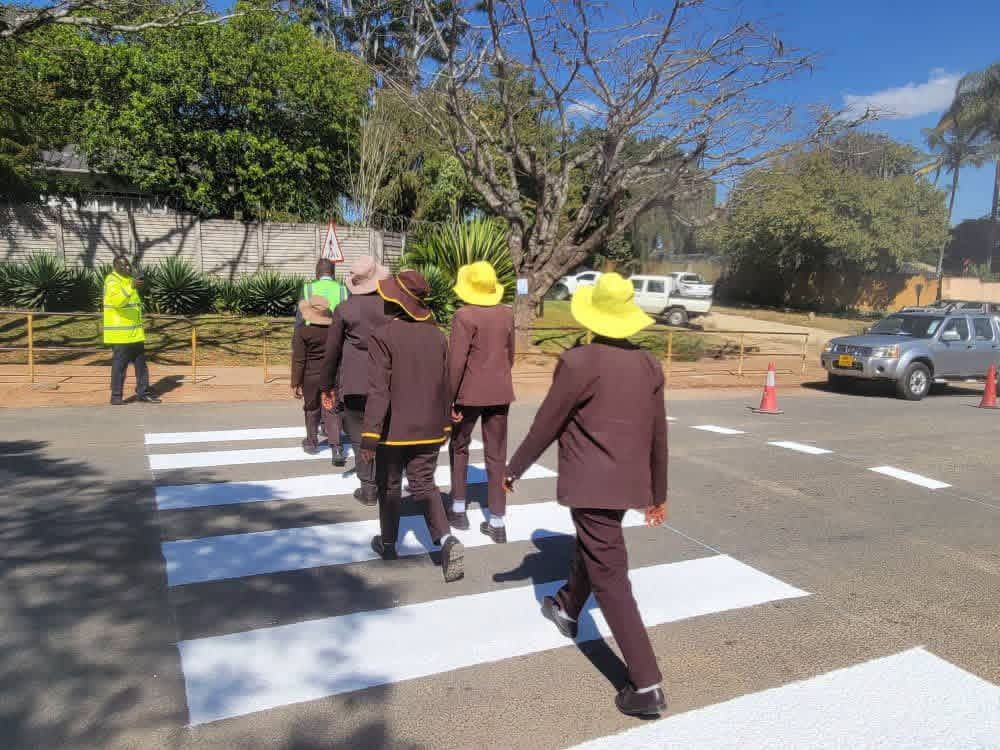
Source: TSCZ, ZRP holds pedestrian safety awareness campaigns in Harare – herald Mutare Junior School pupils crossing the road via their freshly painted pedestrian crossing Freeman Razemba Senior Reporter THE Traffic Safety Council of Zimbabwe, in conjunction with the police, is conducting pedestrian safety awareness campaigns in and around the city aimed at promoting road […]

The post TSCZ, ZRP holds pedestrian safety awareness campaigns in Harare appeared first on Zimbabwe Situation.

Source: TSCZ, ZRP holds pedestrian safety awareness campaigns in Harare – herald

Freeman Razemba

Senior Reporter

THE Traffic Safety Council of Zimbabwe, in conjunction with the police, is conducting pedestrian safety awareness campaigns in and around the city aimed at promoting road safety awareness, encouraging responsible road use, and enhancing pedestrian safety among members of the public.

These campaigns are also being held in collaboration with various key stakeholders who include the Insurance Council of Zimbabwe (ICZ), Discovery Ambulance Services, ConCERT, Zimbabwe union of Drivers and Conductors (ZUDAC) and Zimbabwe United Deregulated Commuter Operators (ZUDCO), among others.

This development comes after the Zimbabwe National Road Administration (ZINARA) and the Traffic Safety Council of Zimbabwe (TSCZ) conducted a pedestrian crossing points campaign and repainting programme in Bulawayo last week, aimed at improving road safety around schools and protecting vulnerable road users.

The initiative comes amid growing concern over the increasing number of pedestrians being killed or injured in hit-and-run accidents across the country.

The Government recently urged motorists to exercise greater caution when approaching pedestrian crossing points and has acquired specialised equipment to repaint zebra crossings nationwide as part of efforts to reduce road traffic fatalities.

According to police statistics, 2 081 pedestrians were killed or injured in hit-and-run accidents between January and March this year, up from 1 905 cases recorded during the same period last year.

Schoolchildren, pedestrians crossing traffic-controlled intersections, as well as people walking along roadsides and pavements, account for the majority of victims.

The increase in casualties has prompted authorities to intensify road safety interventions, including the refurbishment and repainting of pedestrian crossing points across the country’s 10 provinces.

This week, the teams conducted such campaigns in Mutare.

“The Traffic Safety Council of Zimbabwe (TSCZ), working in partnership with ZINARA, carried out a road marking ceremony at Mutare Junior Primary School as part of ongoing initiatives aimed at enhancing pedestrian safety and creating safer roads for all road users.

“The programme brought together key stakeholders in road safety, including representatives from the Ministry of Transport and Infrastructural Development, Mutare City Council, and the Zimbabwe Republic Police,” TSCZ said.

“Teachers and learners from Mutare Junior Primary School also took part, demonstrating the shared responsibility required to promote safe road use and protect vulnerable road users.”

The council said that through collaborative action and sustained road safety initiatives, they remain committed to building a safer road environment where every pedestrian, learner, motorist, and cyclist can travel with greater confidence and security.

“To date, pedestrian crossings in Manicaland have been painted in Mutare, Chipinge and Nyanga.”

The post TSCZ, ZRP holds pedestrian safety awareness campaigns in Harare appeared first on Zimbabwe Situation.