Harare nears full fiscalisation, advances BIQ system rollout 

Source: Harare nears full fiscalisation, advances BIQ system rollout – herald Chairperson of the Finance and Development Committee, Councillor Jubilation Shoko (Ward 45, Dzivarasekwa) Herald Reporter THE City of Harare has made significant progress in modernising its financial management systems, with the local authority now between 80 and 90 percent complete on its fiscalisation programme […]

The post Harare nears full fiscalisation, advances BIQ system rollout  appeared first on Zimbabwe Situation.

Source: Harare nears full fiscalisation, advances BIQ system rollout – herald
Herald Reporter

THE City of Harare has made significant progress in modernising its financial management systems, with the local authority now between 80 and 90 percent complete on its fiscalisation programme while continuing the rollout of the BIQ Enterprise Resource Planning (ERP) system.

The developments are expected to enhance billing efficiency, strengthen revenue collection and improve service delivery as the city accelerates efforts to modernise its operations and improve financial accountability.

City officials said the fiscalisation programme, which integrates transactions with tax and revenue management systems, is nearing completion and will help improve transparency, reduce revenue leakages and streamline financial processes.

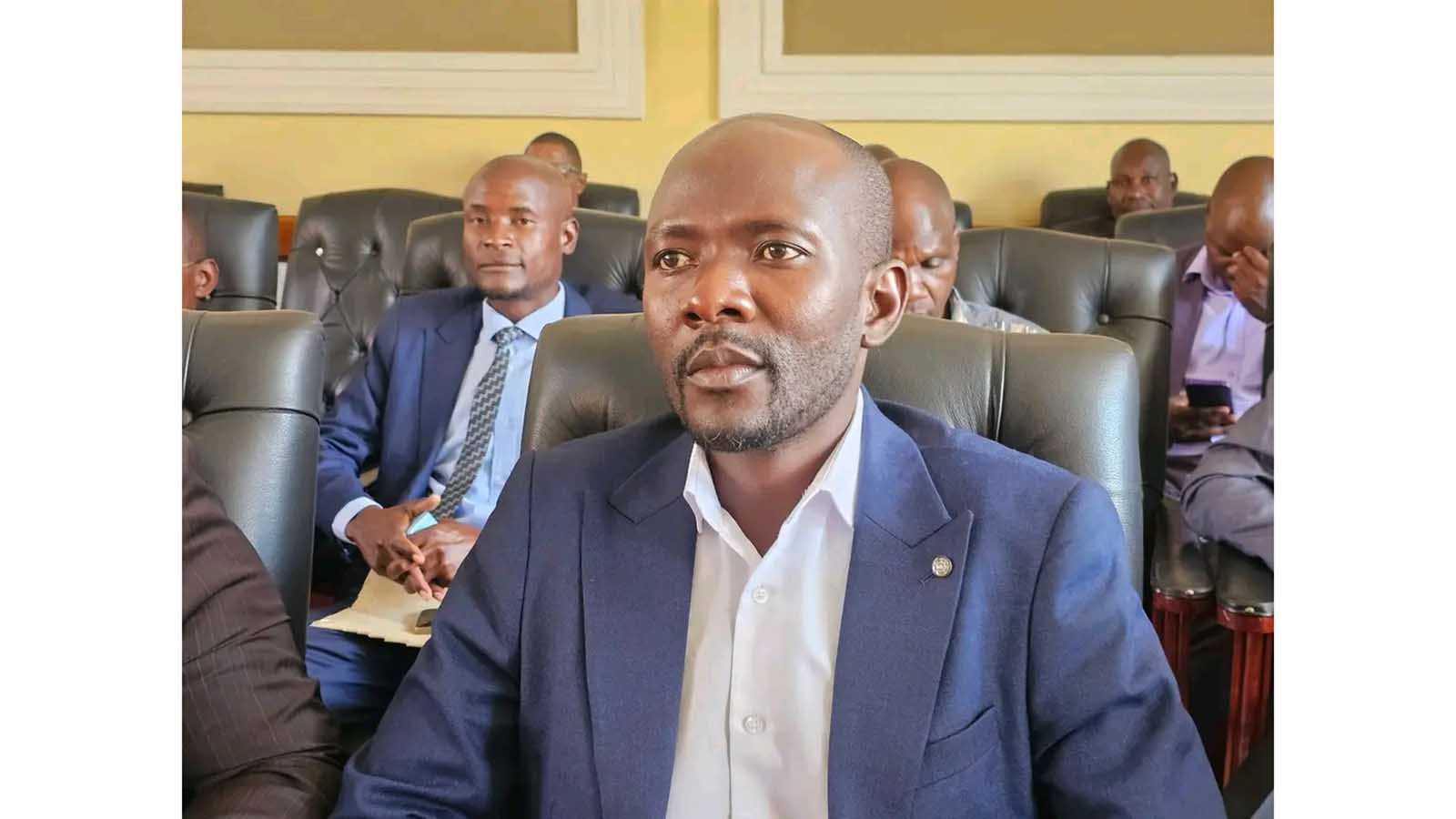
Chairperson of the Finance and Development Committee, Councillor Jubilation Shoko (Ward 45, Dzivarasekwa), said the city had made substantial progress on both fiscalisation and the migration from the Sage ERP platform to BIQ.

“We are between 80 and 90 percent complete in terms of fiscalisation. We have already procured almost everything required in terms of hardware and gadgets and we are now focusing on system configurations,” said Clr Shoko.

“We had fallen behind on fiscalisation largely because of challenges related to the ERP system, but as we resolve those ERP challenges, we are simultaneously addressing our fiscalisation obligations.”

Fiscalisation is a key requirement by the Zimbabwe Revenue Authority (ZIMRA) aimed at improving transparency and accountability through the use of approved electronic systems that record and transmit transaction data.

Clr Shoko said the city had also made notable progress in migrating from Sage to BIQ, the ERP system that was previously used by the local authority before 2019.

“The migration from Sage to BIQ is now underway, and we are implementing the system in phases to ensure a smooth transition. We have already started billing and receipting on BIQ, and residents will notice that the next bills they receive will look different because they will be generated from the new system,” he said.

The councillor revealed that implementation of the BIQ ERP project had now reached 40 percent, with several critical modules already operational.

“So far, modules for receipting, billing, fiscalisation and the General Ledger are already functional, marking a significant milestone in the implementation process,” said Clr Shoko.

According to a recent report presented to the council by Acting Head of Information Communication Technology (ICT), Mr William Mugobogobo, the BIQ ERP project implementation had reached 40 percent completion, with three out of the 10 contracted modules already functional.

In his report, Mr Mugobogobo said: “The BIQ ERP project implementation progress is now at 40 percent, with three out of 10 modules already functional. These are receipting, billing, fiscalisation and General Ledger modules.”

Mr Mugobogobo further noted that the online payments platform had been successfully configured, with three financial institutions already tested and approved for use.

“The online payments platform has been successfully configured and three financial institutions have already been successfully tested for use. More banks are currently being configured for online payments integration,” read part of the report.

The city is implementing close to 10 modules under BIQ, including lease management, credit control and bank reconciliation, among other critical financial functions.

“We are working flat out to ensure that all the modules are fully operational. It is a comprehensive process involving about 10 modules and the work is progressing well,” said Clr Shoko.

Mr Mugobogobo said the remaining modules scheduled for implementation under the BIQ system include asset management, budget management, inventory procurement, stores management, accounts payable, payroll, bank reconciliations and costing modules.

He added that training for all cashiers, clearing officers and billing staff on the receipting module had already been completed as part of efforts to ensure a seamless transition to the new platform.

To ensure continuity of operations and safeguard data integrity, the city is currently running both the Sage and BIQ systems concurrently during the transition period.

“We have not completely shut down Sage because we are still migrating historical data from one system to the other,” said Clr Shoko.

“For the next few months, we will continue operating both systems as we manage the transition.”

The local authority has also started collecting taxpayers’ Taxpayer Identification Numbers and fiscal information to build a comprehensive database ahead of full fiscalisation.

In addition, the city has procured new and modern computer hardware for district offices, service centres and processing points to support the upgraded systems.

“Almost every district office has received new computers and installations are ongoing. It is all systems go in terms of modernising our operations and ensuring that our systems run smoothly,” said Clr Shoko.

He added that the Auditor-General had already been invited to verify and audit historical financial records to ensure accuracy and bring closure to outstanding financial issues.

“We have already invited the Auditor-General to carry out verifications and audits of historical figures,” he said.

“We believe this process will help bring finality to outstanding issues and strengthen public confidence in the city’s financial records.”

The ongoing reforms are expected to improve accountability, minimise revenue leakages and enhance the efficiency of municipal service delivery across the capital.

The post Harare nears full fiscalisation, advances BIQ system rollout  appeared first on Zimbabwe Situation.

Zimbabwe and the anatomy of a constitutional coup 

Source: Zimbabwe and the anatomy of a constitutional coup -Newsday Zimbabwe WHEN most people hear the word “coup,” they imagine soldiers on the streets, tanks surrounding government buildings, suspended constitutions and military officers announcing the seizure of power on national television. Yet, the 21st has produced a more sophisticated and often more dangerous threat to […]

The post Zimbabwe and the anatomy of a constitutional coup  appeared first on Zimbabwe Situation.
Source: Zimbabwe and the anatomy of a constitutional coup -Newsday Zimbabwe

WHEN most people hear the word “coup,” they imagine soldiers on the streets, tanks surrounding government buildings, suspended constitutions and military officers announcing the seizure of power on national television.

Yet, the 21st has produced a more sophisticated and often more dangerous threat to democracy: the constitutional coup.

Unlike a military coup, a constitutional coup does not abolish the Constitution. It appropriates it.

It does not suspend legal processes. It manipulates them. It does not overthrow democracy through force. It undermines democracy through the selective use of legality.

The result is often the same: the concentration of power, the weakening of democratic accountability and the frustration of the people’s sovereign will.

Zimbabwe’s Constitution Amendment No 3 Bill presents a textbook example of this phenomenon.

The evolution of coups

Africa has experienced several generations of democratic disruption.

The first generation consisted of classic military coups in which armed forces seized power directly.

The second generation involved electoral manipulation, where elections continued to take place but were conducted in ways that prevented genuine competition.

The third generation is more subtle. It uses constitutional amendments, parliamentary majorities and legal procedures to achieve outcomes that would otherwise be rejected by the electorate.

This is what scholars increasingly describe as constitutional coup-making.

The essence of a constitutional coup is not whether legal procedures are followed.

The real question is whether constitutional procedures are being used to destroy constitutional principles.

A constitution is not merely a collection of legal clauses. It embodies democratic values, limits on power and a social contract between citizens and the State.

When constitutional mechanisms are employed to defeat those principles, legality becomes a weapon against constitutionalism itself.

The African Union has already defined a constitutional coup

The debate over constitutional coups is often presented as if it were merely a political argument. It is not.

The African Union settled this question nearly two decades ago.

Article 23(5) of the African Charter on Democracy, Elections and Governance expressly recognises it as an unconstitutional change of government: “Any amendment or revision of the constitution or legal instruments, which is an infringement on the principles of democratic change of government.”

This provision is revolutionary because it acknowledges a reality that many democracies have experienced: democracy can be undermined not only by soldiers with guns but also by politicians with parliamentary majorities.

The charter recognises that constitutional procedures can be abused to achieve anti-democratic outcomes.

The question, therefore, is not whether constitutional amendments are permissible. Constitutions may, indeed, be amended.

The question is whether particular amendments infringe the principles of democratic change of government.

That is the test established by the African Union itself.

Article 2 of the charter commits member States to promoting democracy, constitutional order and the rule of law.

Article 3 commits member States to constitutionalism, popular participation, political pluralism and democratic governance.

Articles 24 and 25 empower the African Union to respond when democratic institutions are threatened by unconstitutional changes of government.

Most significantly, the 2022 Accra Declaration on Unconstitutional Changes of Government recognised that contemporary threats to democracy increasingly include the manipulation of constitutions by incumbents seeking to entrench themselves in power.

The African Union, therefore, no longer views unconstitutional change solely through the lens of military intervention. It recognises that constitutional manipulation can produce the same anti-democratic result.

The Zimbabwe case

Supporters of Constitution Amendment No 3 Bill (CAB 3) argue that the Bill is being processed through Parliament and, therefore, enjoys constitutional legitimacy.

This argument mistakes procedure for principle.

Empirical evidence elsewhere in Africa shows us that many anti-democratic measures have been enacted through formally legal processes. Legality alone does not establish legitimacy.

The central question is whether the proposed amendments strengthen constitutional democracy or weaken it.

Several aspects of the Bill suggest the latter.

Most controversially, the Bill seeks to extend the tenure of elected office holders beyond the mandate granted by voters in the 2023 election.

At the heart of constitutional democracy lies a simple principle: political authority must periodically return to the people for renewal.

Citizens elect governments for defined periods. Governments govern during those periods. When the term expires, the people decide whether the mandate should continue.

That cycle is the foundation of democratic accountability.

When elected officials seek to prolong their tenure without returning to the electorate, the relationship between citizens and government is fundamentally altered.

The issue is not whether Parliament possesses the numerical capacity to amend the Constitution.

The issue is whether Parliament possesses the democratic authority to extend mandates that belong to the people.

No parliamentary majority can substitute itself for the sovereign electorate.

Indeed, the fact that the National Assembly has passed (CAB 3) by the requisite two-thirds majority only sharpens the constitutional question.

Numbers can pass legislation.

Numbers cannot create democratic legitimacy where the sovereign will of the people has been bypassed.

If, as anticipated, the Senate also passes the Bill, the question will remain exactly the same:

Can elected representatives extend electoral mandates without first returning to the electorate?

That question lies at the heart of constitutional democracy.

Constitutionalism versus constitutional amendment

One of the most dangerous misconceptions in contemporary politics is the belief that everything contained in a constitution can be altered by those who temporarily control the institutions of the State.

Constitutionalism is not the same thing as constitutional amendment.

Constitutionalism is the principle that power must be limited, accountable and subject to democratic control.

A constitutional amendment that weakens those principles may be legal in form while unconstitutional in spirit.

This distinction explains why many constitutions contain entrenched provisions designed to protect democracy from temporary majorities.

Zimbabwe’s Constitution contains safeguards intended to prevent incumbents from benefiting from amendments relating to tenure and term limits.

These safeguards were not inserted accidentally. They were designed to prevent precisely the type of constitutional manipulation now under debate.

The Constitution anticipated the temptation of power and attempted to guard against it.

Why referendums matter

There is a simple democratic solution available whenever constitutional changes fundamentally alter the relationship between citizens and the State: let the people decide.

The Constitution of Zimbabwe was adopted through a referendum.

The people were the authors of the constitutional settlement.

It follows that fundamental change affecting electoral mandates, democratic accountability and the architecture of governance should similarly derive legitimacy from the direct consent of the people.

Those who claim overwhelming public support for CAB 3 should have nothing to fear from a referendum.

Democracy is strongest when it trusts citizens.

If the people approve the changes, the amendments gain democratic legitimacy.

If they reject them, the constitutional order remains intact.

Either way, the sovereign will of the people prevails.

Why this matters beyond Zimbabwe

The struggle over CAB 3 is ultimately larger than Zimbabwe.

It raises a question confronting democracies across Africa and beyond:

Can constitutions continue to protect citizens when those entrusted with power use constitutional procedures to weaken constitutional principles?

The answer will shape the future of democratic governance on the continent.

Democracy is not simply majority rule.

It is majority rule constrained by constitutional principles, periodic elections and the sovereignty of the people.

When those principles are weakened, democracy survives in form but not in substance.

Constitutional coups are dangerous precisely because they disguise democratic erosion behind the language of legality.

They ask citizens to accept that because a process is lawful, it must, therefore, be legitimate.

But constitutional history teaches a different lesson.

The ultimate purpose of a constitution is not to protect governments from the people.

It is to protect the people from the abuse of power.

That is why Zimbabwe’s current constitutional moment deserves attention not only from Zimbabweans but from all Africans committed to constitutional governance.

The African Union has already recognised that constitutional amendments can, in certain circumstances, amount to unconstitutional changes of government.

The question before Zimbabwe is, therefore, not whether Parliament has the votes.

The question is whether constitutional power will remain where it belongs — with the people.

Senator Jameson Z Timba is a Zimbabwean politician, former Minister of State in the Office of the Prime Minister and Convenor of the Defend the Constitution Platform. He serves on the presidium and board of governors of the Progressive Alliance and writes extensively on constitutionalism, democratic governance, statecraft and Africa’s democratic renewal.

The post Zimbabwe and the anatomy of a constitutional coup  appeared first on Zimbabwe Situation.

Mthuli to rebase economy again 

Source: Mthuli to rebase economy again -Newsday Zimbabwe THE government is planning to rebase the economy for a third time in less than a decade, two years before its target date of attaining upper-middle-income status. The move will reshape key economic indicators, which may distort whether the milestone is economically or statistically driven. The planned […]

The post Mthuli to rebase economy again  appeared first on Zimbabwe Situation.
Source: Mthuli to rebase economy again -Newsday Zimbabwe

THE government is planning to rebase the economy for a third time in less than a decade, two years before its target date of attaining upper-middle-income status.

The move will reshape key economic indicators, which may distort whether the milestone is economically or statistically driven.

The planned rebase follows major revisions in 2018 and 2025 that significantly altered the size and structure of the economy.

In the 2018 exercise, Zimbabwe revised its base year from 2009 to 2012, resulting in the value of the economy rising by 22,5% from US1 235 to US$1 511.

The rebasing elevated manufacturing above agriculture as the country’s second-largest contributor to GDP after wholesale and retail trade, reflecting previously uncounted activity in the informal sector and among small and medium enterprises.

Seven years later, another rebasing pushed Zimbabwe’s GDP estimate for 2024 to US$35,2 billion and lifted gross national income per capita above US$3 000, bringing the country closer to the threshold associated with upper-middle-income economies.

The government argued that the 2025 revision reflected the incorporation of results from the Economic Census, which identified 204 798 operational establishments, despite 76,1% of them being informal.

“A rebasing is a global norm in terms of national statistics, a recognition standard where we have to rebase every five years. So, the last rebase was in 2018, then 2023 and then the next rebasing will be in 2028, so we are going to rebase again,” Finance, Economic Development and Investment Promotion minister Mthuli Ncube said during an online Press briefing.

Ncube made the remarks from China, where he is leading a government delegation to the 17th Annual Meeting of the New Champions from the World Economic Forum. He said the 2025 rebasing process began in 2023.

“That is normal. So, it does not mess up any trends really; it just shows that if your economy is evolving then you are able to capture the new sectors, shifting sectors’ contributions to always recapture them accurately. So, rebasing is necessary for a more accurate representation of the economy and its sub-sectors,” Ncube said.

“Again, we will start the work in 2027, next year and hopefully, end of 2028 or early 2029, complete it. It takes quite a while — 18 months to do — to allow us to be thorough.”

However, economists noted that exchange-rate distortions and methodological changes widened the gap between modest real economic growth and the sharp increase in the economy’s US dollar valuation.

This raises questions as to whether GDP gains reflect genuine improvements in living standards or merely statistical adjustments.

Consequently, with the 2028 rebasing occurring just two years before Vision 2030’s target of attaining upper-middle-income status, there is doubt whether this will be driven by genuine economic expansion, productivity gains and rising household incomes or by successive statistical revisions.

This comes as the cost of living continues to rise, unemployment remains stubbornly high, purchasing power is eroding, disposable incomes are shrinking, and firms are increasingly entering corporate rescue or shutting down.

Furthermore, foreign capital remains constrained or is leaving and liquidity shortages persist.

Economist Tony Hawkins said rebasing was normal given the past economic shocks the country has faced, but noted that it made it very difficult to compare current GDP progress with past economic performance.

He added that there was also a structural change in the economy where one product — gold — is now responsible for half the foreign currency, suggesting that there was very little room for GDP expansion.

“You take gold out, then the situation will be very different. I think the second point now, as of mid-2026, when we are staring down the barrel of a very serious El Niño, there could be a very dramatic change, certainly in agriculture, with knock-on effects across the rest of the economy in 2026 and 2027 because of El Niño,” Hawkins said.

“If you look at last year, a third of the GDP growth came from agriculture; that is because of the rebound from a very poor season before to a good season, with bigger and higher tobacco prices.

“Now, this time round, there could be the exact reversal in that. So, I think it becomes harder and harder to interpret changes in growth, what causes them and what undermines them.”

He added that it was also a matter of time before the currency must be revalued, as its tight control is behind the current inflation and exchange rate stability.

“We cannot go on forever pretending that we don’t have a fixed exchange rate with the US dollar. It is a fiction that suits the government politically.

When you say that you are an upper-middle-income economy, you have to convince the World Bank, International Monetary Fund and others, who carry out the calculation.

“So, it is not just the Zimbabwe government saying that. If the figures are obviously phoney, then the international  guys will say we do not accept that.”

According to Hawkins, the major challenge is that current GDP statistics are mostly being derived from just one-third of the economy, as most is informal.

“You are looking at an economy that is two-thirds informal, so there is a hell lot of guesswork in getting to those output numbers,” he said.

“Some of the numbers you get them, very solid, from the private sector and so on — the formal private sector. But then, if you turn to what is happening in the informal private sector, who knows how reliable the numbers are.”

Africa Economic Development Strategies (AEDS) executive director Gift Mugano agreed that rebasing is not unusual, given the levels of growth and the scale of the informal sector.

However, he noted more needed to be done.

“The first thing to have is economic stability as a minimum requirement, as a foundation for building this country forward better.

“We cannot stop poverty when we are in poverty; we cannot address jobs when you have a yoyo economy, but you cannot have stability in one and a half years and then have an eradication of poverty,” Mugano said.

“In our conversation with government as AEDS, we told them we now need to lay a foundation for inclusive development where the benefit and dividend of our economic stability begin to now pay off dividends, making sure there is the availability of medicine, hospitals, meaningful jobs in terms of job creation, etc”.

He said the government needed to move towards addressing social ills by including accountability and transparency in the way foreign currency is being used.

“Let us accept that we are here because of economic hardships, which have been affecting us for close to three decades now.

“So, what you see as the outcome of OK Zimbabwe is one of the major issues where there was a currency crisis which saw the crash of the ZiG in September 2024 and wiped the balance sheet of many companies beyond OK,” Mugano said.

“So, we are still burning even if we have economic stability and that is the reality on the ground. We need to accept that.

There is no way you can say there is now stability, things are normal — no. Even the mindset of people is traumatised, which leads them to say, ‘How do we trust you?’ So, we need to accept that as it is. The informal sector is as a result of the collapse of the formal sector.”

The post Mthuli to rebase economy again  appeared first on Zimbabwe Situation.

Mashonaland West give Cde Matemadanda rousing farewell

Source: Mashonaland West give Cde Matemadanda rousing farewell – herald Pallbeares carry the casket bearing the body of national hero Cde Victor Matemadanda upon arrival at the Charles Gumbo in Harare yesterday.- Picture: Charles Muchakagara. Walter Nyamukondiwa in SANYATI THOUSANDS of people, including relatives, members of the Sanyati and Mashonaland West province community, thronged the […]

The post Mashonaland West give Cde Matemadanda rousing farewell appeared first on Zimbabwe Situation.

Source: Mashonaland West give Cde Matemadanda rousing farewell – herald

Walter Nyamukondiwa in SANYATI

THOUSANDS of people, including relatives, members of the Sanyati and Mashonaland West province community, thronged the Matemadanda homestead to bid farewell to national hero Ambassador Victor Matemadanda.

Mashonaland West Provincial Affairs and Devolution Minister Marian Chombo, represented by provincial secretary Mr Josphat Jaji, led the official Government programme, leading to the body being airlifted back to Charles Gumbo Barracks.

Mr Jaji said all was set for people in the province to travel to the National Heroes Acre for the burial.

“We have done everything that Government needs to do to ensure that Amb Matemadanda received a befitting send-off in the province.

Described as an honest and steadfast leader, Amb Matemadanda has been hailed for promoting the virtues of unity and hard work.

Zanu PF Mashonaland West provincial chairman Cde Mary Mliswa-Chikoka implored people to emulate the virtues of honesty, steadfastness and patriotism demonstrated by the late Ambassador to Mozambique.

She said Cde Matemadanda had helped improve diplomatic ties with their eastern neighbour while also facilitating access for people touring historical war shrines such as Chimoio.

His daughters, Patience and Teresa, said Amb Matemadanda taught them the value of education and production on the land.

His brother, Mr Willie Bhushmani, said Amb Matemadanda was the glue that stuck the family together.

The body of the late national hero Cde Victor Matemadanda left Village 9C, Muzvezve 1, in Sanyati.

War veteran Cde Cornelius Muwoni said Cde Matemadanda had raised consciousness among freedom fighters and worked to improve their welfare.

The post Mashonaland West give Cde Matemadanda rousing farewell appeared first on Zimbabwe Situation.

Kunzvi dam ‘nearing completion’ but more dams needed, Mayor warns

Source: Kunzvi dam ‘nearing completion’ but more dams needed, Mayor warns –Newsday Zimbabwe HARARE Mayor Jacob Mafume has sounded the alarm on the capital’s escalating water crisis, revealing that the city’s demands have surged to 500 megalitres per day – and even the long-awaited Kunzvi Dam won’t be enough to quench the thirst of 3.4 […]

The post Kunzvi dam ‘nearing completion’ but more dams needed, Mayor warns appeared first on Zimbabwe Situation.

Source: Kunzvi dam ‘nearing completion’ but more dams needed, Mayor warns –Newsday Zimbabwe

HARARE Mayor Jacob Mafume has sounded the alarm on the capital’s escalating water crisis, revealing that the city’s demands have surged to 500 megalitres per day – and even the long-awaited Kunzvi Dam won’t be enough to quench the thirst of 3.4 million residents.

Mafume praised the government for the Kunzvi Dam project, which is now nearing completion, but cautioned that additional dams will be required to meet the rising demand.

“Harare’s water works supply Harare City itself, Chitungwiza, Epworth, Ruwa and Norton,” Mafume told NewsDay.

“Currently, demand for water in the greater Harare area is pegged at 500 megalitres per day, which is quite a lot.”

The Kunzvi dam represents the city’s first major water infrastructure project since Morton Jaffrey Dam was built in 1976, nearly half a century ago.

“I want to pay tribute to the government and specifically the Ministry of Water for constructing Kunzvi Dam. I am happy and satisfied that the project is now nearing completion, and this is going to ease water supplies in Greater Harare,” Mafume said.

Once completed, the dam will benefit areas including Mabvuku and the eastern parts of the city, providing much-needed relief to the sprawling metropolis.

In a separate development, Mafume declared that the era of post-paid municipal services is over, with the city rolling out pre-paid water meters.

The City of Harare, in partnership with Helcraw Water Private Limited, has already installed 80,000 pre-paid water meters across the capital—a move the mayor says aligns with global trends toward pre-payment systems.

The post Kunzvi dam ‘nearing completion’ but more dams needed, Mayor warns appeared first on Zimbabwe Situation.