Source: Mthuli to rebase economy again -Newsday Zimbabwe
THE government is planning to rebase the economy for a third time in less than a decade, two years before its target date of attaining upper-middle-income status.
The move will reshape key economic indicators, which may distort whether the milestone is economically or statistically driven.
The planned rebase follows major revisions in 2018 and 2025 that significantly altered the size and structure of the economy.
In the 2018 exercise, Zimbabwe revised its base year from 2009 to 2012, resulting in the value of the economy rising by 22,5% from US1 235 to US$1 511.
The rebasing elevated manufacturing above agriculture as the country’s second-largest contributor to GDP after wholesale and retail trade, reflecting previously uncounted activity in the informal sector and among small and medium enterprises.
Seven years later, another rebasing pushed Zimbabwe’s GDP estimate for 2024 to US$35,2 billion and lifted gross national income per capita above US$3 000, bringing the country closer to the threshold associated with upper-middle-income economies.
The government argued that the 2025 revision reflected the incorporation of results from the Economic Census, which identified 204 798 operational establishments, despite 76,1% of them being informal.
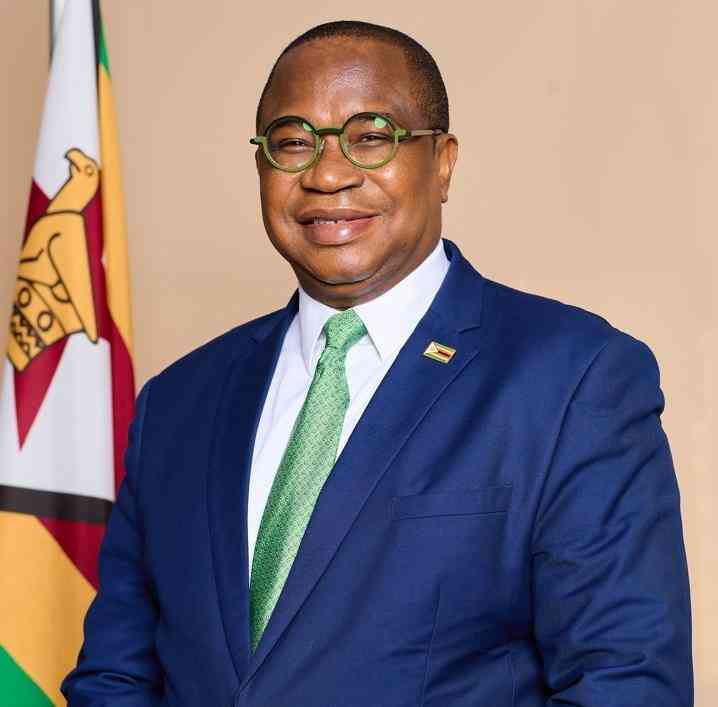
“A rebasing is a global norm in terms of national statistics, a recognition standard where we have to rebase every five years. So, the last rebase was in 2018, then 2023 and then the next rebasing will be in 2028, so we are going to rebase again,” Finance, Economic Development and Investment Promotion minister Mthuli Ncube said during an online Press briefing.
Ncube made the remarks from China, where he is leading a government delegation to the 17th Annual Meeting of the New Champions from the World Economic Forum. He said the 2025 rebasing process began in 2023.
“That is normal. So, it does not mess up any trends really; it just shows that if your economy is evolving then you are able to capture the new sectors, shifting sectors’ contributions to always recapture them accurately. So, rebasing is necessary for a more accurate representation of the economy and its sub-sectors,” Ncube said.
“Again, we will start the work in 2027, next year and hopefully, end of 2028 or early 2029, complete it. It takes quite a while — 18 months to do — to allow us to be thorough.”
However, economists noted that exchange-rate distortions and methodological changes widened the gap between modest real economic growth and the sharp increase in the economy’s US dollar valuation.
This raises questions as to whether GDP gains reflect genuine improvements in living standards or merely statistical adjustments.
Consequently, with the 2028 rebasing occurring just two years before Vision 2030’s target of attaining upper-middle-income status, there is doubt whether this will be driven by genuine economic expansion, productivity gains and rising household incomes or by successive statistical revisions.
This comes as the cost of living continues to rise, unemployment remains stubbornly high, purchasing power is eroding, disposable incomes are shrinking, and firms are increasingly entering corporate rescue or shutting down.
Furthermore, foreign capital remains constrained or is leaving and liquidity shortages persist.
Economist Tony Hawkins said rebasing was normal given the past economic shocks the country has faced, but noted that it made it very difficult to compare current GDP progress with past economic performance.
He added that there was also a structural change in the economy where one product — gold — is now responsible for half the foreign currency, suggesting that there was very little room for GDP expansion.
“You take gold out, then the situation will be very different. I think the second point now, as of mid-2026, when we are staring down the barrel of a very serious El Niño, there could be a very dramatic change, certainly in agriculture, with knock-on effects across the rest of the economy in 2026 and 2027 because of El Niño,” Hawkins said.
“If you look at last year, a third of the GDP growth came from agriculture; that is because of the rebound from a very poor season before to a good season, with bigger and higher tobacco prices.
“Now, this time round, there could be the exact reversal in that. So, I think it becomes harder and harder to interpret changes in growth, what causes them and what undermines them.”
He added that it was also a matter of time before the currency must be revalued, as its tight control is behind the current inflation and exchange rate stability.
“We cannot go on forever pretending that we don’t have a fixed exchange rate with the US dollar. It is a fiction that suits the government politically.
When you say that you are an upper-middle-income economy, you have to convince the World Bank, International Monetary Fund and others, who carry out the calculation.
“So, it is not just the Zimbabwe government saying that. If the figures are obviously phoney, then the international guys will say we do not accept that.”
According to Hawkins, the major challenge is that current GDP statistics are mostly being derived from just one-third of the economy, as most is informal.
“You are looking at an economy that is two-thirds informal, so there is a hell lot of guesswork in getting to those output numbers,” he said.
“Some of the numbers you get them, very solid, from the private sector and so on — the formal private sector. But then, if you turn to what is happening in the informal private sector, who knows how reliable the numbers are.”
Africa Economic Development Strategies (AEDS) executive director Gift Mugano agreed that rebasing is not unusual, given the levels of growth and the scale of the informal sector.
However, he noted more needed to be done.
“The first thing to have is economic stability as a minimum requirement, as a foundation for building this country forward better.
“We cannot stop poverty when we are in poverty; we cannot address jobs when you have a yoyo economy, but you cannot have stability in one and a half years and then have an eradication of poverty,” Mugano said.
“In our conversation with government as AEDS, we told them we now need to lay a foundation for inclusive development where the benefit and dividend of our economic stability begin to now pay off dividends, making sure there is the availability of medicine, hospitals, meaningful jobs in terms of job creation, etc”.
He said the government needed to move towards addressing social ills by including accountability and transparency in the way foreign currency is being used.
“Let us accept that we are here because of economic hardships, which have been affecting us for close to three decades now.
“So, what you see as the outcome of OK Zimbabwe is one of the major issues where there was a currency crisis which saw the crash of the ZiG in September 2024 and wiped the balance sheet of many companies beyond OK,” Mugano said.
“So, we are still burning even if we have economic stability and that is the reality on the ground. We need to accept that.
There is no way you can say there is now stability, things are normal — no. Even the mindset of people is traumatised, which leads them to say, ‘How do we trust you?’ So, we need to accept that as it is. The informal sector is as a result of the collapse of the formal sector.”
The post Mthuli to rebase economy again appeared first on Zimbabwe Situation.