Zanu PF, CCC hail bipartisan support for CAB 3 

Source: Zanu PF, CCC hail bipartisan support for CAB 3 – herald Zanu PF Chief Whip Cde Pupurai Togarepi hailed the adoption of the proposed amendments. “The overwhelming support of the Bill across the political divide is a clear testimony to the desire by the people of Zimbabwe to have progressive laws,” he said. Farirai […]

The post Zanu PF, CCC hail bipartisan support for CAB 3  appeared first on Zimbabwe Situation.

Source: Zanu PF, CCC hail bipartisan support for CAB 3 – herald
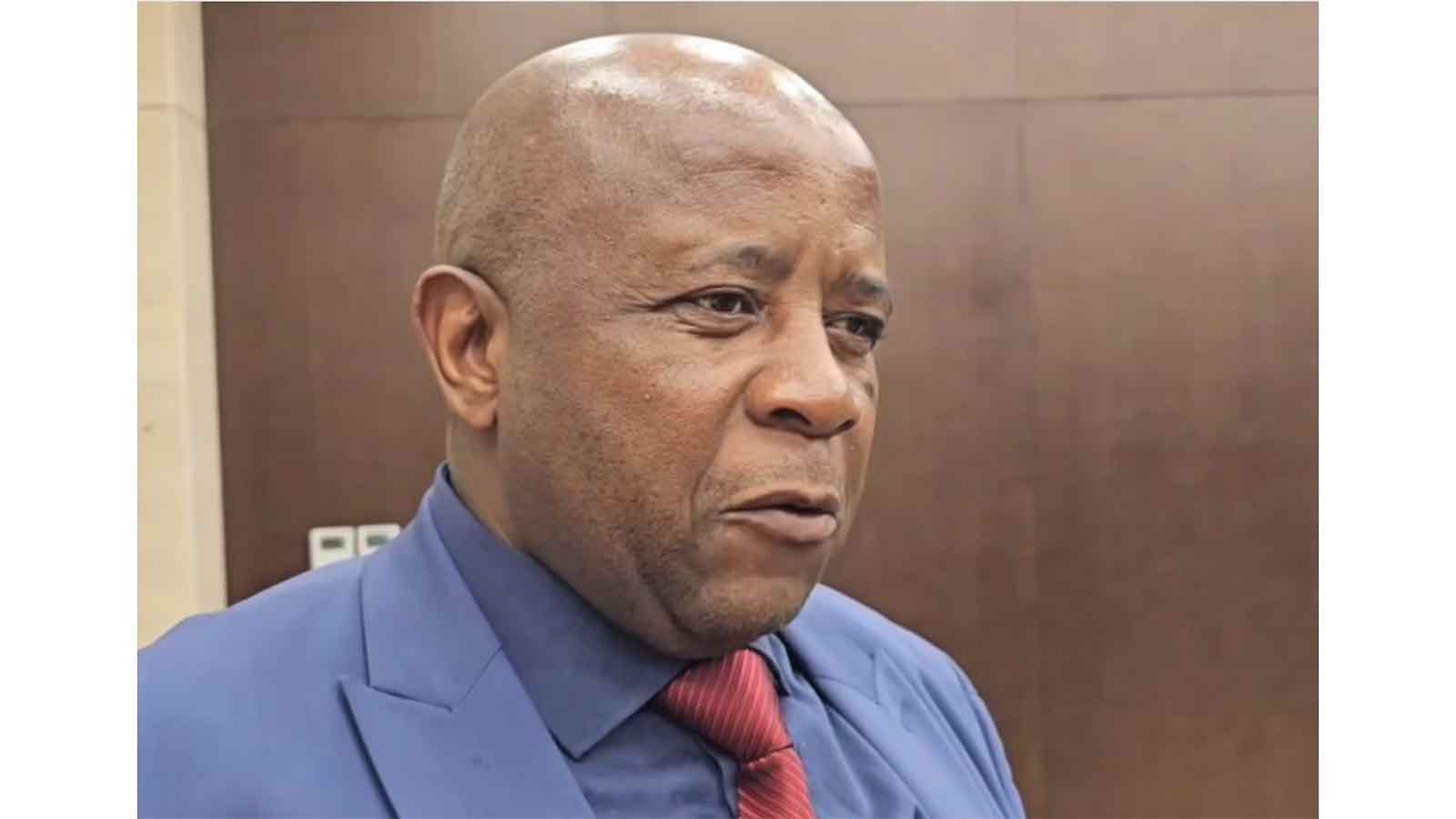
Farirai Machivenyika-Senior Reporter

ZANU PF and CCC have hailed the bipartisan support for Constitutional Amendment No. 3 Bill, which was passed in the National Assembly on Thursday, saying this is indicative of Zimbabweans’ wish to have progressive laws required for the country’s development.

CAB3 was passed with an overwhelming majority across the political divide, with 216 MPs voting in favour of the Bill, while 42 were against.

Zanu PF Chief Whip Cde Pupurai Togarepi hailed the adoption of the proposed amendments.

“The overwhelming support of the Bill across the political divide is a clear testimony to the desire by the people of Zimbabwe to have progressive laws,” he said.

“I am excited that the Honourable Members were satisfied with the Bill and what it seeks to achieve. This will allow the current and future governments to work with this forward-looking Constitution as we strive to achieve the development of our people.”

CCC’s interim spokesperson, Nqobizitha Mlilo, said the opposition party had allowed its MPs to debate and vote freely without toeing any party line.

“Ahead of this historic vote, the party made a deliberate decision to allow our MPs a free conscience vote,” he said.

“By not imposing a rigid party line, we empowered our MPs to vote in line with the expressed will of their constituencies and their own considered judgment.

“The result of the vote, therefore, reflects the practice of a free and open democracy.”

Mr Mlilo said as the Bill proceeds to the Senate, his party called on members of the public and politicians to engage each other civilly.

“As the Bill proceeds to the Senate for further consideration, we urge all citizens and political actors to engage with civility, decorum and political tolerance,” Mr Mlilo added. “Building national consensus and a united nation remains our central priority.”

He said with the forthcoming debate in the Senate, both parties must be guided by the principle of nation-building.

“All parties must be guided by the core principle of sustainable nation-building,” he said. “The time has come for deliberate, collaborative effort to bring a lasting end to political strife and conflict in our country.”

Political commentator Mr Dereck Goto said the bipartisan support of the Bill showed maturity in the country’s body politic.

“The support across political lines shows maturity in the country’s politics that is above partisanship,” he said. “This shows that the Bill was accepted on its merits, and that can only be good for the country’s development.”

The Bill will now be transmitted to the Senate, with the Justice, Legal and Parliamentary Affairs Minister, Ziyambi Ziyambi, expected to present his second reading speech on Tuesday before senators debate it.

After debate, the Bill will be scrutinised at the committee stage, where the Senate will consider it clause by clause. It will then be subjected to a vote, where it must also garner a two-thirds majority for it to sail through.

If it is passed by the Senate, it will then be transmitted to President Mnangagwa for his assent.

The post Zanu PF, CCC hail bipartisan support for CAB 3  appeared first on Zimbabwe Situation.
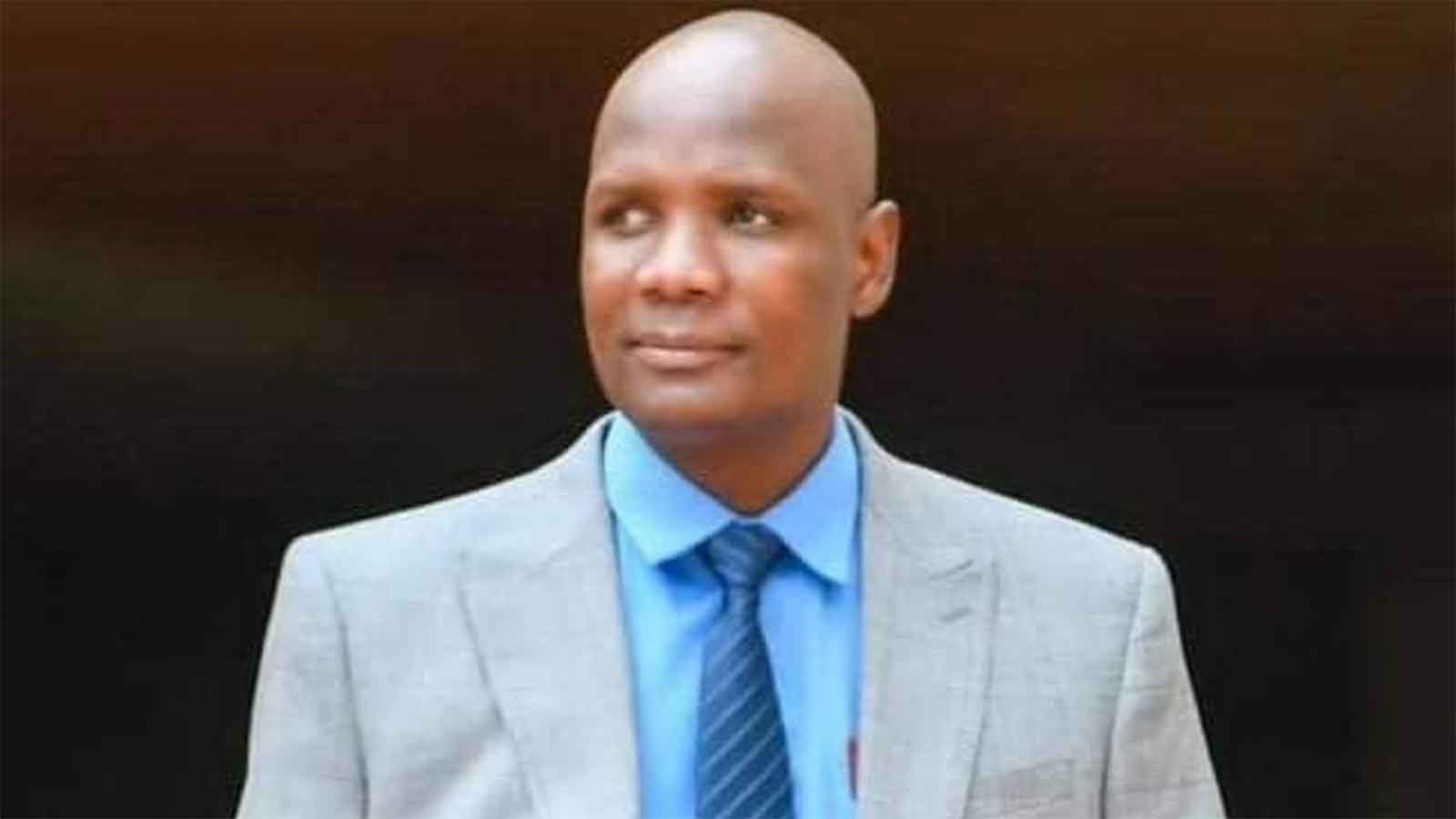
‘CAB3 lawsuits procedurally defective’ 

Source: ‘CAB3 lawsuits procedurally defective’ – herald Cde Wiriranai Muchemwa Fidelis Munyoro-Chief Court Reporter In what could be the tip of the iceberg, a lawyer representing Uzumba legislator Cde Wiriranai Muchemwa has said the court application made by a voter in his constituency was “procedurally defective, premature and directed at the wrong respondents”. The case […]

The post ‘CAB3 lawsuits procedurally defective’  appeared first on Zimbabwe Situation.

Source: ‘CAB3 lawsuits procedurally defective’ – herald

Fidelis Munyoro-Chief Court Reporter

In what could be the tip of the iceberg, a lawyer representing Uzumba legislator Cde Wiriranai Muchemwa has said the court application made by a voter in his constituency was “procedurally defective, premature and directed at the wrong respondents”.

The case against the legislator is similar to some other cases that have been filed across the country to challenge provisions of Constitution of Zimbabwe Amendment Bill No. 3 of 2026.

The legislator, who is being represented by his lawyer, Mr Tichawana Nyahuma, raised a series of preliminary objections, which he argued were sufficient to dispose of the matter before the court considers the merits of the challenge.

Responding to the application, Cde  Muchemwa implored the Constitutional Court (ConCourt) to dismiss an application filed by voter Yvonne Kapiripiri.

In an opposing affidavit filed before the court, the MP said Kapiripiri had improperly cited him solely because he was the incumbent Zanu PF Member of Parliament for Uzumba Constituency, despite his lack of authority to enact, amend, withdraw or invalidate constitutional legislation.

“I am not in Parliament, I am not the Speaker of the National Assembly. I am not the Attorney-General. I am not the Minister responsible for the Bill,” Cde Muchemwa said, adding that he had no unilateral power over the constitutional amendment process.

Cde Muchemwa also contended that the founding affidavit was invalid because it was not properly commissioned, saying the commissioner of oaths’ stamp failed to identify the office or capacity in which the commissioner acted.

He also challenged Kapiripiri’s legal standing, arguing that while she claimed to be a registered voter seeking relief based on that status, she had not provided proof of registration.

“She, therefore, cannot assert any case which is predicated on a status which she has not established,” Cde Muchemwa said.

The MP further argued that the application suffers from fatal non-joinder because it seeks relief affecting Parliament, the legislative process and the constitutionality of provisions contained in the amendment bill without citing parties such as Parliament, the Speaker of the National Assembly, the President of the Senate, the Minister of Justice, Legal and Parliamentary Affairs and the Attorney-General.

According to MP Muchemwa, the challenge is also premature because it seeks declarations on a constitutional bill that has not yet become law.

He argued that the Constitution provided specific mechanisms through which the ConCourt may advise on proposed legislation and that Kapiripiri’s application falls outside those constitutional procedures.

“The Bill is not sure to retain its present form or content when it has come out of that rigorous process,” he said, referring to parliamentary debate and possible amendments before the legislation is enacted.

Cde Muchemwa denied allegations that he intends to remain in office beyond the constitutional term ending in September 2028, saying no amendment has been enacted extending the tenure of Members of Parliament.

“There is no factual basis for the applicant’s assertion that I will unlawfully remain in office,” he said. “The complaint is speculative.”

The MP also rejected claims that the proposed amendments have already infringed political rights guaranteed under the Constitution.

He argued that no election has been postponed, no voter has been prevented from voting and no law currently in force restricts citizens from exercising their political rights.

“No enacted law presently prevents applicant from voting in any election to which the Constitution or any law applies,” he stated.

Addressing concerns over proposed changes to the presidential electoral system, Cde Muchemwa said Parliament is constitutionally empowered to make laws for the peace, order and good governance of Zimbabwe, including changes to electoral arrangements.

“It is not unconstitutional to change the electoral system,” he argued. “The vote remains and will be exercised within the new electoral system.”

Throughout the affidavit, Cde Muchemwa maintained that the application seeks what amounts to an advisory opinion on proposed legislation rather than the resolution of an actual constitutional dispute.

He argued that direct access to the ConCourt should not be granted because the matter is unripe, essential parties have not been joined and the application has been brought against a single constituency MP who lacks authority over the legislative process.

“The intended application does not enjoy prospects of success,” Cde Muchemwa said. “It is premature, defective for non-joinder, misdirected against the wrong respondent, and seeks pre-enactment advisory relief outside the proper constitutional channels.”

He consequently asked the ConCourt to dismiss the application with costs.

Kapiripiri, is among people who are seeking to challenge aspects of Constitution Amendment Bill No. 3 of 2026, including proposed provisions relating to parliamentary tenure and changes to the election of the President, arguing that the amendments would violate constitutional safeguards and political rights.

The ConCourt has yet to determine whether the application will proceed.

The post ‘CAB3 lawsuits procedurally defective’  appeared first on Zimbabwe Situation.

President Mnangagwa’s faction Risks Violent Coup… Military Faction Warns of Mugabe’s Fate as Generals Turn Against ED

The current political climate in Zimbabwe is fraught with tension, as President Emmerson Mnangagwa, once hailed as a pragmatist after the 2017 coup that unseated Robert Mugabe, now faces a formidable challenge from within his own ruling establishment. …

The current political climate in Zimbabwe is fraught with tension, as President Emmerson Mnangagwa, once hailed as a pragmatist after the 2017 coup that unseated Robert Mugabe, now faces a formidable challenge from within his own ruling establishment. His ambition to extend his tenure beyond the constitutionally mandated term has ignited a fierce internal struggle, […]

The post President Mnangagwa’s faction Risks Violent Coup… Military Faction Warns of Mugabe’s Fate as Generals Turn Against ED first appeared on My Zimbabwe News.

SA permit crisis deepens as xenophobic violence forces mass exodus 

SA permit crisis deepens as xenophobic violence forces mass exodus Source: SA permit crisis deepens as xenophobic violence forces mass exodus -Newsday Zimbabwe SOUTH African’s Department of Home Affairs has launched a stakeholder consultative process on the future of the Zimbabwean Exemption Permit (ZEP) and Lesotho Exemption Permit (LEP) programmes following a landmark court ruling […]

The post SA permit crisis deepens as xenophobic violence forces mass exodus  appeared first on Zimbabwe Situation.
SA permit crisis deepens as xenophobic violence forces mass exodus

Source: SA permit crisis deepens as xenophobic violence forces mass exodus -Newsday Zimbabwe

SOUTH African’s Department of Home Affairs has launched a stakeholder consultative process on the future of the Zimbabwean Exemption Permit (ZEP) and Lesotho Exemption Permit (LEP) programmes following a landmark court ruling that halted the termination of the permits.

In an invitation dated June 18, 2026, the department called on stakeholders and government representatives to participate in a Gauteng provincial stakeholder consultative workshop scheduled for later this month at Emperors Palace in Kempton Park.

The consultations stem from a June 2023 ruling by the Pretoria High Court in the case involving the Helen Suzman Foundation and others against the Home Affairs minister.

The court declared the decision to terminate the ZEP programme unlawful, unconstitutional and invalid.

The judgment further ordered that ZEP holders be allowed to remain in South Africa while a proper consultative process is conducted.

The Constitutional Court dismissed the minister’s appeal in June 2024, affirming that the minister is legally bound to follow a fair process.

According to the Department of Home Affairs, the public consultative exercise will be carried out during the 2026-27 financial year, with recommendations expected to be submitted to Cabinet by March 31, 2027 regarding the future of the ZEP and LEP programmes .

“Department of Home Affairs will embark on the court-mandated public consultation process in the 2026-27 financial year with the intention of making recommendations to Cabinet by March 31, 2027 regarding the future of the ZEP and LEP programmes,” the notice read.

Authorities said it was important to engage government departments and entities before wider stakeholder consultations began to ensure that all concerns and legal obligations are adequately addressed.

The consultative process includes workshops across multiple provinces.

The call comes at a time when vigilante groups such as March and March and Operation Dudula are intensifying protests and raids on foreign nationals, demanding that they leave the country before June 30 or face the worst.

The June 30 deadline, though having no legal basis, has acquired considerable symbolic power and has become a focal point for threats and intimidation.

Sporadic xenophobic violence erupted in various parts of the country, leaving some people dead as the situation grows increasingly tense in the neighbouring country.

According to World Health Organisation director-general, at least five Ethiopians and five Mozambicans were killed in recent attacks, with thousands of families displaced.

In Durban, more than 400 documented refugees are camped outside the Home Affairs office after being driven from their homes, while an estimated 10 000 displaced people are living in dire conditions in Sherwood Park.

International Relations minister Ronald Lamola recently moved to quell xenophobia claims, stressing that recent killings are linked to organised crime and not xenophobia and vowed that perpetrators will face the full force of the law.

However, Human Rights Watch has warned of a new wave of xenophobic violence targeting African and Asian migrants “with little or insufficient apparent response from the police and other authorities”.

Several governments, including Malawi, Mozambique, Ghana, Nigeria and Zimbabwe, have sent buses to evacuate their citizens from the volatile country in fear of what may befall them on June 30.

In Zimbabwe, authorities allege the government has evacuated 696 citizens from South Africa since the beginning of June under an assisted voluntary repatriation programme launched in response to the surge in attacks.

There are over one million Zimbabweans believed to be domiciled in South Africa.

The repatriation initiative is being implemented with support from partners, including the International Organisation for Migration and the United Nations Children’s Fund.

Most of the returnees were displaced from the Western Cape, KwaZulu-Natal and Gauteng provinces, where anti-immigrant protests have turned violent in recent weeks.

The outcome of the consultative process is expected to have dire implications for thousands of Zimbabwean and Basotho nationals living and working in South Africa under the exemption permit system, as the country grapples with rising anti-immigrant sentiment fuelled by deep inequality, poverty and high unemployment.

The post SA permit crisis deepens as xenophobic violence forces mass exodus  appeared first on Zimbabwe Situation.

CAB 3: ConCourt raises Mnangagwa red flag 

Source: CAB 3: ConCourt raises Mnangagwa red flag -Newsday Zimbabwe THE Constitutional Court (ConCourt) has hinted that President Emmerson Mnangagwa had a moral duty to recuse himself from Cabinet’s Constitutional Amendment No 3 Bill (CAB 3) discussions to extend his term of office by two years. One of the ConCourt judges made the  observation in […]

The post CAB 3: ConCourt raises Mnangagwa red flag  appeared first on Zimbabwe Situation.

Source: CAB 3: ConCourt raises Mnangagwa red flag -Newsday Zimbabwe

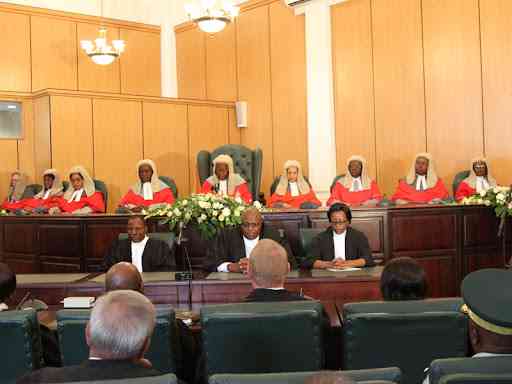
THE Constitutional Court (ConCourt) has hinted that President Emmerson Mnangagwa had a moral duty to recuse himself from Cabinet’s Constitutional Amendment No 3 Bill (CAB 3) discussions to extend his term of office by two years.

One of the ConCourt judges made the  observation in a ruling that cast a shadow on the push by the 83-year-old loyalists to overhaul the country’s electoral system.

The remarks by Justice Bharat Patel formed the crux of the judgment delivered by a full seven-member ConCourt bench on Wednesday that struck off the roll an application by war veterans challenging Mnangagwa’s involvement in the CAB 3 process.

The war veterans, represented by constitutional lawyer Lovemore Madhuku, approached the apex court arguing that the President breached his constitutional obligations by initiating and advancing constitutional amendments whose purpose and effect were allegedly constitutionally impermissible.

Patel drew a sharp distinction between what may be considered ethically desirable and what is legally enforceable under the Constitution.

“Even if one accepts the highly persuasive proposition that he has a moral duty to recuse himself from the process, that in itself does not translate to a legal or constitutional obligation to do so,” Patel said while delivering judgment.

“The second basis on which the applicants’ contention cannot succeed is that they have not identified any constitutional provision prohibiting the President from participating in Cabinet discussions relating to proposed constitutional amendments.

“The mere fact that a proposed constitutional amendment might benefit the President cannot, without more, render his participation in that process unconstitutional.”

Patel said the applicants failed to identify a constitutional provision prohibiting the President from participating in Cabinet discussions relating to proposed constitutional amendments.

According to the court, accepting the applicants’ argument would create a precedent where Executive officials could face accusations of constitutional misconduct merely for taking part in processes authorised by the Constitution.

The war veterans were seeking a declaration that Mnangagwa violated his constitutional obligations by directing and approving the constitutional amendment process through Cabinet despite allegedly standing to benefit from some of the proposed changes.

The court also rejected an argument that the President was obliged to personally file an opposing affidavit in the matter.

The applicants contended that proceedings concerning a president’s constitutional obligations were personal in nature and could not be opposed through an affidavit deposed to by another State official.

Patel disagreed, saying that while constitutional obligations imposed on the President may be personal and non-delegable in substance, that did not mean he was required to personally swear every affidavit filed in proceedings brought under section 167(2)(d) of the Constitution.

“Neither the Constitution nor the Constitutional Court rules expressly require the President to personally swear an opposing affidavit,” Patel said.

The post CAB 3: ConCourt raises Mnangagwa red flag  appeared first on Zimbabwe Situation.