The Tail Lying In The Leaves

Source: The Tail Lying In The Leaves – Cathy Buckle Dear Family and Friends, Driving behind a commuter kombi (minibus) on a road littered with potholes and humps, the kombi kept cutting in front of me, stopping to pick up more passengers, overtaking me and then cutting me off again. The kombi’s back window was […]

The post The Tail Lying In The Leaves appeared first on Zimbabwe Situation.

Source: The Tail Lying In The Leaves – Cathy Buckle

Dear Family and Friends,

Driving behind a commuter kombi (minibus) on a road littered with potholes and humps, the kombi kept cutting in front of me, stopping to pick up more passengers, overtaking me and then cutting me off again. The kombi’s back window was completely covered with a poster supporting Zimbabwe’s Constitutional Amendment Bill Number 3. ‘Building our Future without Interruptions,’ the poster said and I felt a deep ache in my heart. For weeks we have watched as every trick in the book has been used to silence opponents including violence, beatings, intimidation and harassment and then, at the last minute, reducing the submission time from 20 to 10 minutes for opposing MPs to voice their opinions. Zimbabwe’s parliament, which has a two thirds Zanu PF majority, yesterday passed Constitution Amendment Bill Number 3 with 216 votes in favour and 42 against.  The Senate will now debate and vote on the Bill before it goes to the President for assent.

Trying to clear my head while this process went on, I headed for the wilderness, looking for solace and peace. Walking along the narrow path in the dense thickets along the river, hope begins to return. This is the place where the trees are immense, said to be 500 years old, towering 40-50 to metres high. Even their names are intoxicating: Poison Pod Albizia, Red Mahogany, Apple Leaf Rain tree, Fever tree, Monkey Bread and as I pass each one, I touch their trunks and feel the beauty of Zimbabwe seeping back into my heart. This is the place where vines and creepers coil and curl, twist and bend, looping into branches and hanging in thick ropes. It’s the place where you have to step over big exposed roots and walk around spectacular prop roots. You have to duck your head to miss low hanging branches and I stop to look at a giant Sycamore Fig tree growing half in and half out of the river. A little Vervet monkey is hanging precariously from a thin leafy branch just a few centimetres above the water, desperate to reach that one yummy berry that it can see. The branch bends more, the monkey is almost upside down now and then with a long stretch and a quick snatch it gets the berry, pops it into its mouth and climbs back to safety. Ahead on the path is a pile of buffalo droppings and my eyes are peeled now and my heart rushes at the sound of rustling but it’s just a big leguaan (water monitor) skittering down into the safety of the water.

Little black and white spotted feathers litter the ground here and I reach an impenetrable thicket and look up. What must live there in those dark thick branches adorned with thick creeping vines, I wonder, and then I look down at my feet and see a tail lying in the leaves. Thick and fluffy, about 30 centimetres long, it is newly fallen there, but how or at whose hand or teeth is unknown. Look but don’t touch, I think. Further along I bend down to pick up what I think is a plastic bag only to discover it’s actually a fat, inside out snake skin.

Things out here in the wilderness are not at first what they seem and I watch a fearsome column of big black ants, six across, marching in a long line across the path. Life in Zimbabwe is like the ants on the trail: follow, obey, don’t step out of line or you too may end up being a tail lying in the leaves. Don’t let democracy interrupt the future of the already rich and powerful.

When time comes for me to leave the wilderness it’s hard to say goodbye to the guardians of this place, men and women working so hard for so little, far from their families, often in dangerous situations. They are ever smiling, ever thankful and I give what little I can, encouraging them to keep believing in the good, keep protecting Zimbabwe’s wild places. It’s a touching farewell. “Come back soon,” they say and I swallow a lump in my throat as I head out into the approaching dawn. The following day a message comes on my phone asking if I had a safe trip home and thanking me for staying at their camp. This is the real heart of Zimbabwe.

There is no charge for this Letter From Zimbabwe but if you would like to support my writing and donate please visit my website.

Until next time, thanks for reading this Letter From Zimbabwe now in its 26th year, and my books about life in Zimbabwe, a country in waiting.

Ndini shamwari yenyu (I am your friend)

Love Cathy 19th June 2026. Copyright © Cathy Buckle  https://cathybuckle.co.zw/

Please visit my website to see all my Books, Photobooks and Calendars https://cathybuckle.co.zw/

The post The Tail Lying In The Leaves appeared first on Zimbabwe Situation.
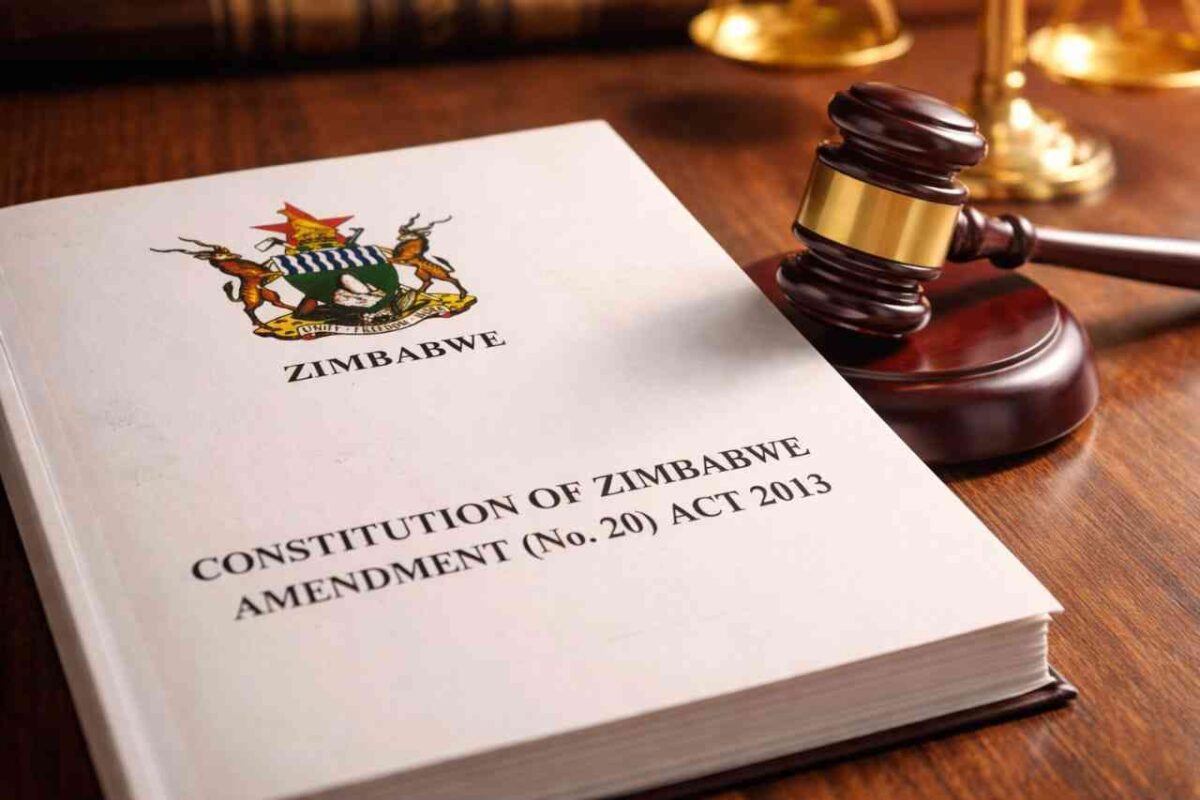
CAB3 passage sparks debate over Zimbabwe’s democratic future

Source: CAB3 passage sparks debate over Zimbabwe’s democratic future — CITEZW Zimbabwe’s Parliament has passed the contentious Constitutional Amendment Bill No. 3 (CAB3), triggering renewed debate over whether the proposed changes will strengthen governance or erode democratic accountability. The National Assembly on Thursday passed CAB3 after its third reading, with 216 legislators voting in favour […]

The post CAB3 passage sparks debate over Zimbabwe’s democratic future appeared first on Zimbabwe Situation.
Source: CAB3 passage sparks debate over Zimbabwe’s democratic future — CITEZW

Zimbabwe’s Parliament has passed the contentious Constitutional Amendment Bill No. 3 (CAB3), triggering renewed debate over whether the proposed changes will strengthen governance or erode democratic accountability.

The National Assembly on Thursday passed CAB3 after its third reading, with 216 legislators voting in favour and 42 against, paving the way for significant changes to the country’s Constitution.

Speaking on This Morning on Asakhe, a Current Affairs programme hosted by CITE on X, opposition politician Pashor Sibanda said the amendments were designed to benefit political elites rather than ordinary Zimbabweans.

“One of the things that we must be honest about is that CAB3 is not for the people, and it is not coming from the people. It is purely for the ZANU-PF elites,” said Sibanda.

He argued that the proposed changes weaken popular sovereignty by shifting key decision-making powers away from citizens.

“Our people are not going to be voting for the President. It’s going to be a few people who take part in that process,” he said.

Sibanda questioned the constitutional model proposed under the bill, saying it creates an unusual concentration of power.

“Where else in the world have you seen Parliament elect a President and that President goes on to appoint other Members of Parliament? It’s only in Zimbabwe,” he said.

He warned that the reforms could create what he described as a “dangerous presidency”, where leaders could potentially prolong their stay in office through constitutional amendments rather than direct public endorsement.

Sibanda also questioned why such major constitutional changes were not being subjected to a referendum.

“If this is what the people want, why are they not taking it to a referendum?” he asked.

He said public resistance to the amendments could grow.

“Zimbabwe does not belong to ZANU-PF, and ZANU-PF is not Zimbabwe.”

However, constitutional lawyer and political commentator Kudzai Mutisi defended the amendments, arguing that elected representatives have a democratic mandate to make constitutional changes on behalf of citizens.

“The issue of whether people agree with these amendments was settled in the previous election,” Mutisi said.

He argued that representative democracy does not require citizens to vote directly on every major decision.

“Imagine if every time something needed to be changed, the whole country had to go for a referendum. That is not how a country functions,” he said.

Mutisi said elections are the primary mechanism through which citizens delegate authority to lawmakers.

“They represent the voice of the people, and that voice is expressed during elections,” he said.

He added that political parties that win elections should be allowed to implement their policies.

“If you fail to win, you should allow those who won to implement their manifesto,” he said.

Mutisi dismissed claims that CAB3 would disenfranchise citizens, noting that regular elections would still take place.

“We are not taking away the power of the people. We are not banning elections,” he said.

He argued that reducing frequent electoral processes could allow Zimbabwe to redirect resources toward development.

“We need to focus on development. That money can build hospitals and roads. We are a developing country, and we need to prioritise that,” he said.

Mutisi said concerns about disenfranchisement would only be valid if elections were abolished altogether.

“If CAB3 was banning elections outright, then there would be a strong argument that people are being disenfranchised, but that is not the case,” he said.

The bill remains one of Zimbabwe’s most divisive political issues, exposing deep disagreements over governance, constitutional reform and the balance between democracy and state efficiency.

The post CAB3 passage sparks debate over Zimbabwe’s democratic future appeared first on Zimbabwe Situation.

Anti-migrant myths that have been allowed to fester in South Africa 

Source: Anti-migrant myths that have been allowed to fester in South Africa | News24 People gather to stage an anti-immigrant demonstration to call on the government to deport irregular immigrants in the Benoni area east of Johannesburg on 5 June 2026. Ihsaan Haffejee/Anadolu via Getty Images Rising xenophobia is fuelled by narratives that woefully and […]

The post Anti-migrant myths that have been allowed to fester in South Africa  appeared first on Zimbabwe Situation.

Source: Anti-migrant myths that have been allowed to fester in South Africa | News24

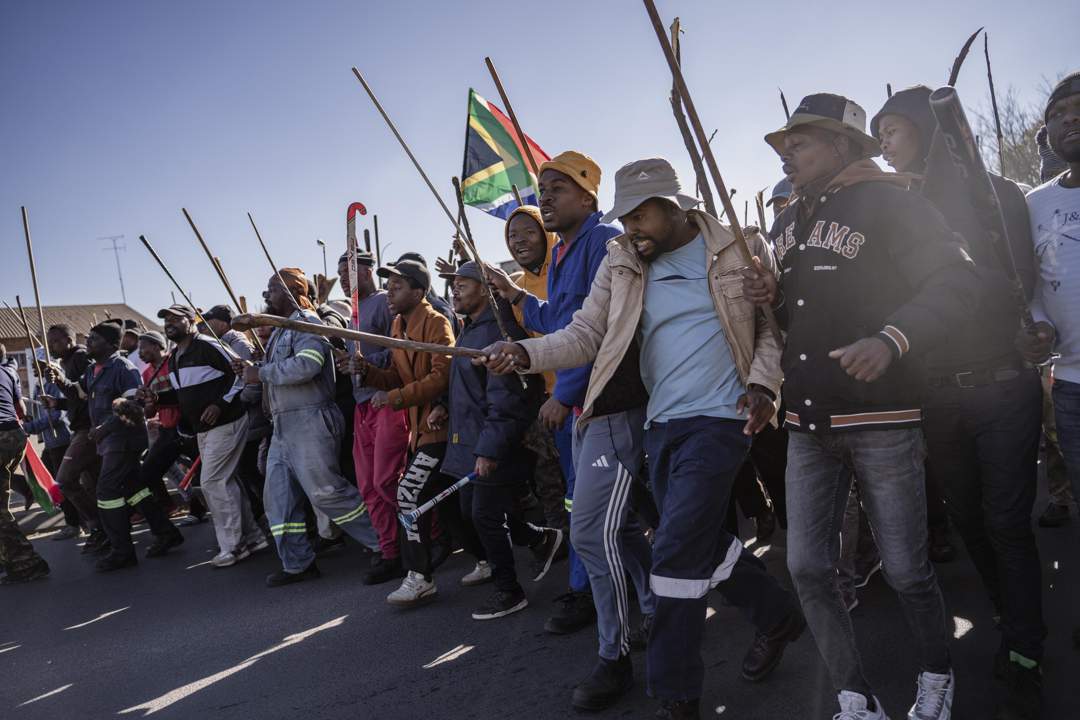
People gather to stage an anti-immigrant demonstration to call on the government to deport irregular immigrants in the Benoni area east of Johannesburg on 5 June 2026.

People gather to stage an anti-immigrant demonstration to call on the government to deport irregular immigrants in the Benoni area east of Johannesburg on 5 June 2026.
Ihsaan Haffejee/Anadolu via Getty Images

Rising xenophobia is fuelled by narratives that woefully and wilfully misrepresent SA’s socio-economic problems and immigration and refugee law, writesAimée-Noël Mbiyozo in ISS Today.


As countries mark World Refugee Day on 20 June, antagonism towards foreigners globally is at an all-time high. In South Africa, World Refugee Day falls 10 days before the 30 June deadline set by the anti-migrant movement March and March for ‘undocumented’ foreign nationals to leave the country, and businesses to terminate their employment.

Since April, anti-migrant protests have erupted countrywide, resulting in migrant deaths, property destruction and displacement. None of this is new to South Africa. Since 2008, hostilities against African migrants have erupted in multiple waves of violence that the government has dismissed as isolated incidents rather than a systemic social problem.

Anti-migrant sentiment, past and present, is fuelled by narratives that misrepresent the facts. Language referring to ‘illegals’, ‘illegal aliens’, ‘illegal migrants’, ‘undocumented migrants’ and ‘illegal foreigners’ is used to stoke fear of, and violence against, African foreigners.

A person cannot be illegal; actions can. Migration laws classify unauthorised entry or visa overstaying as criminal offences. In the same vein, migration in South Africa is not a crisis – it is a normal human pattern for a country sharing borders with six others. Framing migration as a crisis suggests extraordinary responses are needed, rather than robust, sensible management and better governance.

President Cyril Ramaphosa recently acknowledged concerns about ‘migration and illegal migration’ and committed to five actions: cracking down on the violation of immigration and labour laws; preventing irregular entry; stamping out corruption in the immigration system; strengthening immigration laws and policies; and improving migration coordination with other African countries.

Ramaphosa called for the recognition that ‘illegal immigration is not the cause of all our economic challenges.’ But more consistent, comprehensive and honest messaging is needed to persuade South Africans of this fact. Institute for Security Studies (ISS) research shows that anti-migrant sentiment is fuelled by perceptions that foreigners exacerbate unemployment and inequality, strain housing, health and education services, and disproportionately commit crime.

Risks to the country’s reputation, diplomatic relationships and business interests from the government’s continuing mismanagement of anti-migrant violence are significant. In 2024, South Africa’s intra-African trade totalled US$42 billion, and its businesses across the continent have faced backlash. Several governments and the African Union have condemned the marches, issued travel warnings and launched repatriation programmes for their citizens.

March and March claims that illegal immigrants number 15 million-30 million, and that South Africans are becoming refugees in their own country. Statistics South Africa’s 2023 survey showed there were 3.1 million immigrants in the country (5.1% of the population), including all documentation statuses.

The United Nations Department of Economic and Social Affairs, using a different methodology, said migrants peaked at 3.2 million in 2015 (5.6% of the population), and that migrant density (percentage of foreigners of total population) after that was lower than the 3.6% global average, 15.9% in North America and 12.7% in Europe.

Made with Flourish • Create a chart

The 2025 Human Sciences Research Council’s Social Attitudes Survey showed that South Africans were more hostile towards immigrants than ever. Only 15% of adults said they would welcome all foreigners; 42% would ‘welcome no immigrants.’ Attitudes have hardened, especially among poorer and working-class adults in the provinces of Mpumalanga, Gauteng, Limpopo and KwaZulu-Natal.

Afrobarometer in 2025 revealed that seven out of 10 South Africans (69%) perceived immigrants’ economic impact as negative, despite evidence showing each immigrant worker creates roughly two jobs for citizens.

Most (85%) polled by Afrobarometer favoured reducing or eliminating refugee entry. Many don’t distinguish between refugees and migrants, and believe the country hosts a disproportionate number of refugees and asylum seekers. South Africa is home to about 75 000 refugees and 165 000 asylum seekers. These numbers peaked in 2015 and have been declining since. By comparison, Uganda hosts two million refugees.

March and March claims to only target migrants without legal rights to be in the country, but violence is reportedly meted out indiscriminately.

For years, the ISS has provided analysis showing that the public and government overstate the number of asylum seekers in South Africa and their role in overburdening the Department of Home Affairs. Home Affairs has been found to inhibit access to asylum on the presumption that ‘many’ asylum seekers lodge fraudulent claims to regularise their stay.

Many judges have handed down scathing rulings against the department for illegal conduct such as the unlawful, multi-year closure of Refugee Reception Offices, and corruption, along with maladministration. In 2019, Amnesty International found the asylum system had an unreasonably high (96%) rejection rate, forcing some applicants to wait up to 19 years for a decision. As of May 2026, 161 000 asylum seekers were appealing rejections.

Weak institutions, not migrants themselves, are at the core of South Africa’s migration challenges. In February, the Special Investigating Unit found that ‘the immigration system has been treated as a marketplace,’ where permits and visas were sold through corrupt officials and other external actors.

Ramaphosa correctly identified systemic corruption and maladministration as areas for attention. Of the areas he highlighted for action, improving Home Affairs’ application of laws and policies would be fairly quick and affordable. But better administrative management is unlikely to quell public unhappiness. Protesters want large police raids and buses full of migrants returning home. But while these enforcement measures look dramatic, they change little.

The ‘illegal migrant’ rhetoric has become a fixture in party political campaigns and will likely amplify as November’s local elections approach. The ISS has warned of the dangers of politicians and public officials scapegoating foreigners for government failures. Elections create incentives for politicians to project images of strength and control, while staying silent or benefitting from anti-migrant behaviours.

Equally important are questions about who finances and coordinates anti-migrant mobilisation. The scale and sophistication suggest these demonstrations are not spontaneous expressions of public frustration. Organised transport, digital campaigns, branded materials and coordinated messaging require resources.

In the short term, the government must improve administrative capacity and stop corruption in its own systems, reject violence against foreigners by arresting and prosecuting those attacking migrants, and launch a communication campaign to reverse dangerous and false narratives.

In the long term, it should coordinate with other African countries to address migration pressures and responses, implement its National Action Plan to Combat Racism, Racial Discrimination, Xenophobia and Related Intolerance, and reform immigration and labour laws and their enforcement to reflect current realities.

Aimée-Noël Mbiyozo is a Senior Research Consultant on migration at the Institute for Security Studies (ISS).

This article was first published by ISS Today.

The post Anti-migrant myths that have been allowed to fester in South Africa  appeared first on Zimbabwe Situation.

Zimbabweans Fleeing SA Xenophobia Allowed One Duty-free Car, Household Goods 

Source: Zimbabweans Fleeing SA Xenophobia Allowed One Duty-free Car, Household Goods ⋆ Pindula News Zimbabweans returning home amid renewed xenophobic attacks in South Africa will be allowed to bring personal effects, household goods and one vehicle into the country duty-free under an immigrants’ rebate. Details of the rebate are set out in a letter from […]

The post Zimbabweans Fleeing SA Xenophobia Allowed One Duty-free Car, Household Goods  appeared first on Zimbabwe Situation.

Source: Zimbabweans Fleeing SA Xenophobia Allowed One Duty-free Car, Household Goods ⋆ Pindula News

Zimbabweans Fleeing SA Xenophobia Allowed One Duty-free Car, Household Goods

Zimbabweans returning home amid renewed xenophobic attacks in South Africa will be allowed to bring personal effects, household goods and one vehicle into the country duty-free under an immigrants’ rebate.

Details of the rebate are set out in a letter from George Guvamatanga, permanent secretary in the Ministry of Finance, Economic Development and Investment Promotion, to Zimbabwe Revenue Authority (ZIMRA) commissioner-general Regina Chinamasa.

“The facility would cater for only one motor vehicle imported by a Zimbabwe Exemption Permit (ZEP) holder… All motor vehicles would be cleared under suspension of duty, whereby VAT would remain payable… ZIMRA would apply flexible valuation terms to ensure that the VAT payable on the vehicles would be minimal.”

Guvamatanga said no permits will be required for vehicles more than 10 years old, adding that the exemption will apply only to vehicles bought before the Zimbabwe Exemption Permit (ZEP) expired in December 2022.

“For personal property and equipment of a commercial nature. Rebate of duty would apply on personal and household property, as well as property of a commercial nature, which presumably the returnees would have been using in their businesses,” reads the letter.

“The exempted property would have been purchased prior to the expiry of the ZEPs, that is, prior to 31 December 2022.

“There would be flexibility with respect to time of arrival in order to accord residents who returned by December 2022 ample time to clear their goods.”

Guvamatanga stressed that measures would be put in place to stop the immigrants’ rebate being abused.

“This is subject to the appropriate evaluation in order to limit potential abuse of the facility by non-qualifying returning residents. Furthermore, the facility will not apply to new items.

“In the case of motor vehicles, the returnees are required to meet the conditions that ordinarily apply to immigrants. These include prior ownership of the motor vehicle.”

The post Zimbabweans Fleeing SA Xenophobia Allowed One Duty-free Car, Household Goods  appeared first on Zimbabwe Situation.

Does anti-foreigner hatred pay? Do digital platforms profit?

Digital platforms are not passive hosts of content. They have become creator economies in which attention is systematically converted into income, and content that provokes outrage, fear or anger often proves to be among the most lucrative.
The post D…

Digital platforms are not passive hosts of content. They have become creator economies in which attention is systematically converted into income, and content that provokes outrage, fear or anger often proves to be among the most lucrative.

The post Does anti-foreigner hatred pay? Do digital platforms profit? appeared first on Zimbabwe Situation.