Citizens Coalition for Change defectors: It is my turn now to feel the pain 

‘After restoring 12 CCC candidates on the ballot in Bulawayo, my heart sank as some of them voted in favour of a vulgarity that cannot be atoned’ Source: Citizens Coalition for Change defectors: It is my turn now to feel the pain – Zimbabwe News Now Advocate Thabani Mpofu and Professor Welshman Ncube in conversation […]

The post Citizens Coalition for Change defectors: It is my turn now to feel the pain  appeared first on Zimbabwe Situation.

‘After restoring 12 CCC candidates on the ballot in Bulawayo, my heart sank as some of them voted in favour of a vulgarity that cannot be atoned’

Source: Citizens Coalition for Change defectors: It is my turn now to feel the pain – Zimbabwe News Now
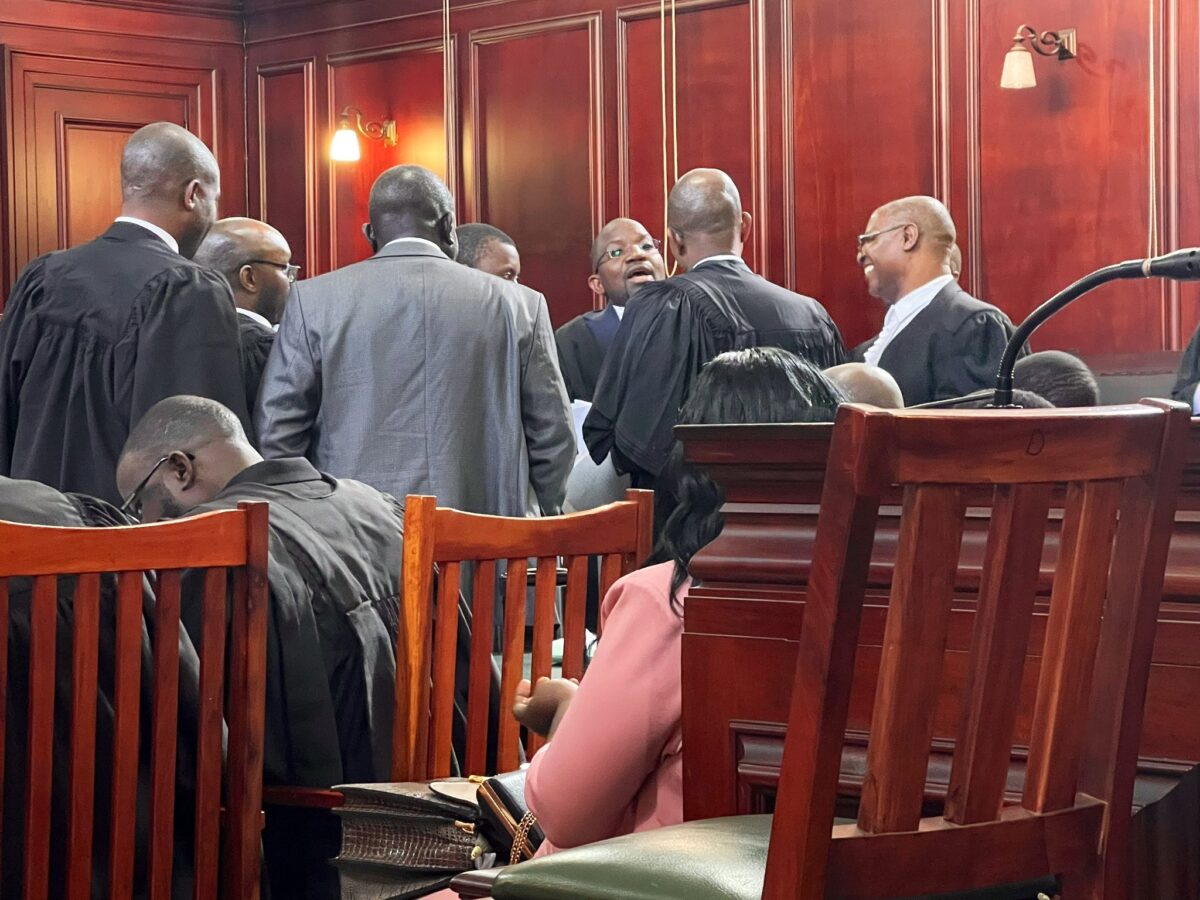
Advocate Thabani Mpofu and Professor Welshman Ncube in conversation at the Bulawayo High Court while representing 12 CCC parliamentary candidates who faced disqualification from election for filing their papers out of time on July 19, 2023

I NO not remember the exact date in 2023, but I remember the moment with painful clarity. It was the day the Nomination Court sat for the 2023 general elections. I was in Chambers, minding my own business, when Nelson Chamisa walked in, darkening my doorway. He had just met Tendai Biti, who came in with him.

Nelson looked at me and said, in that familiar, earnest way of his:

“My brother, if you are able to assist, I would love for you to lead the legal team going into the elections. As usual, and as you know, we are unable to pay you.”

I have always regarded service to the people of Zimbabwe as an honour, not a burden. So my answer was immediate, plain, and resolute: I would do it.

My first public duty as leader of the legal team came that very instance, I was to accompany Nelson to the High Court, to ensure the presidential nomination process was proceeding properly and to satisfy ourselves that all was well. As we walked, my mind was alive with questions. What structure would I have? Who would form part of it? How would we run the operations? And how, pray, would this all be funded? Because the truth is this: my team received not a single dollar for everything it did.

The rituals at the High Court where the nomination court for the presidential election was held went by without event. We had to make our way back to Chambers. By then the day was already far spent. It must have been around 6PM.

That was when I received my baptism of fire.

The Nomination Court sitting at Rotten Row had rejected the Proportional Representation CCC parliamentary nominations. It was a mess. A stinker. A rotten, humiliating, dangerous mess. It was not of my making, but it had landed on my head all the same, and I had to clean it up.

Fortunately, I knew the Electoral Act as intimately as the prayer we recite at home before dinner. I had to rely on that knowledge, on my oratory, and on my presence. When I arrived at Rotten Row, the atmosphere shifted. The sullen faces of the candidates lifted. They may lack in many respects but these opposition stalwarts command a belligerent presence.

Within minutes, the Harare problem was solved. The things I said impressed me but I can’t even remember them. I then had to return to Chambers and continue working for my family, or so I thought.

On the way back, I received a call. I cannot remember from whom. Twelve Bulawayo MPs were having problems with their papers. This was after the cut-off time. A disaster was brewing.

The idea that an election in which the traditional opposition stronghold would simply be handed over to ZANU PF was not something that could happen under my watch. But at that point, I did not yet have all the facts.

After a flurry of calls, I had at least gotten on top of the facts. But I still had no legal team in place. My mission was becoming a storm. I had nothing to do with the original problems, but if I was not careful, I would end up wearing them like a mask. And as so often happens in these moments, everyone was now looking at the lawyer.

I called David Coltart. I needed someone to go to the Nomination Court and advance an argument I had crafted. He sounded exhausted; he had had a difficult day and could not assist. I then tried Welshman Ncube and struggled to reach him. I searched high and low until I finally got Tinashe.

Tinashe was honest with me: the Electoral Act was not his terrain. But at that point I did not need his technical mastery. I needed his heart. My own expertise could be channeled through another person. On that score, I was calm and confident. I assured him that all would be well.

He was willing to serve the motherland, and so he drove to the Nomination Court. All the while, I was on the phone with him, breaking down both the legal argument and the strategy. Tinashe is a clever lawyer. Before long, he was making my points as though they had come from his own mouth.

But there was resistance at first. They did not want to hear him. He handed the phone to the person in charge, and after I softened that heart, they agreed that he would be heard.

Long story short: Tinashe did not leave until 2AM. That was when we finally solved the problem of the twelve.

I was awake throughout, cleaning up someone else’s mess and fighting on an uneven field with the lights of justice flickering uncertainly overhead.

A few days later, after the usual high-fives and the brief relief that follows a crisis, twelve applications were filed against the candidates. By then I had a legal team in place—twenty formidable minds ready to defend the motherland.

The candidates remembered Tinashe as the face that had saved them, and they all agreed to take their papers to him. Tinashe himself, now a full member of the team, was prepared to assist with the administrative work. That left me to draft twelve defences. I did it overnight. I prepared the heads of argument and shared them with the team. Then I had to fly to Bulawayo, and because of an exchange that has left me bitter and upset to this day, I paid all my expenses.

At the Bulawayo High Court, the twelve people who were under threat of disqualification were not even present.

I told Tinashe to read the riot act and make it clear to them that if they were not in attendance, I would not represent them. In fairness, I had expected to arrive in a boiling, anxious Bulawayo. Instead, I was met with indifference and capitulation, and that shocked me deeply. In fact, it upset me gravely to this very day.

Long story short, Welshman Ncube and I argued the matter. To my sweet surprise, ZEC fought in our corner. It fought as though it meant it. I realised it was a matter of honour, Zanu PF having abused it all this while was effectively questioning its integrity. The vulgarity was even supported by that Tshinga fellow who was in attendance. That was a dim and disappointing sight.

Notwithstanding ZEC’s defence, we lost.

And let me be clear: it was not the loss itself that drove me mad. It was the circumstances under which the news was delivered.

My wife and I had travelled to England for an important family engagement. We arrived at Manchester Airport, where my father-in-law was waiting for us. I was tired as I had worked the entire flight and so I slept on the long drive to Yorkshire. Meanwhile, disaster had struck in Bulawayo. The High Court had barred the twelve from contesting. The whole of Bulawayo.

I only received the news when I walked into my in-laws’ home. I could not bathe. I could not eat. My mind was on fire. I was beside myself. But I was determined to reverse the injustice, and so I set to work drafting a notice of appeal.

I understood the political sensitivities, and I knew the narrative had to be changed quickly. The judgment had to be neutralized by an appeal. The appeal would also suspend the effect of the judgment and ensure that ZEC did not do anything underhanded, like printing ballot papers that excluded the twelve.

In no time at all, I was done. I asked my team to file the appeal. They delayed. It was a slight delay but which no mad man could take.

My in-laws had never seen me that angry, that agitated, that belligerent. I threatened to dissolve the entire team. I was losing control. I was screaming at everyone. Perhaps I was unfair to them. But they responded like mature men and the appeal was filed. Only then did my mother-in-law greet me in her traditional Manyika way. Yes it was the other way round. Until that moment, I had not formally “entered” the house, and there I was, behaving like a man possessed by her hearth.

The elections were fast approaching, and there were further processes that had to be pursued, so the appeal had to be finalized. I had to prepare the application for the urgent hearing of the appeal and the heads of argument. There was a reason these processes fell on me but those do not matter for now. My trip was a nightmare. I spent all my time working on these legal processes. I was also working on the Polling Agents Manual.

I must pause here and say that for purposes of the appeal, I suggested that I and Paida Saurombe would represent six candidates, while Welshman Ncube and Runganga would represent the other six. The heads prepared by Welshman were a thing of beauty. I am angry with Welshman over many things, but whenever I remember those heads of argument, my heart softens.

I then had to travel back to Zimbabwe, and in accommodating me, the Supreme Court set the matter down for 2:30PM a departure from the traditional 9:30AM. I arrived in the country just after mid-morning and was on my feet in the Supreme Court by 2:30PM.

Once again, Welshman was brilliant. Our appeal was allowed, and the twelve were restored to contest—and all of them won the election.

I think only about six attended the Supreme Court hearing. They had to share cars from Bulawayo, or some other pitiful excuse.

I personally went through a great deal for these people. If I had charged them, not even the Zanu PF bribe money some of them have now received would have discharged their indebtedness.

My official position is that they owe me nothing. They never forced me into this and my foolish heart must not leave them in debt.

But today, my broken heart and shattered soul sank as I watched some of them vote in favour of an indecency that even sacrifice cannot cleanse; a vulgarity that cannot be atoned. I found myself asking questions I never thought I would ask. I reviewed my sacrifices. I cursed. I swore. Anger gave way to rage, rage to bitterness, and bitterness to frustration.

My blood pressure rose through the roof.

And in the end, I said to myself only this:

It is my turn to feel the pain.

Advocate Thabani Mpofu is a lawyer 

The post Citizens Coalition for Change defectors: It is my turn now to feel the pain  appeared first on Zimbabwe Situation.
Bill to extend Mnangagwa’s rule clears National Assembly, heads to Senate

42 CCC MPs vote against constitutional amendments Source: Bill to extend Mnangagwa’s rule clears National Assembly, heads to Senate – Zimbabwe News Now Attorney General Virginia Mabhiza and justice minister Ziyambi Ziyambi in conversation shortly after bill to amend the constitution was passed by the National Assembly on June 18, 2026 HARARE – The National […]

The post Bill to extend Mnangagwa’s rule clears National Assembly, heads to Senate appeared first on Zimbabwe Situation.

42 CCC MPs vote against constitutional amendments

Source: Bill to extend Mnangagwa’s rule clears National Assembly, heads to Senate – Zimbabwe News Now

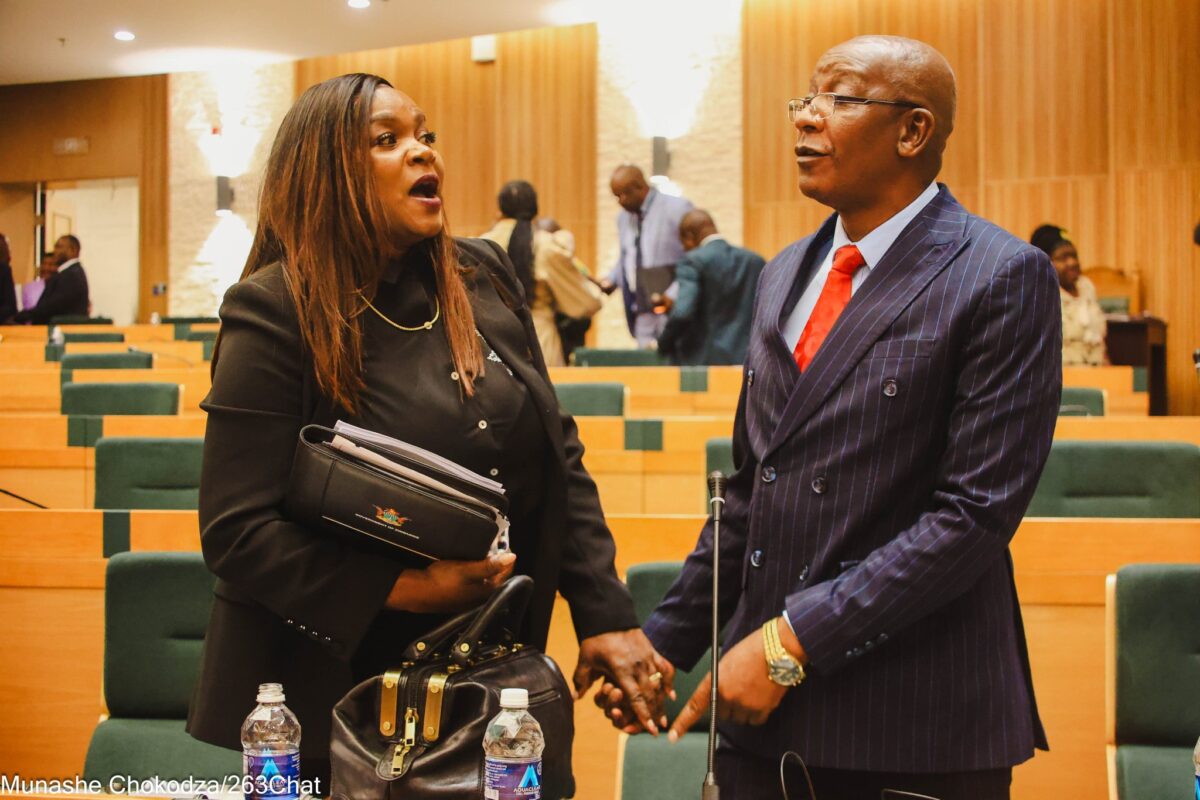
Attorney General Virginia Mabhiza and justice minister Ziyambi Ziyambi in conversation shortly after bill to amend the constitution was passed by the National Assembly on June 18, 2026

HARARE – The National Assembly passed a bill to extend presidential terms from five to seven years on Thursday, which would allow President Emmerson Mnangagwa to remain in power until 2030.

Some 216 ​MPs voted in favour of the draft legislation, passing the 187 mark needed ​for a two-thirds majority. In opposition were 42 Citizens Coalition for Change lawmakers, although 35 others voted with the government.

The bill now moves to the Senate, upper house of ⁠parliament, where it is also expected to sail through as Mnangagwa’s Zanu PF party ​controls it through traditional leaders and other proxies who generally vote with the party.

Mnangagwa came to power after a 2017 military coup ousted longtime leader Robert Mugabe, who had ​been in power since ​independence in 1980.

Until ⁠they fell out in the months leading up to the coup, Mnangagwa was one of Mugabe’s closest lieutenants, serving in top government ​positions including vice president.

Some activists and veterans of the country’s liberation ​war launched court ⁠challenges against the plan to extend Mnangagwa’s time as head of state, but they were struck off the court roll this week for technical reasons.

Other African countries whose leaders have changed ⁠the ​law to stay in power for longer include Cameroon and ​Uganda, entrenching a trend on the continent where some of the world’s oldest leaders govern its youngest populations.

The post Bill to extend Mnangagwa’s rule clears National Assembly, heads to Senate appeared first on Zimbabwe Situation.

The Constitutional Court now needs to uphold and protect Zimbabwe’s supreme law

Source: The Constitutional Court now needs to uphold and protect Zimbabwe’s supreme law We now stand at a critical crossroads in our nation’s history. Tendai Ruben Mbofana Yesterday’s passage of the Constitutional Amendment (No. 3) Bill, CAB3, by the House of Assembly has brought Zimbabwe to a critical constitutional precipice. If you value my social […]

The post The Constitutional Court now needs to uphold and protect Zimbabwe’s supreme law appeared first on Zimbabwe Situation.

Source: The Constitutional Court now needs to uphold and protect Zimbabwe’s supreme law

We now stand at a critical crossroads in our nation’s history.

Tendai Ruben Mbofana

Yesterday’s passage of the Constitutional Amendment (No. 3) Bill, CAB3, by the House of Assembly has brought Zimbabwe to a critical constitutional precipice.

If you value my social justice advocacy and writing, please consider a financial contribution to keep it going. Contact me on WhatsApp: +263 715 667 700 or Email: mbofana.tendairuben73@gmail.com

As the dust settles on the parliamentary vote, the gaze of the nation must now turn squarely toward the Constitutional Court.

This is the moment for our highest judicial body to stand up, defend the supreme law of the land, and protect the fragile architecture of our democracy.

After all, is that not precisely why our country’s judges take a solemn oath to “uphold and protect the Constitution and the human rights and fundamental freedoms enshrined in it”?

The Court must demand that CAB3 be subjected to a national referendum.

To be absolutely clear, this intervention is not about whether one supports or opposes a seven-year presidential and parliamentary term.

This is strictly, exclusively, and unapologetically about constitutionalism.

No one can deny or rewrite the exact text of Section 328(1) of the Constitution of Zimbabwe.

It explicitly defines a term-limit provision as “a provision of this Constitution which limits the length of time that a person may hold or occupy a public office.”

Nothing could be clearer.

A term-limit provision is not tied to any single, isolated section of the Constitution.

Rather, it encompasses any provision that dictates the “length of time that a person may hold office.”

In plain terms, a term limit can be manifested in two ways: the number of terms a person can serve, or the number of years contained within a single term.

Both are, by definition, term-limit provisions.

There are no two ways about it.

Consequently, who can logically deny the meaning and weight of Section 328(7)?

This section explicitly states that an amendment to a term-limit provision, the effect of which is to extend the length of time that a person may hold or occupy any public office, does not apply in relation to any person who held or occupied that office, or an equivalent office, at any time before the amendment.

Who could fail to understand the absolute clarity of this clause?

Any amendment to a term-limit provision—as defined under Section 328(1)—that results in extending the duration of public office falls squarely under the jurisdiction of Section 328(7).

Explained more simply, any amendment affecting the time a person occupies office, which ultimately elongates their tenure, is precisely what Section 328(7) was designed to regulate.

It matters little what semantic language or legal packaging is used to label this amendment.

Even if proponents attempt to frame CAB3 merely as “electoral cycle changes,” the underlying reality remains unchanged.

If electoral cycles are altered such that an office bearer—be it the president or a member of parliament—remains in that particular office longer, it triggers Section 328(7).

In the case of CAB3, we all know that the president and legislators currently occupy their respective offices for five years before the next election.

Under these proposed changes, they will now occupy those offices for seven years.

Can anyone honestly explain how that is not an amendment “the effect of which is to extend the length of time that a person may hold or occupy any public office”?

Therefore, the sitting incumbents are undeniably covered by the restrictions of Section 328(7).

The section unambiguously dictates that such an amendment cannot benefit “any person who held or occupied that office, or an equivalent office, at any time before the amendment.”

Who on earth, then, can legitimately claim that these changes should benefit the sitting president and current legislators?

The only lawful way to bypass this restriction is to amend Section 328(7) itself.

According to Section 328(9), amending this restrictive clause requires the exact same rigorous process used to amend Chapter 4, the Declaration of Rights.

This mandatory constitutional pathway requires two strict components: a two-thirds parliamentary majority and a binding national referendum.

So, why are we not having a national referendum?

Again, it bears repeating: this has absolutely nothing to do with whether one supports the substance of CAB3 or not.

Even those who favor a seven-year term should desire for the Constitution to be followed explicitly in implementing these changes.

Just because you want the rules followed in a soccer match does not mean you do not want your team to win.

It would be utterly perplexing if, during the ongoing 2026 World Cup, a team like Brazil preferred the rules of the game to be violated just to secure a victory.

Would that make any sense?

Even the most passionate Brazil supporters, no matter how desperately they want their team to win, would demand that victory be achieved fairly by adhering to the established rules of the game.

This is precisely when the Constitutional Court must step forward to defend and uphold the Constitution of Zimbabwe.

This is not a political debate about the merits of CAB3; it is a purely legal demand for adherence to the rules.

When the rules are respected and followed, we can all confidently declare: whoever wins, wins!

I, for one, will willingly accept the outcome once a national referendum is conducted and the people of Zimbabwe freely and fairly choose CAB3.

However, if the Constitutional Court allows this brazen violation of the country’s supreme law to proceed unchallenged, it sets a catastrophic precedent.

Adding two more years to a political term may not appear monumental to some today, and many may wonder what all this hullabaloo is about.

But if CAB3 is permitted to become law without due process, what is to stop a future constitutional amendment from extending terms or changing the electoral cycle to ten or even fifteen years without ever consulting the citizens through a referendum?

Let us remember that an armed robber does not start his criminal career by holding up a bank.

He likely begins by stealing ten cents of his mother’s change after being sent to buy bread.

Because he gets away with it, he moves on to stealing a whole dollar.

Soon, he becomes emboldened to steal from other children, eventually graduating to using a knife to threaten those who resist him.

Ultimately, he becomes a fully-fledged armed robber—breaking into homes, holding up banks, and hijacking cars.

This is the real, existential danger of allowing CAB3 to be enacted into law without a national referendum.

The true fear is not a seven-year presidential and parliamentary term itself, but how an emboldened government, having successfully bypassed the supreme law today, will abuse the Constitution tomorrow.

The Constitutional Court must act now to stop the first ten cents from being stolen.

The post The Constitutional Court now needs to uphold and protect Zimbabwe’s supreme law appeared first on Zimbabwe Situation.

THE TITLE DEED TIME BOMB: 12 Months to Save Your Home from Being ‘Deleted’

For decades, the thick, cream-coloured parchment of a title deed was the ultimate symbol of security for the Zimbabwean homeowner. It was the “castle’s” foundation, a physical proof of ownership that could be tucked away in a safe or …

For decades, the thick, cream-coloured parchment of a title deed was the ultimate symbol of security for the Zimbabwean homeowner. It was the “castle’s” foundation, a physical proof of ownership that could be tucked away in a safe or a bank vault, gathering dust but never losing its legal weight. That era is over. A […]

The post THE TITLE DEED TIME BOMB: 12 Months to Save Your Home from Being ‘Deleted’ first appeared on My Zimbabwe News.

Zimbabwe lithium sector faces refinery bottleneck as miners push to delay 2027 export ban

HARARE – Zimbabwe’s rapidly expanding lithium sector is entering a critical policy test as miners push for more time to build domestic processing plants ahead of a scheduled export ban on lithium concentrates in 2027. According to Business Insider Africa, in a report headlined “Africa’s top lithium producer faces refinery bottleneck as miners seek more […]

The post Zimbabwe lithium sector faces refinery bottleneck as miners push to delay 2027 export ban appeared first on The Zimbabwe Mail.

HARARE – Zimbabwe’s rapidly expanding lithium sector is entering a critical policy test as miners push for more time to build domestic processing plants ahead of a scheduled export ban on lithium concentrates in 2027.

According to Business Insider Africa, in a report headlined “Africa’s top lithium producer faces refinery bottleneck as miners seek more time before export ban”, industry players say the country’s ambitions to localise value addition are colliding with the practical limits of project timelines and infrastructure readiness.

Lithium producers are now appealing to authorities to extend the January 2027 deadline, arguing that several key processing facilities are still under construction and will not be operational in time. The request was reportedly raised by the Lithium Producers’ Association during a mining conference in Victoria Falls, where executives warned that an abrupt ban could disrupt investment planning and production stability.

At the centre of the debate is Zimbabwe’s broader industrial policy shift aimed at moving the country away from raw mineral exports towards higher-value processing. The government has already banned exports of raw lithium ore and subsequently tightened controls on lithium concentrate shipments through quotas, taxes, and stricter licensing conditions.

The planned 2027 ban on lithium concentrate exports represents the most significant step yet in that strategy. Officials argue it is designed to ensure more of the value chain—from refining to battery-grade chemical production—remains within Zimbabwe rather than being captured abroad.

However, industry data suggests the domestic processing ecosystem is still in its early stages. Of the multiple large-scale projects announced in recent years, only one lithium sulphate facility—developed by China’s Zhejiang Huayou Cobalt—is currently operational. Other major developments, including projects linked to Sinomine’s Bikita Minerals, Yahua’s Kamativi operations, and the state-owned Sandawana mine, remain under construction or in feasibility phases.

Lithium sulphate is a key intermediate product used in producing battery-grade lithium compounds such as lithium hydroxide and lithium carbonate, which are essential inputs for electric vehicle batteries and energy storage systems.

The sector’s concerns come after a period of regulatory tightening. Earlier in the year, authorities temporarily suspended exports of raw minerals and lithium concentrates over concerns about leakage and export irregularities, before later reintroducing controlled quotas. While the measures are aimed at strengthening oversight, miners argue they have also added uncertainty to an already capital-intensive industry.

Despite operational challenges, Zimbabwe’s lithium output has continued to grow. In 2025, the country exported about 1.128 million tonnes of spodumene concentrate, marking an 11% increase from the previous year. However, export earnings remained broadly flat at roughly $513.8 million, as falling global lithium prices offset higher volumes.

The trade pattern underscores the government’s long-standing argument that exporting unprocessed minerals limits revenue potential and industrial development. Zimbabwe shipped approximately 1.13 million tonnes of spodumene concentrate to China last year, accounting for an estimated 15% of Chinese imports of the material, reinforcing the country’s strategic importance in global battery supply chains.

Chinese firms, including Zhejiang Huayou Cobalt, Sinomine, Yahua Group, Chengxin Lithium Group, and Tsingshan, have collectively invested billions of dollars into Zimbabwe’s lithium sector, transforming it into one of Africa’s most significant emerging producers of battery minerals.

Still, the pace of downstream development has lagged behind extraction growth. Industry executives estimate that if planned processing capacity is fully realised, Zimbabwe could produce up to 344,000 tonnes of lithium sulphate annually by 2030, positioning the country as a more integrated player in the global electric vehicle supply chain.

For now, the government faces a policy balancing act: enforcing its industrialisation agenda while ensuring that investment momentum in one of its most strategically important mineral sectors is not disrupted.

The post Zimbabwe lithium sector faces refinery bottleneck as miners push to delay 2027 export ban appeared first on The Zimbabwe Mail.