Rhinos back in Zimbabwe park 30 years after evacuation

A Zimbabwe park that evacuated all its black rhino three decades ago to save them from poachers has reintroduced 17 of the critically endangered animals in a milestone project. Source: Rhinos back in Zimbabwe park 30 years after evacuation A black rhino in the Matusadona National Park in Zimbabwe A Zimbabwe park that evacuated all […]

The post Rhinos back in Zimbabwe park 30 years after evacuation appeared first on Zimbabwe Situation.

A Zimbabwe park that evacuated all its black rhino three decades ago to save them from poachers has reintroduced 17 of the critically endangered animals in a milestone project.

Source: Rhinos back in Zimbabwe park 30 years after evacuation

A black rhino in the Matusadona National Park in Zimbabwe
A Zimbabwe park that evacuated all its black rhino three decades ago to save them from poachers has reintroduced 17 of the critically endangered animals in a milestone project.The animals flown into the Matusadona National Park over the past week were descendants of black rhino removed in the 1990s as poachers slashed their numbers, the park manager said.

“It’s their descendants that we’re bringing back into the system,” Michael Pelham said, adding the project was believed to be the first of its kind on the continent.

“We are rewilding with our own genetics coming back,” he said.

Over one year in the early 1990s, poachers after rhino horn dropped Matusadona’s rhino population from an estimated 250 animals to just 16, he said.

A nine-year poaching spree across Matusadona and other parts of the northern Zambezi Valley cut the area’s black rhino from 3,500 to just 400 animals, he said.

“In this situation, it was feared we would possibly lose all of the genetic stock, so surviving animals were moved,” Mr Pelham said.

Most went to other parts of Zimbabwe but about 25 were shipped to Australia and Texas.

“Some of the animals that we took out of Matusadona in the early 1990s are still alive, but too old to bring back here and move again,” Mr Pelham said.

“But their offspring are coming back into the park.”

The new arrivals were dehorned and new technology such as drones and trackers was in place to safeguard them against poaching, he said. Another 20 were due to arrive next year.

The world’s black rhino population dropped from approximately 65,000 animals in 1970 to only 2,300 in the wild in the early 1990s, according to the International Rhino Foundation.

The numbers had recovered to about 6,800 after intense anti-poaching efforts, it said.

The post Rhinos back in Zimbabwe park 30 years after evacuation appeared first on Zimbabwe Situation.

Achieving sustained corporate growth: lessons in leadership mindsets and execution for Zimbabwe’s economic transformation

IN an era defined by economic fragmentation, technological disruption, and capital scarcity, the question of how organisations achieve sustainable growth has become more than a corporate management issue. It is now a structural economic challenge, particularly in emerging markets such as Zimbabwe, where firms operate under constraints of currency volatility, limited long-term financing, infrastructural bottlenecks, […]

The post Achieving sustained corporate growth: lessons in leadership mindsets and execution for Zimbabwe’s economic transformation appeared first on The Zimbabwe Mail.

IN an era defined by economic fragmentation, technological disruption, and capital scarcity, the question of how organisations achieve sustainable growth has become more than a corporate management issue. It is now a structural economic challenge, particularly in emerging markets such as Zimbabwe, where firms operate under constraints of currency volatility, limited long-term financing, infrastructural bottlenecks, and shifting policy environments.

By Brighton Musonza

Yet global evidence increasingly shows that growth is not primarily a function of resources, but of leadership behaviour. The world’s most successful corporations demonstrate that sustained expansion is driven by disciplined execution of leadership mindsets that convert strategy into measurable outcomes. In Zimbabwe’s case, this distinction between ambition and execution is particularly critical.

This article critically examines the leadership architecture of growth, drawing on global corporate experience, and situates it within Zimbabwe’s industrial and financial reality, where stagnation in several sectors contrasts sharply with pockets of innovation emerging in fintech, mining, agriculture, and telecommunications.

Growth as a Leadership Discipline, Not an Economic Accident

Across global markets, high-performing companies consistently demonstrate that growth is rarely accidental. It is engineered. In advanced economies, conglomerates that once relied on legacy industries—steel, manufacturing, chemicals, or retail—have reinvented themselves through leadership-led transformation, often doubling valuations within a few years after periods of stagnation.

The central lesson from global corporate evolution is that growth is not determined by sector alone but by leadership psychology. Companies that outperform tend to operate under a shared behavioural framework: prioritising long-term expansion over short-term survival, aggressively reallocating capital, and embedding customer intelligence into decision-making systems.

In Zimbabwe, this lesson is particularly relevant. Many corporates still operate with legacy structures shaped in the pre-dollarisation and immediate post-dollarisation era. These structures are often risk-averse, siloed, and heavily dependent on short-term liquidity cycles rather than long-term capital planning. As a result, even profitable firms frequently underinvest in innovation, digital transformation, and regional expansion.

The Zimbabwean Growth Constraint: Short-Termism and Capital Fragmentation

Zimbabwe’s corporate landscape reveals a persistent structural issue: the dominance of short-term financial survival over strategic expansion. Retail banks, for example, are structurally designed for deposit mobilisation and short-term lending rather than financing long-horizon industrial or infrastructural growth. This limits the scale of capital available for transformative projects in manufacturing, energy, and logistics.

Globally, economies that have achieved sustained industrial expansion—such as South Korea during its developmental phase, or Malaysia during its manufacturing boom—relied heavily on coordinated long-term capital systems, including development banks, sovereign investment arms, and investment banking ecosystems capable of underwriting risk at scale.

Zimbabwe’s absence of a deep investment banking layer has meant that even viable industrial ideas struggle to transition into fully financed projects. In contrast, institutions such as Goldman Sachs in the United States or Barclays Capital in its historical UK role have functioned as capital intermediaries, transforming savings into long-term productive investments.

Without such mechanisms, Zimbabwean firms are often trapped in what economists call “liquidity-driven planning cycles,” where survival decisions override expansion strategies.

Mindset One: Prioritising Growth Amid Structural Constraints

Globally, leading organisations consistently demonstrate that sustained growth begins with leadership commitment to long-term thinking, even during volatility. Companies such as Amazon and Samsung have historically continued heavy investment in innovation during downturns, positioning themselves for accelerated expansion once markets recover.

In Zimbabwe, however, macroeconomic instability has often pushed firms in the opposite direction. During inflationary cycles or currency transitions, corporate leaders tend to shift capital into defensive positions such as real estate holdings or foreign currency preservation rather than productive reinvestment.

Yet a handful of regional corporates, particularly in telecommunications and fintech across Southern Africa, have demonstrated alternative behaviour. Firms such as MTN Group and Safaricom have consistently prioritised infrastructure expansion even in uncertain regulatory environments, leading to long-term dominance in digital ecosystems.

The key lesson is that growth requires intentional sacrifice of short-term comfort in exchange for long-term structural positioning.

Mindset Two: Audacity as a Competitive Advantage

Global growth outperformers distinguish themselves through boldness in capital allocation and innovation. Companies such as Tesla and Amazon Web Services built entirely new industries not by incremental improvement but by aggressive bets on future markets.

In Zimbabwe, audacity is often constrained by regulatory caution, capital scarcity, and risk aversion within boardrooms. However, sectors such as lithium mining and renewable energy are beginning to demonstrate the value of bold investment decisions. Foreign and domestic players entering Zimbabwe’s lithium belt have done so on the basis of long-term global demand forecasts rather than immediate returns.

Regionally, South Africa’s Naspers offers a powerful example of an audacious growth strategy. Its early investment in Tencent transformed it from a local media company into a global technology investment powerhouse. This was not the result of incremental thinking but of strategic risk-taking in unfamiliar markets.

Zimbabwean corporates increasingly need to adopt similar thinking if they are to transition from domestic survival entities into regional players.

Mindset Three: Customer Intelligence as a Growth Engine

Modern corporate growth is increasingly defined by data-driven customer understanding. Globally, firms such as Netflix and Amazon have built entire ecosystems around predictive analytics, allowing them to anticipate demand rather than react to it.

In Zimbabwe, however, customer insight systems remain underdeveloped. Many firms still rely on traditional market surveys or historical sales data, which limits their ability to adapt to rapidly changing consumer behaviour shaped by mobile money, informal markets, and diaspora remittances.

Fintech platforms operating in Africa, such as Flutterwave and EcoCash, demonstrate how customer-centred digital systems can redefine financial inclusion. These systems continuously capture transaction data, enabling real-time product adjustments and targeted financial services.

The implication for Zimbabwean corporates is clear: growth will increasingly depend on data infrastructure, not just market presence.

Mindset Four: Talent as a Growth Multiplier

One of the most consistent findings in global corporate research is that talent quality is a primary determinant of growth performance. High-growth firms do not simply hire more people; they strategically redeploy, retrain, and restructure teams to align with growth objectives.

In Zimbabwe, talent migration has created an additional complexity. Skilled professionals often relocate to South Africa, the United Kingdom, or the Gulf, creating internal capability gaps. This has forced many firms to rely on lean teams, often stretched across multiple functions.

However, multinational corporations operating in Africa, such as Unilever and Nestlé, have demonstrated the value of investing in local leadership pipelines. They systematically develop management capacity within regional offices, ensuring continuity even in volatile labour markets.

Zimbabwean firms that invest in structured talent development, particularly in digital skills, financial engineering, and operational analytics, will be better positioned to compete regionally.

Mindset Five: Execution Systems and Institutional Discipline

Perhaps the most overlooked element of corporate growth is execution discipline. Globally, firms that outperform do not rely solely on vision; they embed accountability systems, performance tracking, and adaptive decision-making structures.

German industrial giants such as Siemens and Bosch exemplify this approach, combining engineering excellence with rigorous operational governance. Their success is not simply technological but institutional.

In Zimbabwe, execution gaps often emerge between boardroom strategy and operational delivery. Projects are frequently initiated but delayed due to funding interruptions, bureaucratic inefficiencies, or weak monitoring systems.

The introduction of digital project tracking systems, AI-driven forecasting tools, and performance-based management frameworks could significantly improve execution consistency across both public and private sectors.

The Broader Economic Lesson for Zimbabwe

The central insight from global corporate experience is that growth is a behavioural outcome rather than a structural guarantee. Economies and firms that succeed are those that convert ambition into disciplined execution through leadership systems.

For Zimbabwe, this raises deeper structural questions about financial architecture. Without a robust investment banking ecosystem capable of mobilising long-term capital, corporate growth will remain constrained. Retail banking alone cannot fund industrial transformation at scale.

Countries that successfully industrialised did so through deliberate financial engineering. The United States leveraged investment banks to fund railroads and infrastructure expansion in the 19th century. China used state-directed banking systems to finance industrial zones and manufacturing corridors. Even post-war Europe relied heavily on development finance institutions.

Zimbabwe’s growth challenge is therefore not merely corporate—it is systemic.

Conclusion: From Survival to Strategic Expansion

The lesson from global corporate transformation is clear: growth is not a function of optimism but of disciplined leadership behaviour embedded across strategy, talent, capital allocation, and execution systems.

For Zimbabwean firms, the transition from survival mode to growth orientation will require a fundamental shift in mindset—from reactive management to proactive expansion, from short-term liquidity preservation to long-term capital deployment, and from fragmented operations to integrated growth systems.

In the end, growth is not declared; it is built. And it is built by leaders who are willing to move beyond inherited constraints and design organisations capable of competing not just locally, but regionally and globally.

The post Achieving sustained corporate growth: lessons in leadership mindsets and execution for Zimbabwe’s economic transformation appeared first on The Zimbabwe Mail.

Chamisa voices CAB3 opposition, demands ‘transitional government’

‘The wisest thing is to withdraw this CAB3 from parliament’ Source: Chamisa voices CAB3 opposition, demands ‘transitional government’ – Zimbabwe News Now Nelson Chamisa poses for a picture with activist Godfrey Karembera, popularly known as Madzibaba veShanduko, on June 5, 2026, after the latter was acquitted on public order charges following 8 months of pre-trial […]

The post Chamisa voices CAB3 opposition, demands ‘transitional government’ appeared first on Zimbabwe Situation.

‘The wisest thing is to withdraw this CAB3 from parliament’

Source: Chamisa voices CAB3 opposition, demands ‘transitional government’ – Zimbabwe News Now

Nelson Chamisa poses for a picture with activist Godfrey Karembera, popularly known as Madzibaba veShanduko, on June 5, 2026, after the latter was acquitted on public order charges following 8 months of pre-trial incarceration

HARARE — Former Citizens Coalition for Change leader Nelson Chamisa has proposed the formation of a “transitional government” while urging President Emmerson Mnangagwa and his Zanu PF party to withdraw a bill that would extend the president’s term by two years.

Chamisa, who announced his political comeback after a two-year hiatus, did not specify who would lead such a government or under what legal framework it would operate.

Writing on X, he said: “Everywhere I go, I meet Zimbabweans who are worried about the country’s direction and future. Regardless of age, profession, or location, many share a deep concern about the path the nation is taking and the dangers the country faces in the context of the unilateral, unpopular and anti-people constitutional amendment.

“The wisest thing is to withdraw this #CAB3 from parliament and constitute a transitional government that will address all the challenges our country faces. It’s doable.”

Parliament is currently debating the Constitution of Zimbabwe Amendment (No. 3) Bill, 2026, which would extend Mnangagwa’s term by two years to 2030, despite criticism from a fractured opposition and some veterans of the liberation war.

Mnangagwa, 83, is constitutionally required to step down in 2028 after serving two five-year terms, but Zanu PF wants to amend the constitution to extend presidential terms from five years to seven. The party also wants future presidents elected by parliament rather than by direct popular vote.

Political analysts expect the bill to pass. Zanu PF holds a two-thirds majority in the lower house and controls the Senate through traditional leaders and other proxies who generally vote with the ruling party – giving it the numbers to change the constitution unilaterally.

Until recently, Chamisa had been notably muted on the planned amendments.

His call for a transitional government appears rooted in his longstanding claim that he and his then-CCC party were robbed of victory in the 2023 general elections.

On Wednesday, he wrote that “we defeated Zanu PF comprehensively and conclusively,” pointing to comments by Justice Minister Ziyambi Ziyambi, who – while justifying the cancellation of elections in 2028 – acknowledged that the move was designed to avoid the toxicity and disputes of a contested outcome.

Political analyst Tadini Masaya said Chamisa’s intervention risked muddying the waters at a critical moment in the constitutional debate.

“Preaching such a gospel at this hour completely confuses the resistance,” Masaya said. “When the enemy is actively breaching the outer wall, you do not send a delegation to discuss sharing the living room.”

The post Chamisa voices CAB3 opposition, demands ‘transitional government’ appeared first on Zimbabwe Situation.

Mnangagwa gifts farming equipment to Rtd Chief Justice Malaba 

Source: Mnangagwa gifts farming equipment to Rtd Chief Justice Malaba — CITEZW President Emmerson Mnangagwa has presented a farming equipment package to recently retired Chief Justice Luke Malaba, praising his long service in the judiciary and encouraging him to pursue agriculture in retirement. In a statement posted on his Facebook page on Saturday, the President […]

The post Mnangagwa gifts farming equipment to Rtd Chief Justice Malaba  appeared first on Zimbabwe Situation.

Source: Mnangagwa gifts farming equipment to Rtd Chief Justice Malaba — CITEZW

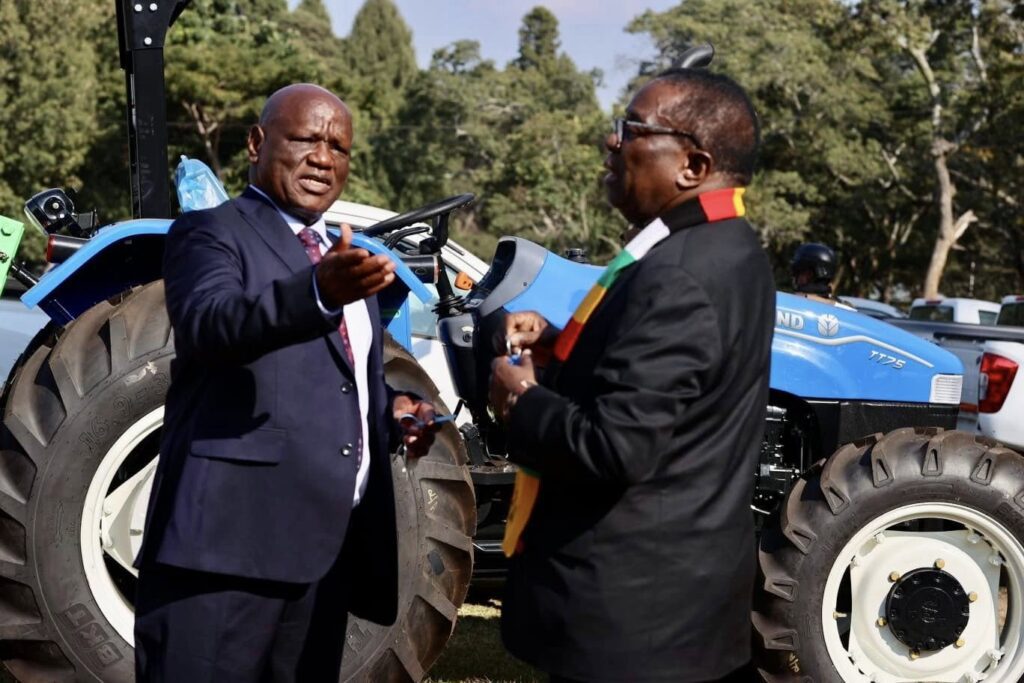
President Emmerson Mnangagwa has presented a farming equipment package to recently retired Chief Justice Luke Malaba, praising his long service in the judiciary and encouraging him to pursue agriculture in retirement.

In a statement posted on his Facebook page on Saturday, the President said he had welcomed Hon Malaba to State House and handed over an agricultural mechanisation package to support his transition from public office.

The package includes a tractor, a Nissan UD truck, a boom sprayer and a planter.

President Mnangagwa said the gesture was in recognition of Hon Malaba’s “outstanding service spanning decades, unwavering commitment, and exemplary legal leadership within the Zimbabwean judiciary”.

“It was my pleasure to welcome the recently retired Chief Justice, Luke Malaba, to State House today,” the President said.

He added that the equipment was intended to help the former Chief Justice embark on agricultural activities after retirement, urging him to apply his experience in the sector.

“As he retires from the judiciary, I encourage him to leverage his vast expertise in the agricultural sector. Our land is a vital asset, and productivity must persist at all levels,” he said.

Hon Malaba retired last month after serving as Chief Justice since 2017, having previously held senior judicial roles, including Deputy Chief Justice.

His tenure, however, was marked by controversy, particularly over constitutional interpretation and judicial independence.

In 2021, he came under scrutiny after issuing a directive extending his tenure beyond the constitutional retirement age, a move that was challenged in court and sparked public debate over the independence of the judiciary. Although the Constitutional Court initially upheld the extension, the decision was widely criticised by legal experts and civil society groups.

He also presided over several high-profile political and electoral cases, some of which drew accusations from opposition parties and human rights groups that the judiciary was not sufficiently independent in politically sensitive matters. Mr Malaba and the judiciary have consistently rejected claims of bias, insisting that all rulings were based on the law.

Despite the controversies, the government has frequently praised his leadership of the judiciary.

In his message, President Mnangagwa thanked Hon Malaba for his service and wished him success in his post-retirement agricultural ventures.

The post Mnangagwa gifts farming equipment to Rtd Chief Justice Malaba  appeared first on Zimbabwe Situation.

MAYHEM: Thousands to lose homes in Harare 

Source: MAYHEM: Thousands to lose homes in Harare -Newsday Zimbabwe SEVERAL families and tens of thousands of small-to-medium businesses—whose structures occupy open spaces, farms, wetlands, vleis, and school or clinic sites—risk losing their properties as Harare intensifies its crackdown on land invasions across the city. A Harare City Council task force recently visited 22 255 […]

The post MAYHEM: Thousands to lose homes in Harare  appeared first on Zimbabwe Situation.

Source: MAYHEM: Thousands to lose homes in Harare -Newsday Zimbabwe

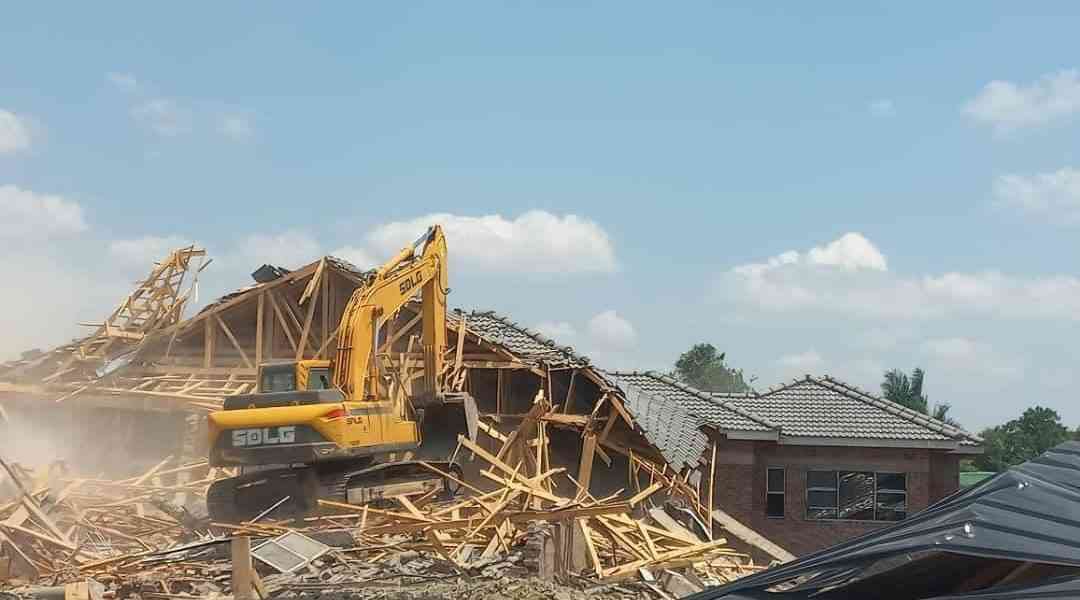
SEVERAL families and tens of thousands of small-to-medium businesses—whose structures occupy open spaces, farms, wetlands, vleis, and school or clinic sites—risk losing their properties as Harare intensifies its crackdown on land invasions across the city.

A Harare City Council task force recently visited 22 255 sites, with authorities warning that structures built on prohibited or protected land will not be spared in the upcoming blitz.

Several properties in Harare South, Whitecliff, and other areas have already been demolished, leaving many families homeless.

Affected businesses have lost goods worth thousands of US dollars after allegedly ignoring several warnings from authorities.

According to a town clerk’s report on the regularisation and demolition of illegal structures, further clearances are earmarked for parts of Greendale, Belvedere, Budiriro, Kuwadzana, and Mabvuku.

Other targeted areas include Glen View, Mabelreign, Tynwald, Crowborough, Chisipite, Glen Lorne, Southlea Park, Hopley, Mainway Meadows, Tafara, and Hatcliffe.

The report indicated that the Harare City Council is targeting illegal settlements linked to land barons, politically connected individuals, and organised groups occupying land earmarked for public facilities or environmental protection.

“Well-organised and coordinated rampant land invasions, fueled by politicians across the political divide, land barons, and general invaders, intensified around August 2023,” the report noted.

In some instances, invaders are occupying land already allocated or leased to other beneficiaries, while bona fide allottees follow due processes for infrastructure development before taking possession.

“Such invaders occupy the land illegally, anticipating regularization. All these illegal developments shall be demolished,” the report said.

The report added that some invaders used documents with scanned or forged signatures, such as offer letters, agreements of sale, and title deeds.

This is reportedly rampant in medium- and low-density areas; all fake documents are being reported to the Zimbabwe Republic Police, and illegal developments will be demolished following due process.

“A clear message is being sent to all land barons that the council will not tolerate lawlessness or the abuse of the Co-operative Act and Parallel Development Concept by politically connected individuals and elites who invade council and government land,” the report said.

Harare South residents told NewsDay during the demolitions this week that the destruction of schools and houses has left them without alternatives.

“Schoolchildren have been greatly affected; authorities should have given residents enough time to make alternative arrangements,” an affected resident said.

Residents expressed deep concern that many children will fall behind in their studies and curricula.

“We are deeply hurt because we have nowhere to live. We are appealing for assistance, as this is the only home we have ever known,” another resident said.

Harare Residents Trust executive director Precious Shumba said yesterday the conflict could have been resolved through the publication of the Justice Tendai Uchena Commission of Inquiry report.

“That report contains specific details about the land barons involved in parcelling out council and state land. We believe the President has a duty to publish it in the public interest,” Shumba said.

He added that city fathers have a duty to inform the public about land use as developments begin.

“Housing developments are taking place, yet there is a shocking lack of development control from the City of Harare and various local authorities. They see developments taking shape but do not intervene,” Shumba said.

He said local authorities stopped servicing land for housing long ago, leading to thousands of rural migrants flooding urban centres.

Harare mayor Jacob Mafume stated yesterday: “These were private actors following their own court orders and processes. This is not our land, so we cannot comment.”

Despite the demolition drive, the city council continues its parallel regularization programme for settlements that meet planning requirements.

However, the town clerk’s report clarified that this exercise excludes settlements on environmentally sensitive areas like wetlands, heritage sites, school sites, and recreational centres, as well as any invasions occurring after the September 24, 2023, cutoff date.

More than 5 000 houses in high-density suburbs will be demolished under 37 High Court orders, alongside structures in over 40 “illegal” cooperatives.

In Mabelreign and surrounding low-density areas—including Meyrick Park, Sentosa, and Madokero—67 structures are slated for demolition.

At the Glen View 8 complex, structures along Willowvale Road will not be spared, and approximately 200 properties constructed along the Harare Drive expansion route will also be razed. Greendale and Amby Township will see 45 and 13 illegal stands demolished, respectively.

At Robert Mugabe Square, the mayor reportedly ordered the reversal of leases and the demolition of illegal structures, while bulldozers are also set to target illegal restaurants, bars, and car washes in Milton Park and Waterfalls.

The post MAYHEM: Thousands to lose homes in Harare  appeared first on Zimbabwe Situation.